How Heuritech achieves 90% accuracy forecasting fashion trends 24 months ahead
The Paris firm analyses 3 million social images daily using computer vision and seven forecasting algorithms to predict colours, prints and silhouettes with claimed 90% accuracy at two years out.

KEY TAKEAWAYS Summary by the editors
- Heuritech claims over 90% forecast accuracy at the 24 month horizon by analysing Instagram, TikTok and Xiaohongshu images with proprietary computer vision trained on 2,000 fashion attributes.
- Wolverine Worldwide achieved 100% sell through in 10 days on a boot capsule informed by Heuritech forecasts, while a client grew skirt sales 9% using trend data.
- The firm uses a master algorithm that ensembles seven distinct forecasting models, combining deep learning and statistical methods to predict trend trajectories.
- Accuracy claims remain self reported and unaudited, cultural context is difficult for AI to parse, and forecasts depend on stable social media data access and representative consumer panels.
Since extending its forecast horizon to 24 months in early 2024, Paris based Heuritech has claimed predictive accuracy exceeding 90% for fashion trend attributes including colours, prints, fabrics and silhouettes. The firm, founded in 2013 by machine learning PhDs Tony Pinville and Charles Ollion, now serves clients including Louis Vuitton, Dior, Adidas, Prada, New Balance, Nike, Decathlon and Chalhoub Group, according to public statements and trade reports.
The claimed accuracy matters because fashion continues to overproduce at scale. McKinsey and Business of Fashion estimated the industry generated 2.5 to 5 billion surplus items worth between 70 billion and 140 billion US dollars in 2023 alone. Heuritech positions its forecasts as demand planning intelligence that can reduce markdown risk and improve full price sell through, and some client case studies show double digit sales lifts and complete sell outs when trend signals inform buy decisions.
The question for merchandising, buying and planning teams is whether the accuracy claim stands up, how the methodology works, which brands use it and what the limits are. This article examines the evidence.
What does 90% accuracy actually mean in trend forecasting?
Heuritech states its algorithm achieves over 90% predictive accuracy for trend evolution up to two years in advance. A Première Vision profile published in June 2026 cited 92% accuracy. The company reports the figure on its website and in marketing materials, but does not publish independent audits or specify the exact metric used.
In forecasting terminology, accuracy typically means directional correctness: did the model predict growth when a trend grew, or decline when it fell. It does not mean predicting exact percentage changes. Industry analysts note that even directional accuracy above 85% represents significant improvement over traditional human led forecasting, which multiple sources peg at 50% to 65% accuracy at comparable horizons.
Heuritech validates its models internally by retrieving historical time series data from its platform, generating forecasts and measuring error against actual subsequent visibility. The firm uses metrics including Mean Absolute Scaled Error, which compares forecast error to a naive baseline method. Its latest forecasting engine, documented in a 2024 technical article, combines five algorithms including PatchTST and N-BEATS, recent transformer and recurrent neural network methods from academic literature.
The 90% claim remains a vendor statement. No third party has published an independent accuracy audit. Competitor claims vary: Style3D AI cited 94% accuracy in early 2026 comparisons, WGSN claims 94% for its TrendCurve AI, and Stylumia reports 88%, all self assessed.
How does the computer vision and forecasting methodology work?
Heuritech's process has three stages: defining consumer panels, applying computer vision to social images, and running forecasting algorithms.
First, the firm builds representative consumer panels for each geography and audience segment. It segments users into edgy, trendy and mainstream categories across 15 regions and four age bands (16 to 25, 26 to 35, 36 to 45, 45 plus). Panels draw from publicly accessible accounts on Instagram, TikTok and Xiaohongshu (Little Red Book, the leading fashion discovery platform in China with over 300 million monthly users). TikTok joined as a live data source in October 2026.
Second, proprietary computer vision algorithms analyse images from these panels daily. Heuritech processes approximately 3 million images per day, according to multiple company statements and third party profiles. The vision models detect over 2,000 fashion attributes, from specific product categories like thong sandals and tube tops to granular details including collar shapes, hem lengths, fabric textures, print patterns and colour gradients.
The computer vision technology, developed in house by the co founders, uses deep learning trained on years of fashion imagery. It can identify branded products (for example, distinguishing a Chanel Boy Bag) and quantify adoption of micro trends across different consumer segments. All attribute detections are cross referenced by geography, seasonality, consumer panel, age and gender.
Third, a master forecasting algorithm ensembles seven distinct models to predict how each attribute will evolve. Heuritech's forecasting toolkit previously included six methods: four statistical models (seasonal naive, seasonal decomposition, TBATS and exponential smoothing) and two deep learning approaches. The current version, released in 2024, uses five algorithms including PatchTST, N-BEATS and proprietary ensemble logic that selects the best performing model for each trend based on historical error.
The master algorithm generates forecasts up to 24 months ahead. For horizons beyond 12 months, growth metrics compare the forecast period to the last year of actual data rather than year on year within the forecast window, ensuring clearer trend trajectory visibility.
Source: Heuritech, 2026
Which brands license Heuritech and how do they use it?
Heuritech serves luxury houses, sportswear brands, fast fashion retailers and multi brand distributors. Confirmed clients include Louis Vuitton, Dior, Prada, Moncler, Adidas, New Balance, Nike, Decathlon, VF Corporation, Kontoor Brands, Chalhoub Group and Rabanne, according to company statements, investor reports and trade press between 2024 and 2026. The firm won the inaugural LVMH Innovation Award in 2017.
Brands access Heuritech through a platform subscription or bespoke reports. The platform, called Market Insights, shows quantified adoption and forecasted growth for prints, colours, fabrics, shapes and product categories, segmented by market and consumer type. Users can view trend radar dashboards, historical visibility curves, and mood boards of real consumer images. Pricing starts around 12,000 euros per year for tiered access, with custom enterprise packages available.
Fashion Insights Reports offer tailored analysis: a Collection Brief summarises top trends for a chosen season and market with data backed launch calendars, a Top Trends report highlights the top five colours, prints and fabrics up to 24 months ahead, and Sportswear Market Intelligence benchmarks 17 brands across 16 markets with sneaker model forecasts.
Merchandising and buying teams use the forecasts to size assortments, defend buy quantities and allocate depth by attribute. For example, if Heuritech forecasts cinnamon growing 20% in Q1 2026 versus Q1 2025 among the target segment, a buyer can increase units in that colour family and reduce exposure to declining palettes. Regional allocation adjusts based on where specific attributes are forecast to grow: APAC, EMEA and Americas can receive different mixes tuned to local demand signals.
Design teams use visual insights to validate creative intuition. A luxury brand might filter forecasts by ultra affluent consumers in a specific region to see which embellishment or hardware detail is gaining traction before finalising a pre collection. The goal is not to replace design vision but to add a demand layer to aesthetic decisions.
What results have clients reported?
Heuritech publishes case studies on its website documenting specific merchandising outcomes. The most detailed examples involve Wolverine Worldwide, Chalhoub Group and unnamed apparel brands.
Wolverine Worldwide: 100% sell through in 10 days. In late 2020, Wolverine Worldwide (owner of Sperry, Saucony, Merrell and other footwear brands) wanted to launch a new colourway on an existing boot silhouette in 90 days for the Christmas season. Barry McGeough, the firm's global vice president of innovation, used Heuritech data to identify the fastest growing colour and style trends for boots and sneakers in the US market for winter 2020. The analysis pointed to a specific blue tone. Wolverine designed a windsurfer blue Saltwater Duck Boot, eliminated the traditional sampling phase and developed 3D prototypes tested with a focus group. The capsule sold out in 10 days with 100% sell through and attracted 71% new customers to the brand, according to a Footwear Plus report and Heuritech case study.
Chalhoub Group: 60% sell through on selected lines. Chalhoub, a luxury distributor operating in over 10 countries with more than 10,000 employees and over 2 billion US dollars in annual revenue, manages brands across the Middle East, US, China and Europe. Its buying team struggled to make data driven decisions in a fast moving market to meet sell through targets. Using Heuritech forecasts to adjust assortments, the company achieved 60% sell through on selected product lines, according to Heuritech case studies.
Skirts collection: 9% sales growth. An unnamed mid sized apparel brand used Heuritech to identify top skirt trends for Spring 2025. By aligning the collection with forecasted demand for specific prints and silhouettes among edgy women aged 18 to 35 in the US and Europe, the brand increased sales in the skirts category by 9% versus the prior season. A separate case study noted a 5% sell through improvement in a single season for another client that integrated forecasting into buy planning.
Plaid coats: SKU reduction avoided overstock. A regional fast fashion merchandiser planning product assortment for the following year was uncertain whether to invest in plaid coats. He initially planned six SKUs. Heuritech's visual recognition analysis of social media images concluded the plaid coat trend was declining, so the client reduced the buy to three SKUs, avoiding potential overstock on a fading trend.
| Client | Use case | Reported result | Source |
|---|---|---|---|
| Wolverine Worldwide | Capsule boot launch, Winter 2020 | 100% sell through in 10 days, 71% new customers | Heuritech case study, Footwear Plus 2020 |
| Chalhoub Group | Assortment adjustment, luxury distribution | 60% sell through on selected lines | Heuritech case study |
| Unnamed apparel brand | Skirts collection, Spring 2025 | 9% sales increase in category | Heuritech case study |
| Unnamed apparel brand | Single season integration | 5% sell through improvement | Heuritech, November 2026 |
| Fast fashion merchandiser | Plaid coat SKU planning | Reduced buy from 6 to 3 SKUs, avoided overstock | Apparel Resources, 2019 |
How accurate have recent forecasts proven in practice?
Heuritech states its 2025 forecasts proved highly accurate. Animal print, which the firm forecast to grow 67% for women in the EU in Q1 2025, emerged as one of the year's key growth drivers according to a November 2026 company article. Suede saw a 128% surge in Q4 2024, detected months before mainstream retail adoption. Dotted prints, flat thong sandals and yellow were successfully forecast as emerging trends before appearing on Paris Fashion Week runways, according to an October 2025 NPR report cited in a Forbes profile.
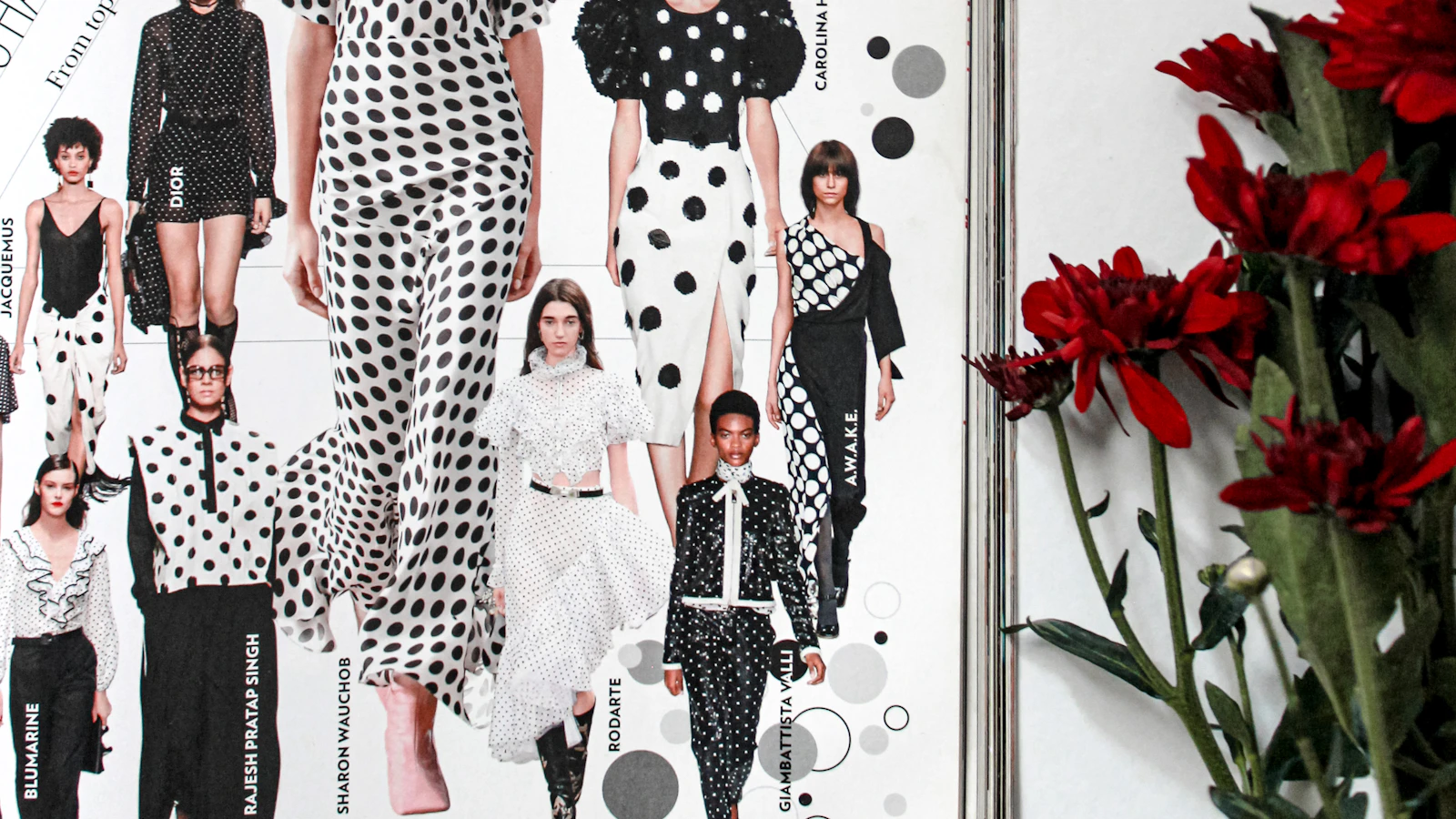
A mid 2026 independent trend check by fashion intelligence firm Apshan confirmed several Heuritech forecasts. Big dots were projected to grow 55% in visibility in Europe and 33% in the US for spring summer 2026, with big dot dresses up 80% among European women. Butter yellow and brooches also validated. However, the analysis noted a 90s minimalism surge driven by a television costume department that no major forecasting platform, including Heuritech, had predicted in January, illustrating the limits of social and runway data when cultural moments move faster.
Industry wide, AI driven trend forecasting accuracy improved markedly between 2024 and 2026. A Style3D report from early 2026 stated that AI platforms achieved over 90% directional accuracy, reducing prediction timelines from 18 months to three months for some applications. However, those figures aggregate short and long horizon forecasts and are not independently verified.
What are the risks, limits and open questions?
Despite strong case studies and claimed accuracy, Heuritech's approach has structural and methodological limits that buyers and merchandisers should understand.
Self reported accuracy with no independent audit. The 90% to 92% accuracy claim comes from Heuritech itself. No third party audit or peer reviewed study has validated the figure. Competitor platforms claim similar or higher accuracy, also unaudited. An AI trend forecasting analysis from January 2026 noted that most vendors, including Trendalytics and others, do not publish verifiable accuracy numbers. Until independent validation exists, the claim should be treated as a vendor reported performance indicator, not verified fact.
Cultural context is difficult for AI to parse. A style emerging from a specific subculture, such as the Nigerian alte scene or post Soviet fashion in Tbilisi, carries cultural meaning that AI models trained primarily on Western data sets may misread or flatten, according to a 2026 industry analysis. Heuritech addresses this partially through geographic and consumer segmentation, but the algorithms detect visual patterns, not the cultural resonance or symbolic value that often drives long term brand relevance. Human trend analysts remain essential to contextualise signals.
Data dependency and platform risk. Heuritech's forecasts depend entirely on continued access to Instagram, TikTok and Xiaohongshu. Platform policy changes, API restrictions or geopolitical interventions (for example, TikTok bans or data localisation rules) could disrupt data collection. The addition of TikTok as a source in October 2026 broadened coverage, but reliance on three commercial platforms creates vendor risk that proprietary internal sales data does not carry.
Panel representativeness and bias. Forecast quality hinges on whether the consumer panels accurately represent target markets. If edgy, trendy and mainstream segments are mis calibrated, or if certain demographics, income levels or regions are underweighted, predictions will skew. Geographic and socioeconomic bias in training data produces biased forecasts. Heuritech has not published detailed panel composition or sampling methodology, so buyers cannot independently assess representativeness.
Not real time, optimised for 6 to 24 month horizons. Heuritech refreshes data weekly and forecasts medium to long term adoption. It is not designed for real time trend validation or micro trend spotting that peaks and declines within weeks. Platforms like Trendalytics, which aggregate search and TikTok signals, are better suited to validate whether a named trend is accelerating or fading right now. Heuritech's strength lies in advance visibility for collection planning, not reactive buying.
AI does not replace creative direction. Even with 90% accuracy, forecasts are probabilistic, not deterministic. A brand's identity, heritage and aesthetic codes must guide which trends to adopt, adapt or ignore. Heuritech's own experts acknowledge that human judgment remains essential; the AI identifies demand signals, but designers and merchandisers interpret and apply them within brand context. Over reliance on data can flatten differentiation and lead to homogenised assortments across competitors using the same tools.
How does Heuritech compare to other forecasting approaches?
Fashion brands have four main options for trend intelligence: traditional agencies, AI visual platforms, search and social validators, and internal historical analysis. Each suits different decisions.
Traditional agencies like WGSN and Stylus offer long range macro forecasting based on runway analysis, cultural research and editorial curation. WGSN claims 94% accuracy for its TrendCurve AI model and serves over 6,500 brands globally at approximately 25,000 US dollars per year for full access. These platforms excel at big picture direction (for example, what colour families and silhouette narratives will define a season) but capture only 20% to 30% of emerging micro trends from street style or niche social platforms, according to industry benchmarks. Manual analysis takes four to six weeks per report.
AI visual platforms like Heuritech, Edited and Stylumia quantify real world consumer adoption by analysing millions of images. Heuritech focuses on social media; Edited emphasises retail assortment and pricing data from e commerce sites. These tools answer different questions: Heuritech tells you which print is growing among your target segment in a specific geography, Edited tells you which competitors are stocking that print and at what price. Both provide bottom up validation of demand rather than top down editorial prediction.
Trend validators like Trendalytics score whether a named trend you already believe in is accelerating or fading, using search, social and marketplace signals. Trendalytics aggregates over 100,000 sources and is best for near term validation (three to six months). Pinterest Predicts, a free annual report, has held around 80% accuracy over several years by tracking what consumers save and plan, a leading indicator of intent.
Internal sales and inventory analysis remains foundational. Brands with two or more full seasons of clean, structured data can train machine learning models on their own SKU performance. These achieve 72% to 78% accuracy at six month horizons, compared to 55% to 65% for human spreadsheet forecasting, according to a 2025 Edited Fashion AI Report cited in trade analysis. However, internal models only forecast what has sold before; they cannot detect emerging attributes or shifts in consumer preference until those appear in sales data, which lags social signals by six to 12 months.
Leading merchandising teams layer methods: macro direction from WGSN or in house creative, quantified demand from Heuritech or Stylumia, near term validation from Trendalytics, and SKU level forecasting from internal models. The optimal mix depends on product category, brand positioning and planning cycle.
- 2013Founded by Tony Pinville and Charles Ollion, PhDs in machine learning from Sorbonne University
- 2017Won inaugural LVMH Innovation Award at VivaTech for AI trend forecasting technology
- 2020Raised 4 million euros Series A led by Elaia and Serena to expand from fashion into beauty
- January 2024Extended forecast horizon from 12 months to 24 months with updated algorithm ensemble
- November 2024Acquired by Luxurynsight Group, a data intelligence SaaS provider for luxury and fashion
- October 2026Added TikTok as live data source alongside Instagram and Xiaohongshu
Source: Heuritech, WWD, Yahoo Finance, Forbes, 2013 to 2026
Frequently asked questions
What should fashion companies do now?
For merchandising, buying and planning teams evaluating whether to license Heuritech or similar AI forecasting tools, these steps reduce risk and clarify fit.
- Audit last season's overstock and markdown by attribute. Calculate how much inventory you held in declining colours, prints or silhouettes that required end of season discounting. If markdown rates exceed 25% in specific attribute categories, external demand forecasting is worth piloting.
- Request a trial focused on one category for one market. Ask Heuritech (or competitors) to forecast a single product category, for example dresses or sneakers, for your primary geography over the next 12 months. Compare those forecasts to your internal buy plan. Track actual sell through when the season closes. Use that data to calibrate trust and accuracy before expanding.
- Define which decisions need 24 month visibility versus 6 month. Fabric and colour commitments for woven goods often lock 18 to 24 months ahead, making long horizon forecasts valuable. Fast fashion or reactive replenishment works on 6 to 12 week cycles, where Heuritech's weekly refresh is too slow. Match the tool's horizon to your longest lead time decision.
- Clarify whether your target segment is well represented in social panels. If your customer is over 50, or shops primarily offline, or lives in a market with low Instagram penetration, social image forecasts will miss signals. Ask the vendor how they weight your demographic and geographic mix. Request panel composition transparency.
- Integrate forecasts into cross functional workflow, not as a replacement. Share Heuritech dashboards with design, merchandising and planning teams simultaneously. Use trend radar data to validate creative concepts and defend buy quantities in range review meetings. The most effective adopters treat AI as one input alongside showroom feedback, sales history and brand codes, not as the single source of truth.
- Measure incremental sell through and markdown improvement, not vanity metrics. Track full price sell through rate and end of season markdown percentage for SKUs informed by AI forecasts versus those that were not. If you see 3% to 5% sell through lift or 2% to 4% markdown reduction after two seasons, the ROI justifies continued investment. Ignore supplier claims about data volume or algorithm sophistication; outcomes matter.
- Prepare for platform and data access risk. Build contract clauses that allow you to exit or renegotiate if a key social platform (Instagram, TikTok, Xiaohongshu) restricts API access or changes data policies. Diversify trend intelligence sources so no single vendor creates dependency.
Frequently asked questions
Has any third party verified Heuritech's 90% accuracy claim?
No. The 90% to 92% accuracy figure is self reported by Heuritech based on internal backtesting of historical forecasts against actual trend visibility. No independent audit, peer reviewed study or third party validation has been published as of November 2026. Industry analysts note that most AI forecasting vendors, including WGSN, Stylumia and Trendalytics, also report accuracy claims without external verification.
Which social platforms does Heuritech analyse and how many images per day?
Heuritech analyses Instagram (over 3 billion users), Xiaohongshu or Little Red Book (over 300 million monthly users in China), and TikTok (close to 2 billion monthly users), which was added as a live data source in October 2026. The firm processes approximately 3 million images daily using proprietary computer vision that detects over 2,000 fashion attributes including colours, prints, fabrics, shapes and product categories.
What is the subscription cost and who are typical clients?
Pricing starts around 12,000 euros per year for tiered platform access, with custom enterprise packages available for larger organisations. Confirmed clients include Louis Vuitton, Dior, Prada, Moncler, Adidas, New Balance, Nike, Decathlon, VF Corporation, Kontoor Brands, Chalhoub Group and Rabanne. The firm serves luxury houses, sportswear brands, fast fashion retailers and multi brand distributors globally.
Sources
- Heuritech: Fashion Forecasting: A Comprehensive Guide For 2026
- Heuritech: About us, company methodology and team
- Heuritech: How Wolverine Worldwide achieved 100% sell-through case study
- Heuritech: Case study on 9% sales growth in skirts category
- Première Vision: Heuritech's AI Trend Forecasting Featured in Visions Series
- Yahoo Finance: Luxurynsight Acquires AI Trend Forecaster Heuritech
- WWD: Heuritech Series A Funding announcement
- Footwear Plus: Wolverine Worldwide Embracing AI
- McKinsey via DressX: State of Fashion 2025 on AI forecasting impact
- Forbes: Venture Capital Is Discovering Fashion Tech
- Heuritech: TikTok Fashion Trend Data Now LIVE announcement
- Apshan: Fashion Trends 2026 mid-year data check