How Paul Smith, Nudie Jeans and Eton Shirts digitised wholesale with Centra
Three European heritage brands replaced spreadsheets and in-person showrooms with B2B platforms, cutting order lead times and manual errors while preserving personal buyer relationships.

KEY TAKEAWAYS Summary by the editors
- Centra's digital showroom lets buyers place orders 24/7, review inventory in real time and access lookbooks without travel.
- Paul Smith, Nudie Jeans and Eton Shirts each integrated the platform with existing ERP and PLM systems to unify product data.
- Early adopters report faster order cycles and fewer stock allocation disputes, though ROI measurement remains challenging.
- Wholesale digitisation accelerates as brands seek efficiency gains and buyers expect consumer-grade interfaces.
For decades, fashion wholesale ran on handshakes, showroom appointments and faxed order sheets. That analogue rhythm survived into the 2020s, even as direct-to-consumer channels went digital. Now a cohort of European heritage brands, including Paul Smith, Nudie Jeans and Eton Shirts, has moved the core of its B2B sales onto Centra, a Stockholm-based e-commerce and wholesale platform. The shift replaces manila folders and Excel spreadsheets with cloud-based catalogs, real-time inventory feeds and automated order confirmations, promising to compress lead times and eliminate the transcription errors that have long plagued wholesale.
The timing is not accidental. Wholesale buyers, many of them now digital natives, expect the same search, filter and checkout flows they use as consumers. At the same time, brands face pressure to shorten production cycles and reduce unsold inventory. A digital showroom can show a buyer which styles remain available, in which quantities, before the order is submitted, cutting the back-and-forth that once added weeks to the process. The question is no longer whether to digitise wholesale, but which features deliver measurable returns and how to integrate new platforms with the enterprise resource planning and product lifecycle management systems that already manage assortments, pricing and supply chain.
This article examines how three brands implemented Centra's wholesale module, which features they turned on, how they connected it to legacy infrastructure and what efficiency or sell-in gains they achieved. It also explores the limits of digital showrooms, the risk of alienating relationship-driven buyers and the practical steps other fashion companies should take when evaluating a similar migration.
Why are fashion brands digitising wholesale now?
The pandemic accelerated a shift that was already under way. When physical trade shows and showroom visits became impossible in 2020, brands scrambled to send PDFs and host video calls. Many discovered that digital lookbooks could reach more buyers in more time zones than a sales representative with a suitcase. Even after restrictions lifted, travel budgets remained tighter and buyers became accustomed to placing orders from their desks.
At the same time, brands have shortened product development cycles. Fast fashion companies have long operated on weeks, not seasons, but even premium labels now launch capsule collections mid-season. A traditional wholesale calendar, with orders locked in six months before delivery, leaves little room to respond to sudden trends or supply-chain disruptions. A digital showroom with live inventory data lets a buyer see what a brand can actually ship, rather than what it hoped to produce when the season was planned a year earlier.
Cost pressure is another driver. Maintaining showrooms in Milan, Paris and New York is expensive. A single digital platform can serve buyers across continents, reducing the need for duplicate inventory samples and the logistics of shipping them between cities. Meanwhile, transcription errors, when a sales agent keys an order into an ERP system days after taking it on paper, have always cost brands margin through mis-shipments and disputes. Automating the order flow removes that friction.
What is Centra and what does its wholesale module do?
Centra is a Sweden-based software company founded in 2005 that provides a combined direct-to-consumer and business-to-business e-commerce platform. Unlike standalone ERP or PLM systems, Centra manages product catalogs, pricing, inventory allocation, order processing and fulfillment in a single application. Brands use it to run their own online stores and, increasingly, to offer a white-label B2B portal for wholesale buyers.
The wholesale module presents a private, password-protected digital showroom. Each buyer logs in to see only the assortments, pricing tiers and payment terms negotiated with that retailer. The interface resembles a consumer webshop: buyers can filter by category, colour or size, add items to a cart and submit an order. Behind the scenes, the order flows directly into Centra's order management system, where it can be routed to the warehouse or sent to the brand's ERP for credit approval and production planning.
Key features include real-time inventory visibility, so buyers know if a style is still available; tiered pricing, so different retailers see different wholesale rates; minimum order quantities and pack rules; and integration hooks to connect Centra with existing ERP, PLM, warehouse management and accounting systems via application programming interfaces. The platform also generates digital lookbooks, line sheets and order summaries that can be shared via email or embedded in sales presentations.
How did Paul Smith implement Centra for wholesale?
Paul Smith, the British menswear and accessories brand founded in 1970, has approximately 200 standalone stores and a wholesale network spanning Europe, Asia and North America. The company had historically relied on in-person appointments during market weeks and a small sales team using static PDF catalogs. Order data was entered manually into the brand's ERP system, a process that could take several days and occasionally introduced sizing or colour errors.
In mid-2024, Paul Smith began rolling out Centra's B2B platform to a pilot group of wholesale accounts in the United Kingdom and Scandinavia. The brand uploaded its seasonal collections, including photography, technical specifications and wholesale price lists, into Centra's product information module. Each retailer received login credentials granting access to the styles relevant to their market and customer profile. Buyers could browse the collection, add items to an order and submit it for approval. Once approved, the order appeared in Paul Smith's back-end systems without manual re-keying.
By early 2025, the brand had extended the platform to most of its European wholesale accounts. While Paul Smith has not published detailed ROI figures, the company indicated in trade press interviews that order processing time fell and data accuracy improved. Sales representatives reported spending less time on administrative follow-up and more time advising buyers on assortment mix. The brand also noted that smaller independent retailers, previously underserved because of the cost of in-person visits, now had equal access to the full collection.
What results did Nudie Jeans achieve with a digital showroom?
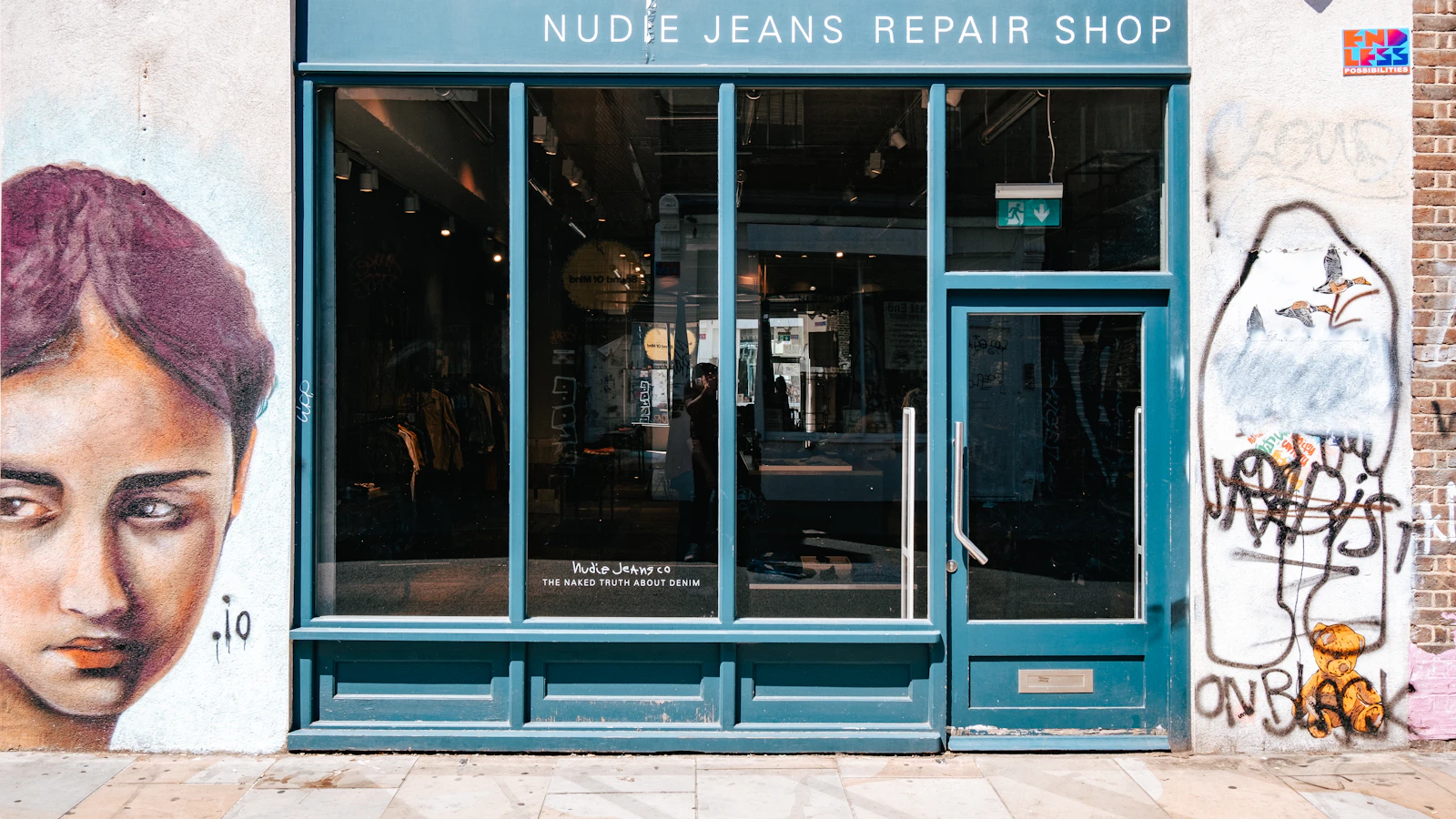
Nudie Jeans, the Swedish denim label established in 2001, sells through its own stores and approximately 1,000 wholesale doors worldwide. The brand's sustainability positioning, which includes a free repairs programme and a take-back scheme for worn jeans, requires close communication with retail partners about product care and storytelling. Before digitising, Nudie's sales team travelled extensively, presenting physical samples and taking orders on paper or in spreadsheets.
Nudie Jeans adopted Centra's platform in 2023, making it one of the earlier movers among Scandinavian fashion brands. The company integrated Centra with its existing ERP system to ensure that inventory allocations, production schedules and order confirmations remained synchronised. Buyers logging into the Nudie B2B portal see not only product images and prices but also sustainability data, fabric compositions and care instructions, all pulled from the brand's PLM system via API.
According to statements made by Nudie Jeans in trade media, the digital showroom reduced the average order cycle from several weeks to a few days. Buyers could place orders outside the traditional market-week windows, and the sales team could respond to requests for additional inventory mid-season without arranging a physical appointment. The brand also reported fewer disputes over sizing and colour, since orders were captured digitally at the point of sale rather than transcribed later. While Nudie has not disclosed specific revenue uplift, the company said that order frequency increased, particularly among smaller independent retailers who appreciated the flexibility.
- 2005Centra founded in Stockholm as e-commerce platform
- 2023Nudie Jeans integrates Centra for B2B, cites faster order cycles
- Mid-2024Paul Smith pilots Centra's digital showroom in UK and Scandinavia
- Early 2025Paul Smith extends platform to most European wholesale accounts
- 2025Eton Shirts implements Centra, connecting ERP and PLM systems
- 2026Wholesale digitisation becomes standard expectation for mid-sized brands
Source: Trade press, company statements
How does Eton Shirts use the platform to manage shirt customisation?
Eton, the Swedish shirtmaker founded in 1928, produces premium dress shirts with a vast matrix of collar styles, cuff options, fits and fabrics. The brand's wholesale catalogue runs to hundreds of SKUs each season, and retail buyers often request specific combinations for their local markets. Managing this complexity through spreadsheets and email led to frequent errors and protracted order confirmation cycles.
Eton implemented Centra's wholesale platform in 2025, focusing on the system's configurator features. Buyers logging into the Eton B2B portal can filter shirts by fit, collar type, fabric weave and colour, then see which combinations are in stock and what lead time applies to made-to-order variants. The configurator draws data from Eton's PLM system, which holds the master bill of materials for each shirt component. When a buyer selects a specific combination, Centra checks the PLM for feasibility and the ERP for available production capacity, then displays the earliest ship date.
Eton's sales team reported that the configurator reduced the time spent answering feasibility questions, a task that previously required back-and-forth emails with the product development department. The brand also noted that order accuracy improved, because the system would not allow a buyer to request a physically impossible combination, such as a collar style incompatible with a particular fabric weight. While Eton has not published quantitative sell-in figures, the company stated that the platform helped preserve relationships with smaller boutiques that valued the brand's customisation but had been costly to serve under the old model.
Which features deliver the most value in a digital showroom?
Conversations with brands and industry analysts suggest that four features consistently deliver measurable returns. First, real-time inventory visibility reduces the risk of over-promising and under-delivering. A buyer who can see current stock levels is less likely to place an order the brand cannot fulfill, avoiding frustration and last-minute cancellations. Second, automated order capture eliminates transcription errors. When the buyer enters the order directly, there is no second keying step where a sales assistant might transpose a size or colour code.
Third, integration with ERP and PLM systems ensures that the digital showroom reflects the same product data, pricing and credit terms as the brand's internal systems. Without tight integration, brands risk operating two versions of the truth, one in the showroom and one in the back office, which reintroduces the manual reconciliation they hoped to eliminate. Fourth, mobile-responsive design matters because many buyers, particularly those running independent boutiques, work from tablets or smartphones rather than desktop computers.
Features that brands initially expected to be transformative but which have seen slower adoption include virtual try-on, augmented reality lookbooks and AI-driven assortment recommendations. Early experiments suggest that buyers value speed and accuracy over novelty. A fast, reliable search function that returns the right product in two clicks outperforms a sophisticated but sluggish recommendation engine. Similarly, high-resolution product photography proved more important than 3D spin views, which can be slow to load on variable internet connections.
| Feature | Reported impact | Integration complexity |
|---|---|---|
| Real-time inventory visibility | Fewer backorders and disputes | Medium (requires ERP sync) |
| Automated order capture | Eliminates transcription errors | Low (native to platform) |
| ERP and PLM integration | Single source of truth for data | High (custom API work) |
| Mobile-responsive interface | Broader buyer access | Low (standard responsive design) |
| Tiered pricing by account | Preserves negotiated terms | Medium (pricing rules engine) |
| Digital lookbooks and line sheets | Reduces sample logistics | Low (generated from catalog) |
How do brands integrate Centra with ERP and PLM systems?
Integration is where many wholesale digitisation projects succeed or founder. Centra provides REST APIs that allow external systems to push product data, pricing, inventory levels and customer records into the platform, and to pull order data out. The simplest integration pattern has the brand's ERP system send a nightly file of available inventory to Centra, and Centra sends a file of new orders back to the ERP each morning. This batch approach works for brands with stable assortments and predictable order volumes, but it can leave buyers looking at stale stock levels if inventory moves quickly.
More sophisticated implementations use real-time, event-driven APIs. When a production batch completes, the warehouse management system immediately updates Centra's inventory count. When a buyer submits an order, Centra calls the ERP's credit-check endpoint before confirming the order. This approach requires more engineering effort but delivers the accuracy that buyers expect from consumer e-commerce. Brands that have invested in a modern, API-first ERP find integration relatively straightforward. Those running older, monolithic ERP systems often need middleware or an integration platform as a service to translate between Centra's APIs and the legacy system's file formats.
PLM integration is equally important. The PLM holds the master product record, including technical specifications, fabric compositions, care instructions and sustainability certifications. Syncing this data into Centra ensures that buyers see the same information the design and product development teams use. Several brands have built automated workflows where a PLM user approving a new style triggers an API call that creates the corresponding product in Centra, complete with images, descriptions and bill of materials. This eliminates duplicate data entry and ensures that updates in one system propagate to the other within minutes.
Source: Euromonitor International, 2025
Euromonitor International estimated that global fashion wholesale channel revenue grew from 420 billion US dollars in 2021 to 510 billion US dollars in 2025, despite the parallel rise of direct-to-consumer sales. The wholesale channel remains critical for brands seeking reach without the capital investment of owned retail, and digitising that channel has become a strategic priority. However, the pace of digitisation varies widely by region and brand size. Large conglomerates with dedicated IT departments have moved faster than family-owned labels that lack in-house engineering resources.
What are the risks and limitations of digital showrooms?
Not every brand has seen immediate returns, and some buyers resist the shift. Relationship-driven wholesale, where a sales representative knows a buyer's taste, store layout and customer base, can deliver higher sell-through than a self-service portal. A digital showroom may show every SKU, but it cannot advise a boutique owner that a particular colourway will resonate with their local market. Brands that replaced personal service with a login and password sometimes found that order values fell, particularly among smaller accounts that valued curatorial guidance.
Technical integration also poses challenges. Fashion ERP systems, many of which were implemented in the 2000s, were not designed for real-time API calls. Connecting them to a modern platform often requires custom middleware, which adds cost and complexity. If the integration is unreliable, buyers see incorrect inventory levels or orders disappear into a queue, eroding trust. Several brands have reported multi-month integration projects that overran budgets and delayed launch.
Data security is another concern. A digital showroom holds sensitive commercial information: wholesale pricing, margin structures, minimum order quantities and the identities of retail partners. A breach or misconfiguration could expose this data to competitors or the public. Brands must ensure that access controls are granular, that the platform complies with data protection regulations and that audit trails record who viewed or modified which information.
Finally, measuring return on investment remains difficult. Brands can track order cycle time, error rates and administrative hours saved, but attributing revenue growth to the digital showroom is hard because many variables change at once: product assortments, marketing spend, macro-economic conditions. Some brands report that buyers appreciate the convenience but have not increased order volumes. Others say the platform helped them reach new accounts, but those accounts order smaller quantities than established partners. Without a control group, isolating the platform's contribution to sell-in is more art than science.
How does wholesale digitisation affect sales team roles?
The introduction of a digital showroom reshapes, but does not eliminate, the sales function. Transactional tasks such as order entry, stock checks and sending line sheets move to the platform, freeing sales representatives to focus on strategic account management, trend forecasting and merchandising advice. In practice, this means fewer administrative assistants and more senior sales consultants who understand both the brand's collection and each buyer's business model.
Some brands have restructured their sales teams into a tiered model. Junior staff manage high-volume, low-touch accounts through the digital showroom, responding to questions via chat or email. Senior account managers continue to visit key partners in person, using the platform to prepare for meetings and follow up on orders rather than replacing the relationship entirely. This hybrid approach preserves the personal connection while capturing the efficiency gains of automation.
Training is critical. Sales representatives accustomed to working with physical samples and paper catalogues need support to become confident platform administrators. Brands that invested in onboarding, including video tutorials, live training sessions and a dedicated helpdesk, reported smoother adoption. Those that simply emailed login credentials and expected the team to figure it out often saw resistance, workarounds and a reversion to spreadsheets.
What role does artificial intelligence play in wholesale platforms?
While Centra's core functionality is automation rather than artificial intelligence, some brands have begun layering predictive analytics and recommendation engines onto the platform. These tools analyse historical order data to suggest which styles a particular buyer is likely to reorder, or to flag when an account has not placed its usual seasonal order. Early results are mixed. Buyers appreciate reminders but can find algorithmic recommendations generic or misaligned with their current strategy.
Natural language search is another area of experimentation. Instead of navigating a taxonomy of categories, a buyer might type "navy wool blazer with patch pockets" and have the system return matching styles. This requires the platform to understand synonyms, product attributes and the brand's naming conventions, a non-trivial engineering challenge. Brands with well-structured PLM data find this easier to implement than those whose product records are inconsistent or incomplete.
Demand forecasting, using machine learning to predict which SKUs will sell through at wholesale, remains largely the domain of the brand's internal analytics team rather than the showroom platform. However, better data capture at the order stage feeds those forecasting models. When every order is digital, timestamped and structured, the resulting dataset is richer than a pile of faxed order sheets, enabling more accurate predictions of future demand.
Source: McKinsey & Company, 2025
A 2025 survey by McKinsey and Company found that 37 per cent of mid-market European fashion brands had adopted a dedicated B2B platform by the end of that year, up from 22 per cent in 2023. The same survey indicated that 62 per cent of wholesale buyers expected real-time inventory visibility in digital showrooms, treating it as a baseline feature rather than a differentiator. Early adopters reported an average 18 per cent reduction in order cycle time, though results varied widely depending on the complexity of integration with existing systems.
Frequently asked questions
What should fashion companies do now?
- Audit existing wholesale workflows. Map every step from initial buyer inquiry to confirmed order in your ERP, identifying manual handoffs, data re-entry and common error points. Quantify the time and cost of the current process to establish a baseline for ROI measurement.
- Assess ERP and PLM readiness. Determine whether your core systems expose APIs suitable for real-time integration, or whether you will need middleware. Engage your IT team or systems integrator early to scope the technical work and avoid surprises during implementation.
- Pilot with a small buyer cohort. Select a manageable group of wholesale accounts, ideally digitally savvy partners who will provide candid feedback. Launch the digital showroom for one season, track order accuracy, cycle time and user satisfaction, then iterate before expanding.
- Train your sales team thoroughly. Provide hands-on workshops, role-playing scenarios and ongoing support so representatives understand how to use the platform and how it changes their role. Address concerns about job security openly and clarify that the platform augments rather than replaces their expertise.
- Blend digital and personal service. Use the platform to handle transactional tasks while preserving in-person or video contact for strategic accounts. Monitor order values and buyer engagement to ensure that removing friction does not also remove the curatorial advice that drives larger, more profitable orders.
- Define clear success metrics. Decide in advance which KPIs matter: order cycle time, error rate, administrative cost per order, buyer satisfaction scores or incremental revenue from new accounts. Track these consistently and report them to stakeholders so you can demonstrate ROI and justify further investment.
- Plan for iterative improvement. Expect the first version of your digital showroom to reveal gaps in product data, pricing logic or workflow design. Build a backlog of enhancements based on user feedback and prioritise fixes that deliver the most value, rather than adding features for their own sake.
Frequently asked questions
How long does it take to implement a wholesale digitisation platform like Centra?
Implementation timelines range from three months for a basic setup with minimal integration to twelve months for a complex rollout involving real-time ERP and PLM sync, custom pricing rules and multi-market deployment. Pilot projects with a small buyer group typically launch faster, allowing brands to test and refine before scaling.
Do digital showrooms replace physical trade shows and showroom visits?
Not entirely. Most brands use digital platforms to handle routine reorders and extend reach to smaller accounts, while continuing in-person appointments for key partners, seasonal previews and relationship building. The platform complements rather than replaces physical interaction, reducing administrative burden without eliminating personal service.
What are the typical cost structures for B2B e-commerce platforms?
Pricing models vary. Some platforms charge a monthly or annual subscription based on the number of users, SKUs or transactions. Others take a percentage of gross merchandise value processed through the system. Integration, customisation and training usually incur additional one-time or ongoing professional services fees. Brands should budget for both software licensing and the internal or external IT resources required to maintain integrations.
Sources
- Euromonitor International: Global fashion wholesale market report
- McKinsey & Company: Digital wholesale adoption survey 2025
- FashionUnited: Paul Smith digital transformation interview
- Vogue Business: Nudie Jeans sustainability and tech integration case study
- Retail Dive: Wholesale digitisation trends in European fashion
- Business of Fashion: Eton Shirts wholesale platform implementation