How does Amazon Fashion use AI for size recommendations and fit insights?
Amazon combines deep-learning size advice, AI review summaries and a fit insights tool for brands, with a shopping assistant now called Alexa for Shopping. What it has published and what brands should do.

KEY TAKEAWAYS Summary by the editors
- Amazon Fashion uses a deep learning model that recommends a best-fitting size on product pages, drawing on reviews, size charts, product data, brand sizing relationships and each customer's fit preferences.
- Amazon said in January 2024 that the model generates billions of size recommendations a month across 19 locales and that customers are more likely to buy and keep an item when a size is recommended.
- Amazon uses large language models to summarise fit feedback from reviews and to clean and standardise size chart data, including correcting missing or wrong measurements.
- Amazon's Fit Insights Tool gives brands aggregated feedback on fit, style and fabric, linked to returns and size chart analysis, to improve sizing information and future designs.
- Amazon's Rufus shopping assistant, which Amazon says helped over 300 million customers in 2025, was renamed Alexa for Shopping on 13 May 2026.
Amazon Fashion uses AI mainly to answer one question: which size will fit? A deep learning model recommends a size on each product page, large language models summarise fit comments from reviews and clean up size charts, and a Fit Insights Tool feeds aggregated fit and return reasons back to brands. Around this sits Amazon's general shopping assistant, launched as Rufus in 2024 and renamed Alexa for Shopping in May 2026.
How do Amazon's AI size recommendations work?
In January 2024 Apoorv Chaudhri, director of computer vision and machine learning at Amazon Fashion, described the system on Amazon's newsroom. A deep learning algorithm recommends a best-fitting size in real time on each product detail page. Its inputs include customer reviews, size charts, product images and descriptions, sizing relationships between brands, and the customer's own fit preferences.
The model groups customers with similar fit preferences anonymously and learns from millions of product details and billions of anonymised purchases. It also adapts over time: Amazon's example is a child's trouser size bought this month signalling a larger size in coming months. Amazon reported that the system generates billions of size recommendations each month across 19 locales, and stated: 'customers are more likely to purchase and keep an item when a size is recommended for them.' Amazon did not publish the size of that effect.
What role do large language models play in fit?
Amazon applies LLMs to the unstructured information that surrounds size, where classic recommendation models struggle.
| Feature | Technique | Audience | Purpose |
|---|---|---|---|
| Size recommendation | Deep learning on purchases, reviews, size charts, brand sizing | Shoppers | Suggest the best-fitting size |
| Fit review highlights | LLM summarisation of reviews from buyers of the same size | Shoppers | Explain size accuracy, fit by body area, fabric stretch |
| Size chart clean-up | LLM extraction and standardisation | Shoppers | Remove duplicates, correct missing or wrong measurements |
| Fit Insights Tool | LLM aggregation of feedback plus ML size chart defect detection | Brands and selling partners | Explain returns and improve sizing and design |
The size chart work is easy to overlook but important. Amazon described using LLMs to extract size chart data from multiple sources, convert measurements into standardised sizes, remove duplicates and auto-correct missing or incorrect measurements. It was also testing a layout that shows only the measurements for the customer's recommended size instead of a full table.
What is the Fit Insights Tool for brands?
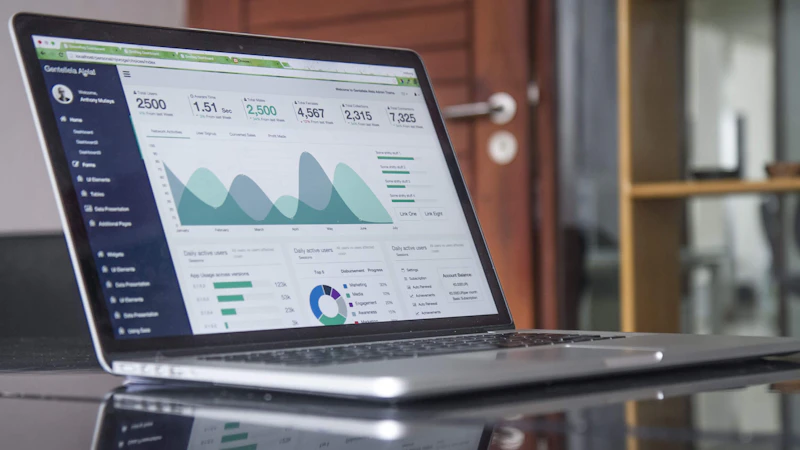
The Fit Insights Tool is the most relevant part for brand teams. According to Amazon, an LLM aggregates customer feedback on fit, style and fabric, links it to returns and size chart analysis, and machine learning flags defects in size charts. Brands can use the output to reduce fit-related returns, improve how they communicate sizing and inform future designs, as Chain Store Age and PPC Land also reported.
- Return reasons in context: why an item comes back, not only how often.
- Size chart quality checks: automatic flags where a chart appears inconsistent.
- Design input: recurring comments on fabric or cut that product teams can act on.
- Communication fixes: guidance on whether to tell shoppers to size up or down.
For brands, this is sell-out feedback at a level of detail that wholesale reporting rarely provides. The limitation is scope: it covers Amazon's channel only, and brands do not control the underlying models.
How does Alexa for Shopping (formerly Rufus) fit in?
Amazon launched Rufus in beta on 1 February 2024 as a generative AI conversational shopping assistant, later rolling it out to all US customers. On 13 May 2026 Amazon renamed it Alexa for Shopping, combining Rufus's product knowledge and shopping history with the personal context of Alexa+. Amazon says Rufus helped over 300 million customers research, compare and buy products in 2025.
Alexa for Shopping adds AI overviews in search and on product pages, up to a year of price history, price alerts, scheduled purchases and an agentic 'Buy for Me' feature for eligible products from other sites. Amazon's announcement did not describe fashion-specific features such as try-on, so its effect on apparel fit and returns is not documented.
What are the limits and risks?
The approach depends on scale. Amazon's model learns from billions of purchases and cross-brand sizing relationships, which few retailers or brands can replicate on their own data. Summaries of reviews can also amplify noise: if early reviewers are unrepresentative, the highlight will be too. Finally, as assistants such as Alexa for Shopping take over more discovery, brands have less direct visibility into how their products are described.
What data does Amazon's fit system depend on?
Amazon's fit features combine four types of data: purchase and return history, customer-declared fit preferences, unstructured reviews and brand size charts. Each covers a gap in the others. Purchases show what people kept, reviews explain why something did or did not fit, size charts describe intended measurements, and cross-brand relationships let the model translate a customer's size in one brand into another.
Two design choices stand out. First, Amazon groups customers with similar fit preferences anonymously rather than asking every shopper for body measurements. Second, it treats the brand's size chart as data to be cleaned and checked, not as a fixed truth. For brands, that means inconsistent or incomplete charts are likely to be flagged rather than silently trusted, and that review language about stretch, length or cut directly shapes the advice other shoppers see.
What should fashion brands selling on Amazon do?
- Fix size charts first: complete, consistent measurements make every downstream recommendation better.
- Use the Fit Insights Tool output as structured feedback for product development, not only for listing copy.
- Keep product attributes (fabric, stretch, cut) accurate, because LLM summaries and assistants draw on them.
- Compare fit-related return reasons on Amazon with other channels to separate product problems from channel problems.
Frequently asked questions
How does Amazon decide which size to recommend?
Amazon uses a deep learning model that weighs customer reviews, size charts, product details, sizing relationships between brands and the shopper's own fit preferences and purchase history. It groups customers with similar fit preferences anonymously and updates as preferences change.
What is the Amazon Fit Insights Tool?
It is a tool for brands and selling partners that uses a large language model to aggregate customer feedback on fit, style and fabric, linked to returns and size chart analysis. Machine learning also flags size chart defects so brands can correct them.
What happened to Amazon Rufus?
Amazon launched Rufus in beta on 1 February 2024 and renamed it Alexa for Shopping on 13 May 2026. Amazon says Rufus helped over 300 million customers research, compare and buy products in 2025.
Do Amazon size recommendations reduce returns?
Amazon says customers are more likely to purchase and keep an item when a size is recommended, but it has not published a figure for the reduction in returns. Brands can use the Fit Insights Tool to investigate fit-related returns on their own products.
One edition every weekday morning. Read in five minutes. Free for industry professionals.
SOURCES
- About Amazon: How Amazon Fashion is using AI to help you find the perfect fit
- About Amazon: Amazon announces Rufus, a new generative AI-powered conversational shopping experience
- About Amazon: Meet Alexa for Shopping, your personalized, agentic AI assistant on Amazon
- Chain Store Age: Amazon enhances fashion shopping with AI
- PPC Land: Amazon Fashion leverages AI to Enhance Customer Fit and Size Experience