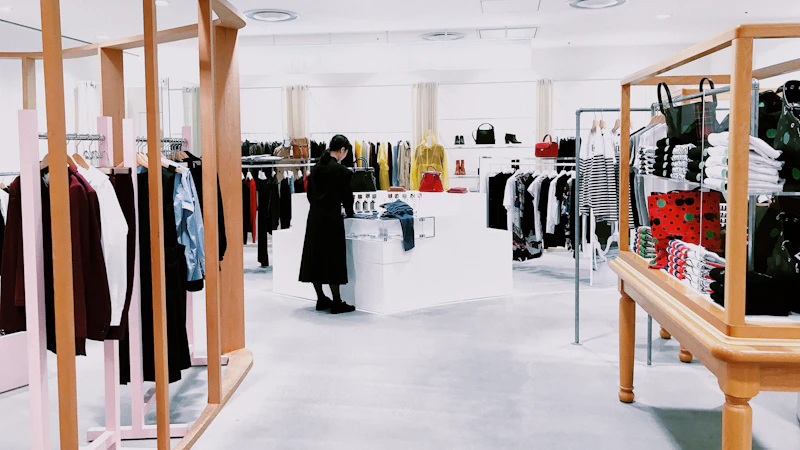
What is sales per square metre in fashion retail?
A retail productivity measure that divides a store's sales by its selling space, showing how efficiently floor space generates revenue.
In short
Sales per square metre is the revenue a store or department generates divided by its selling area over a period, usually a year. Fashion retailers and department stores use it to compare the productivity of stores, categories and brand spaces of different sizes.
How does it work in practice?
The retailer measures the net selling area, the space customers can actually shop, excluding stockrooms, fitting rooms and back offices in most definitions. Annual or seasonal sales are divided by that figure. A department store might calculate it for each brand area, a specialty chain for each store and a category manager for each fixture or wall.
The result feeds space planning. Categories that produce strong sales and margin per square metre may earn more space next season, while weak areas are tightened, relocated or replaced. In wholesale relationships, department stores often use the figure when negotiating shop-in-shop or concession space with brands.
Why does it matter for fashion businesses?
Rent and store running costs are largely driven by space. Measuring sales against area shows whether that space is earning its keep. It also makes stores of very different sizes comparable, which is important when deciding on openings, downsizing or refits. For brands, a strong figure in a partner's store is a persuasive argument for more space or a better location within the store.
How is AI changing it?
Space optimisation tools combine sales, margin, footfall heatmaps and product dimensions to recommend how much space each category should receive. Computer vision can show which zones attract shoppers, helping explain why identical space produces different results in different parts of a store.
Common pitfalls
- Focusing on sales rather than gross margin per square metre, which can reward low-margin volume.
- Ignoring the role of space that supports the brand experience but sells little directly.
- Leaving out online sales influenced or fulfilled by the store.
Frequently asked questions
How do you calculate sales per square metre?
Divide the store's sales for a period, typically a year, by its net selling area in square metres. Many retailers also calculate gross margin per square metre for a more complete view of profitability.
Why do department stores track sales per square metre by brand?
It shows which brands use their allocated space most productively. Department stores use it to decide space allocation, location within the store and the commercial terms of concessions or shop-in-shops.