Automated pattern making and grading explained
Pattern CAD tools use parametric algorithms and rule-based systems to draft and grade garment patterns digitally, with AI increasingly automating size scaling and fit adjustments.

KEY TAKEAWAYS Summary by the editors
- Pattern CAD software uses parametric design, grading rules and constraint-based algorithms to automate garment pattern drafting and size scaling.
- Grading algorithms apply incremental measurement rules to scale patterns proportionally across sizes while maintaining design integrity.
- AI tools can now generate patterns from sketches, predict fit issues and automate grading processes that traditionally required manual expertise.
- The CAD pattern software market reached 1.56 billion dollars in 2025 and is projected to grow to 3.04 billion dollars by 2034.
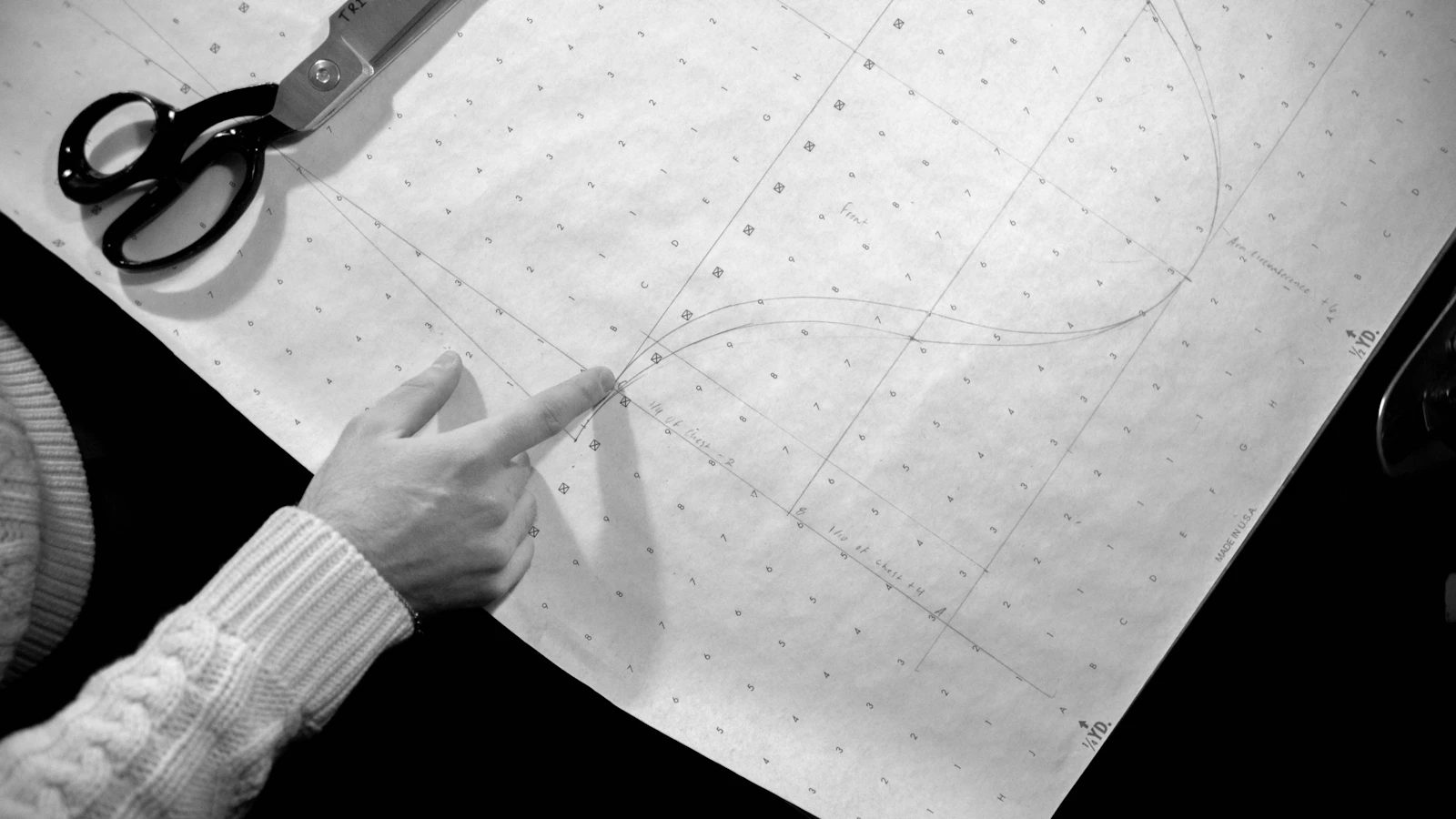
Pattern computer-aided design tools use a combination of parametric algorithms, rule-based grading systems and increasingly artificial intelligence to automate the drafting and scaling of garment patterns. Traditional pattern making relied on manual drafting or traditional grading techniques, but parametric design and pattern generating based on artificial intelligence now enable automated production of patterns across multiple sizes. The global CAD pattern design software market reached 1.56 billion dollars in 2025 and is projected to expand to 3.04 billion dollars by 2034.
How do parametric algorithms enable pattern drafting?
Parametric sewing patterns are formally represented as symbolic programs that generate sewing patterns based on body measurements and design configurations, enhancing efficiency by allowing users to draft or modify sewing patterns through semantically meaningful parameters. Pattern CAD systems manage three essential components: entities, constraints and parameters. When applied to apparel computer-aided design systems, parametric patterns enable the creation of ready-made patterns by simply inputting size specifications, offering a significant alternative for automating the pattern-drafting process.
The mathematical foundation allows designers to define patterns using formulas and relationships rather than fixed dimensions. Each symbolic function is essentially a series of rule-based 2D draw-calls controlled by its unique set of design configurations and the body measurements. This means changing a single measurement, such as bust circumference, automatically updates all related pattern points and curves that depend on that dimension.
What grading rules do CAD systems apply?
Apparel grading is the process of increasing or decreasing the base size pattern according to a set of body measurements and proportional relationships to develop a range of sizes for production. Even with automated computer-based grading techniques, grading still requires a skilled person with an extensive knowledge of garment patterns and an understanding of the expected changes for all sizes in the range.
Standard grading rules are based upon ergonomic measurements of the body, mathematically extrapolated or interpolated according to one of numerous pattern making systems, with the first pattern typically developed in one size and then graded up or down according to the chosen system, ensuring an optimum fit in all sizes. Grading is the art of proportionally increasing or decreasing a given size pattern part from one size to another, retaining everything true to its original form.
Grading systems fall into two broad categories:
- Two-dimensional grading systems only grade a pattern for girth and height, with application limited to loose or semi-drape garments because it retains the stock size suppression throughout the size range, more apt for very loose-fitting garments such as a shirt or blouse
- Three-dimensional grading not only increases a pattern for size but also increases or decreases suppression in areas such as bust to shoulder, hip to waist and elbow to wrist
How do automated grading algorithms work in production?
Automated grading methods determine avatar strain ratios representing differences in a shape of a three-dimensional source avatar and a target avatar, identify body portions with different shapes, and determine mapping relationships between portions of a 3D source garment and the body portions of the 3D source avatar. Target patterns are generated by applying the determined pattern strains to the source patterns.
Production systems rely on grading rules that specify incremental changes at cardinal points on the pattern. Grade rules for different cardinal points as compared throughout the pattern can be categorized as incremental or relative. Common industry practice applies standard increments between sizes, typically one to two inches for bust, waist and hip measurements, with smaller adjustments for details like shoulder width.
What role does AI play in pattern generation?
Fashion pattern generation remains one of the most labour-intensive stages in garment production because it depends heavily on expert manual drafting, iterative revisions, and technical precision, and although existing artificial intelligence-based fashion systems have primarily focused on garment classification, image synthesis, and trend prediction, limited research has addressed the automated generation of structured garment pattern representations incorporating manufacturing-oriented construction information.
Advanced generative models, including GANs and transformer-based architectures, generate detailed and structurally consistent garment pattern representations that address the complexities of garment design by producing structurally accurate and aesthetically consistent patterns that satisfy both functional and visual requirements. AI-assisted pattern generator tools computerise the development of scanned persons into 3D shell surface meshes, which are automatically unwrapped into 2D patterns, using advanced AI algorithms to facilitate the conversion of 3D scans into usable patterns.
AI-powered pattern making software uses machine learning models trained on vast garment databases to identify ideal pattern shapes and measurements, incorporating predictive fit analysis, digital draping, body scanning data, and automated size grading. According to data from GlobalData and Statista in 2025, over 68 per cent of fashion manufacturing firms had already integrated AI technologies into design or production processes, up from just 29 per cent five years earlier.
Which CAD platforms support automated pattern workflows?
Major pattern CAD vendors include Lectra, Gerber Technology, Optitex, Browzwear and CLO Virtual Fashion. Tier-1 fashion specialists, including Lectra, CLO Virtual Fashion, Browzwear, Optitex/EFI Optitex, Gerber Technology, and Style3D, are estimated to control around 55 to 65 per cent of dedicated 3D fashion software spending, focusing on digital patternmaking, fabric drape simulation, grading, fit validation, virtual sampling, and production data transfer.
In October 2024, Lectra launched Valia Fashion, an intelligent digital platform combining AI with fashion expertise that connects, automates, and streamlines each stage of apparel production from order processing to fabric cutting, with key capabilities including AI-powered marker making for fabric layout optimisation, automated grading with intelligent rule systems, full integration from design through production cutting, and advanced material optimisation algorithms. Valia can improve fabric usage by 2 per cent to 4 per cent.
| Function | Traditional CAD | AI-enhanced CAD |
|---|---|---|
| Pattern drafting | Manual point and curve input | Generated from sketches or measurements |
| Grading | Rule-based size increments | Predictive fit adjustments plus rules |
| Marker making | Semi-automated nesting | AI-optimised fabric layout |
| Fit validation | Physical samples required | Virtual 3D simulation |
What efficiency gains do automated systems deliver?
Leading AI pattern making tools excel in automated drafting, grading, and 3D simulation, slashing design time by up to 70 per cent while ensuring precise fits, and virtual sampling reduces physical prototyping costs by 70 per cent. Integrating AI into pattern production can reduce pattern drafting time from days to hours, cut material waste by 30 to 50 per cent, and ensure consistent fit across all sizes.
AI algorithms can reduce fabric waste by 3 to 8 per cent compared to manual layouts, translating directly to material cost savings. CAD systems improved accuracy and efficiency, while 3D pattern-making and virtual prototyping reduced the need for physical samples. The combination of parametric design, rule-based grading and AI-assisted generation enables brands to compress development cycles whilst maintaining technical precision across size ranges.
Frequently asked questions
What is the difference between parametric and traditional pattern CAD?
Parametric pattern CAD uses formulas and constraints to define patterns based on body measurements and design parameters, enabling automatic updates when dimensions change. Traditional CAD requires manual redrawing of pattern points and curves for each modification. Parametric systems automate pattern generation by inputting size specifications, whilst traditional methods rely on fixed geometry that must be manually adjusted.
How accurate are AI-generated patterns compared to manual drafting?
AI pattern systems trained on large garment databases can produce structurally accurate patterns that satisfy manufacturing requirements. However, according to research, even with automated grading techniques, skilled pattern makers with extensive knowledge remain necessary to ensure expected changes across all sizes. AI tools reduce errors and drafting time but still require technical oversight for production validation.
Can small brands afford automated pattern CAD systems?
The CAD pattern software market includes options across price points. Enterprise platforms like Lectra and Gerber Technology typically require quote-based licensing, whilst tools like TUKAcad offer pattern making and grading from 19 dollars per month. Open-source parametric options like Seamly2D provide free formula-driven pattern drafting without AI features. Cloud-based platforms increasingly offer subscription models accessible to smaller operations.
Sources
- Market.us: 3D Fashion Design Software Market Size
- Stytrix: 6 Best AI Pattern Making Software for Fashion (2026 Tested)
- Style3D: How AI Is Changing Clothing Pattern Making in Today's Fashion Industry
- WWD: Lectra's New System Leverages Smart Tech to Streamline Garment Production
- Frontiers in Artificial Intelligence: Automating the creation of fashion patterns using deep learning algorithms
- DataIntelo: CAD Pattern Design Software Market Research Report 2034
Researched and drafted with AI support, reviewed and released by the editorial team.