
Maya Falk
Reports on artificial intelligence in buying, sales, planning and product content.
Articles by Maya Falk

How does LVMH organise AI? The AI Factory, maison agents and the Innovation Award
LVMH runs AI as shared group infrastructure with maison-level control: a central data and AI team, internal assistants, clienteling agents and a startup award that feeds the pipeline.
How does Moncler use data and AI in design, clienteling and supply chain?
Moncler's public record shows AI first in planning, quality control and replenishment, then in clienteling tools and a redesigned website. What it discloses, and what it does not, is instructive.

How did PVH and Tommy Hilfiger digitise wholesale with showrooms, 3D and data?
Tommy Hilfiger opened a digital showroom for wholesale buyers in 2015 and moved apparel design into 3D. The case shows what a digital sell-in process needs before AI can add value.

How does Tapestry use data and AI for demand planning and personalisation at Coach?
Tapestry, owner of Coach and Kate Spade, built a shared data layer, used AI to forecast demand and position inventory, and now runs an in-house generative AI system called Mira for planners and merchants.

Why did Valentino's AI-generated DeVain campaign cause a backlash?
In December 2025 Valentino posted a clearly labelled AI-generated video for its DeVain bag and drew a wave of criticism. The episode shows that disclosure alone does not make AI imagery acceptable in luxury.

The Guess AI model ad in Vogue: what happened and what brands should learn
A Guess advert featuring an AI-generated model ran in Vogue US in August 2025 with a small disclosure line. The backlash, and new disclosure laws since, set out what brands now need to get right.

Walmart's Trend-to-Product: how AI cut fashion development timelines
Walmart says its in-house Trend-to-Product tool can shorten apparel development by up to 18 weeks. Here is what the tool does, what is company-reported and what other retailers can learn.
How Marks & Spencer uses AI for style advice and product descriptions
M&S uses AI to personalise online fashion, power a body shape and style quiz and write most product descriptions, and in 2026 gave Copilot to 11,000 colleagues. What has been reported.

How Otto Group rolled out generative AI across its retail companies
Otto Group launched its in-house assistant ogGPT in 2023 and by late 2025 had more than 10,000 monthly active users. How the rollout was organised, governed and supported, and what it has not yet shown.
How does ASOS use AI? Outfit recommendations, the AI Stylist and ChatGPT
ASOS has moved from single-product recommendations to AI-generated outfits, an in-app AI Stylist and a shopping app inside ChatGPT. What it has published, and what other fashion retailers can learn.
How does ThredUp use AI to list and sell second-hand fashion at scale?
ThredUp uses AI to describe and measure items it processes, and natural-language search, image search and a style chat to help shoppers find them. What it has published, and the lessons for resale.

How does Rent the Runway use data and AI to manage a shared inventory?
Rent the Runway made its biggest-ever inventory bet in 2025, then turned to AI recommendations, search and outfit generation in 2026. What it has reported, and what rental teaches about inventory.
What is Alibaba's Accio, and what does an AI sourcing agent mean for fashion?
Accio, Alibaba.com's AI sourcing tool, passed 10 million monthly users in 2026 and now has an agent platform. How it works, what it cannot do yet, and what it changes for fashion buyers and suppliers.
Do AI stylists sell? The metrics to judge a conversational shopping assistant
Chat volume says little about whether an AI stylist earns its keep. Which metrics show real commercial impact, how to test them fairly and what published data does and does not prove.

AI shopping assistant hallucinations: who is liable for wrong product claims?
An assistant that invents a fabric, a discount or a returns rule creates real liability. How hallucinations happen in fashion e-commerce, what the law says and how to reduce the risk.

Schema markup for fashion products: which structured data does AI search read?
Product, Offer and ProductGroup markup describe price, availability, sizes and colours in a form machines can parse. Here is what to mark up for apparel, and what markup cannot do.

What is an AI supply chain control tower, and who acts on what it shows?
Control towers promise one view of orders, shipments and stock with AI alerts on top. In fashion their value depends less on the dashboard than on data quality and on who is empowered to act.

Do AI-generated fashion images need a label? The AI Act transparency rules
Article 50 of the AI Act requires chatbot disclosure, machine-readable marking and deepfake labels from August 2026. What it means for campaigns, product imagery and virtual models.

Is AI for recruiting and staff scheduling high-risk under the EU AI Act?
Recruitment screening, task allocation and worker monitoring are listed as high-risk in the AI Act. What that means for fashion retailers, and why the 2027 delay is no pause.

Can fashion retailers use customer data to train AI under GDPR?
Personalisation, recommendations and chatbots run on customer data. How legal basis, transparency, profiling rules and data subject rights apply when fashion e-commerce uses that data for AI.

AI dupes and design copying: how brands protect prints and silhouettes in 2026
AI makes it faster to spot, imitate and list look-alike products. What the 2025 EU design reform, recent copying disputes and copyright rules on AI mean for protecting prints and silhouettes.

Rules for generative AI in the design studio: a governance checklist
Design teams already use generative AI, often without agreed rules. A practical governance checklist covering approved tools, data, IP, disclosure, training and accountability for fashion design studios.

How to build AI-generated assortment proposals for retail accounts
A pre-filled order proposal per account can save buyers and reps hours, if it rests on clean sell-in history, clear rules and a rep who checks it. A step-by-step guide.

How can AI measure wholesale account profitability, terms and cost to serve?
Revenue per account hides discounts, returns, payment terms and service costs. How AI helps brands see true account profitability, and why the data work comes first.

Which styles should you drop before the sales campaign? How AI helps edit the line
Carrying too many styles into the selling campaign costs samples, minimums and margin. How AI scores styles before the line is shown to buyers, and where merchants must overrule it.

How to use AI meeting notes to turn buying appointments into orders
AI notetakers can capture what a buyer asked for, draft the follow-up and update the CRM. A practical guide for wholesale reps, including consent, accuracy and data rules.

How should brands allocate scarce stock across wholesale accounts with AI?
When production falls short of orders, someone must decide which retailers get what. How AI optimises allocation against clear rules, and why perceived fairness matters as much as margin.

How do you measure forecast accuracy in fashion? MAPE, WAPE, bias and MASE
Forecast accuracy decides whether an AI planning tool is worth its cost, yet the most popular metric is badly suited to fashion. A practical guide to MAPE, WAPE, bias and MASE, and what good looks like.

Dynamic pricing in fashion: where does AI help and where does it harm the brand?
Algorithmic pricing can clear stock and protect margin, but frequent or personalised price changes carry brand, trust and legal risks. Where AI pricing earns its place in fashion and where it should stop.

How can AI help decide buy depth and production quantities in fashion?
Buying too deep creates markdowns and waste; buying too shallow loses sales. How AI combines demand forecasts, uncertainty and lead times to set production quantities, and why flexibility matters as much as accuracy.

Google AI try-on and Doppl: what search-native try-on means for fashion brands
Google moved virtual try-on from a Labs experiment into Search and Shopping in little over a year, then closed its standalone Doppl app. What happened, and what it means for brands.

What data does AI size recommendation need? Measurements, fit notes and returns
Size recommendation is only as good as the data behind it. A practical guide to the garment, customer and returns data that size and fit models need, and who in the business owns each piece.

How does AI predict returns before checkout? Flagging risky baskets explained
Return prediction models estimate, while the basket is still open, how likely each item is to come back. How they work, what data they need, which interventions are fair, and where the legal limits lie.

How can AI reduce fashion returns? 12 levers ranked by likely impact
From size advice and fit flags to return prediction and try-on, a checklist of twelve AI levers for reducing online fashion returns, ranked by evidence and likely impact, with the data each needs.

How to feed fit feedback and return reasons back into pattern-making
Return reasons and fit comments contain precise clues about patterns and grading, but rarely reach the technical design team. A step-by-step guide to closing the loop with AI and better data.

How can AI help estimate scope 3 emissions in fashion supply chains?
Most of a fashion brand's footprint sits with suppliers it does not own. Here is where AI genuinely speeds up scope 3 estimates, and where it cannot replace real supplier data.

What is AI-assisted lifecycle assessment for fashion products?
Brands need footprints for thousands of products, not a handful of studies. How AI helps scale lifecycle assessment, what the EU's apparel PEFCR changes, and where the data still falls short.

CSRD after the Omnibus: what fashion brands must report in 2026, and how AI helps
The Omnibus I deal cut the CSRD's scope sharply. Which fashion companies still report, when, what the value chain cap means for suppliers, and where AI can make reporting less painful.

How to use AI to read supplier audit reports and certificates
Compliance teams drown in audit PDFs, certificates and questionnaires. A step-by-step guide to automating supplier document checks with AI, without outsourcing judgement to a model.

Why do AI pilots stall in fashion, and how do you scale them to production?
Most generative AI pilots never reach scaled use. Why fashion pilots stall, from data and integration to unclear value, and a step-by-step route from proof of concept to production.

ChatGPT Enterprise, Copilot or Gemini: which AI assistant suits a fashion company?
Choosing a general AI assistant depends less on model quality than on your office suite, data location, admin controls and the work your teams do. A neutral decision guide for fashion businesses.

What is a large language model? LLMs explained for fashion professionals
Large language models power chat assistants, product copy tools and AI shopping advisers. A plain explanation of how they work, what they do well in fashion, and where they fail.

What is RAG? How AI answers questions from your product and order data
Retrieval-augmented generation lets an AI assistant look up your catalogue, price lists and orders before it answers. How it works, what data it needs, and where it goes wrong.

Machine learning basics for merchandisers: models, features and training data
What a model, a feature, a label and training data actually are, explained with fashion merchandising examples, and the questions a merchandiser should ask before trusting a forecast.
What is AI in fashion? A complete guide to AI across the fashion value chain
From design and planning to wholesale, supply chain and e-commerce: what artificial intelligence really does in fashion today, what data it needs and where its limits are.

How to measure the ROI of AI in fashion
Most companies struggle to prove that AI pays off. A practical framework for fashion: baselines, control groups, the right metrics per use case and the full cost picture.

AI in fashion product development: from brief to sample
AI is reshaping the steps between a collection brief and the first approved sample: research, concepts, digital prototypes and range decisions. What works, what data it needs and where people stay in charge.
AI trend forecasting in fashion: how it works, what it sees and its limits
AI tools now scan runway images, social media and sales data to spot emerging styles. Here is what the signals can and cannot tell a design or buying team, and why human forecasters still matter.

AI, 3D and virtual sampling: fewer samples, faster decisions
3D garment simulation has been replacing some physical samples for years. AI now speeds up the steps around it. Here is what virtual sampling can really replace, what data it needs and where physical samples still win.
How does AI improve fit and sizing? From size advice to better patterns
Size and fit problems drive a large share of fashion returns. AI now powers size recommendations, body measurement and virtual fitting rooms, and its data can flow back into patterns and size charts.
How is AI used for colour, prints and materials in fashion?
From AI palette tools to generated prints and AI-assisted fibre research, colour and materials work is changing. A sober look at what is in use, what is still experimental and what data it depends on.

How does AI allocation and replenishment work across stores and channels?
Allocation decides where stock goes first; replenishment decides what follows. AI makes both decisions at size and location level. Here is how it works, what it needs and where it struggles.
What is size curve optimisation and how does AI help buy the right sizes?
Buying the wrong mix of sizes leaves fringe sizes on the rail and core sizes sold out. Here is how AI estimates true size demand, why stockouts mislead the data and what to watch for.

How can AI support range and line planning in fashion?
Range planning decides how many styles, at which prices and in what depth a collection should have. AI can forecast new items and test scenarios, but the creative and strategic call stays human.

Why is sell-out data essential for AI in fashion wholesale?
Brands that sell through retailers see what they ship, not what consumers buy. Sell-out data closes that gap, and without it most AI forecasting for wholesale works half blind.

AI in B2B fashion wholesale: the complete guide
Where artificial intelligence creates real value between brands and retail partners, what data it needs, how buyers already use it and where the limits are.

What makes a wholesale business AI-ready?
AI readiness in fashion wholesale is less about algorithms than about structured product, order and partner data, clear ownership and processes that capture why buyers decide.
How do AI re-order prediction and automated replenishment work for retailers?
Re-orders cover styles that have already proven themselves. AI can suggest or trigger them before a retail partner runs out, if sell-out and stock data are shared.
What can conversational AI assistants do for B2B fashion buyers?
Assistants that answer questions on availability, order status and terms are arriving in B2B portals. What they can do, what they must be connected to and where caution is needed.

How does AI personalisation work in fashion e-commerce?
Recommendations, ranked listings, size advice and conversational assistants all rely on the same thing: clean customer and product data. A practical guide to what works, what it costs and where the limits are.

How are fashion brands using AI in marketing, from content to measurement?
Generative AI has cut the time and cost of campaign content for some retailers, but brand control, rights and disclosure rules decide whether it works. A guide to the main uses and their limits.
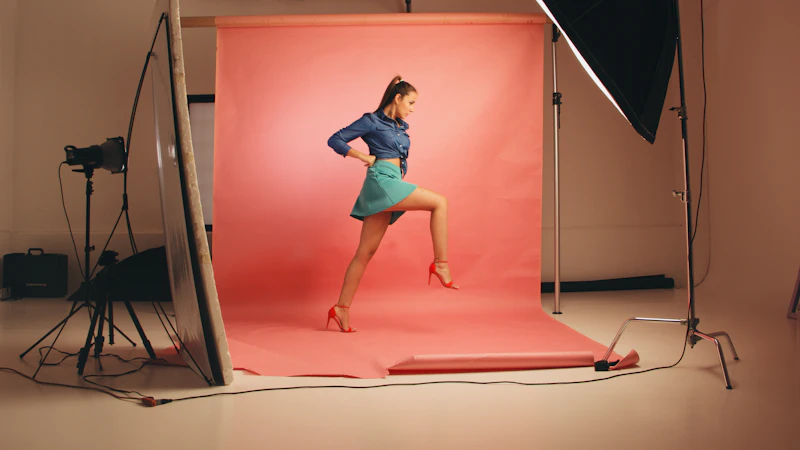
AI-generated models in fashion: what are the ethics and disclosure rules?
Digital twins and fully synthetic models promise faster, cheaper imagery. Consent, pay, disclosure and audience trust now shape how brands can use them, and new rules in New York and the EU raise the bar.

How is AI search changing the way shoppers find fashion?
Shoppers now describe what they want to chatbots and AI search engines instead of typing keywords. How conversational shopping works, what the early evidence shows and what it means for fashion brands and retailers.
How is AI used in fashion customer service, and where does it fail?
AI chatbots and agent assistants can answer order, return and sizing questions around the clock. Customers still want a human when it matters, and companies stay liable for what their bots say.

How is AI used in physical fashion stores?
From associate assistants and clienteling to computer vision for stock and checkout, AI is moving onto the shop floor. What works, what it requires and where privacy law draws hard lines.
How does AI help sort and recycle textiles?
Recycling clothes into new fibres needs precise sorting by material and colour. Sensors and machine learning make that possible at scale, but capacity and economics are still limiting.

How can AI help fashion brands prepare for the Digital Product Passport?
The EU Digital Product Passport turns product data into a regulated deliverable. AI can help collect, check and structure that data, but it cannot invent what suppliers never recorded.

How Inditex uses AI and data: RFID and a demand-driven supply chain
Inditex's edge rests on item-level RFID data, integrated stock and production close to home. Where AI now enters, what results are public and what remains undisclosed.

How Nike uses AI: direct-to-consumer data and generative product creation
From demand sensing for its own channels to AI-generated footwear concepts and an AI shopping beta, what Nike has built, what it has disclosed and what changed under new leadership.
How adidas uses AI: from design archives to generative content
adidas has documented AI in footwear concepting, software engineering, review analysis and personalised campaigns. What it built, what results it reports and what it has not disclosed about planning.

How Levi Strauss & Co. uses AI: the data programme and its lessons
Levi Strauss & Co. trained its own staff in machine learning, stumbled with AI models in 2023 and is now rolling out agents for employees and shoppers. What the programme shows.

How Mango uses AI: generative design, virtual models and Mango Stylist
Mango has built more than 15 machine learning platforms since 2018, from the internal Lisa tool to AI-generated campaign models and the Mango Stylist assistant. What is documented and what is not.
How Stitch Fix uses AI: algorithms plus human stylists
Stitch Fix pairs recommendation algorithms with about 1,700 part-time stylists, and has added generative AI tools such as Vision. How the hybrid model works and what the numbers show.

How Shein uses data and algorithms: the on-demand model and its criticism
Shein says it orders new designs in batches of 100 to 200 pieces and scales them on demand signals. How the data-driven model works, what is claimed, and why regulators and designers criticise it.

AI in fashion: the September 2026 review
Meta's Muse agent, Amazon's block, Shopify's agent checkout, AI replenishment at Macy's and Zalando's AI imagery: the verified AI news for fashion from September 2026.
AI for fashion buyers: what changes in buying and how to start
Where AI already helps fashion buyers with trend scanning, line reviews, quantities and re-orders, what data it needs, what stays a human judgement and a 30-day plan to start.

AI for wholesale sales teams and key account managers
How AI helps fashion wholesale reps and key account managers prepare appointments, build retailer assortments, read sell-out data and handle re-orders, plus what buyers still expect from people.

AI for fashion CFOs: where the money is and how to govern it
Where AI creates measurable value in a fashion business, what finance teams can use it for, why many AI projects fail to pay back and how CFOs can govern AI spending and risk.

AI for CIOs and IT leaders in fashion: architecture, data and governance
What fashion CIOs and IT leaders need to get right for AI: product and sales data foundations, integration architecture, build or buy, security, EU AI Act duties and governance frameworks.
AI for sourcing and supply chain managers in fashion
How fashion sourcing and supply chain managers use AI for demand and production planning, cost and tariff scenarios, supplier risk, compliance and quality, with data needs, limits and a 30-day plan.
AI in fast fashion: speed, demand signals and the overproduction problem
Fast fashion lives on reading demand early and reacting fast. AI sharpens both, but it can also accelerate volume, and new EU rules make unsold stock more costly.
AI in footwear: fit, size data and faster product creation
In footwear, a few millimetres decide whether a sale sticks. AI helps with foot scanning, size advice and design iteration, but only on top of accurate last and product data.
AI in denim: how finishing, laser technology and water use are changing
Denim's look is made in finishing, traditionally with water, chemicals and manual abrasion. Digital design and laser finishing, increasingly guided by AI, change that, but the evidence base is still thin.
AI in mid-market and wholesale-led fashion brands: where to start
Mid-market brands that sell mainly through retail partners have less data and smaller teams than the giants. AI still pays off, if it targets order-taking, product data and sell-through insight.

AI in childrenswear and basics: forecasting replenishment-driven ranges
Basics and childrenswear sell steadily, in many sizes, at thin margins. That makes them ideal for AI forecasting and replenishment, and sensitive when the customer is a child.

Can AI forecast a full pre-order book from the first 20 percent of orders?
Early wholesale orders carry more signal than any pre-season plan. Here is how AI models read them, what data they need and where the forecast breaks down.

How do you turn a pre-order book into production orders without losing time?
The handover from sales to sourcing is where wholesale brands lose weeks and margin. A step-by-step guide to closing the gap, and where AI genuinely helps.

How do you design a B2B re-order portal that retailers actually use?
Retailers want to re-order between seasons without calling a sales rep. What a self-service portal needs to offer, which data it depends on and where AI adds value.

Why do key accounts demand EDI order confirmations, and what do brands get wrong?
Large retailers expect an electronic order response for every purchase order. What the message does, why it matters to the buyer and the mistakes that cost brands money.
How can brands use data to reduce pre-order cancellations and order cuts?
Cancellations and late order cuts turn a healthy pre-order book into excess stock. How to measure them, predict them and agree rules that protect both sides.

How can brands use early-booking discounts without eroding margin?
Early-booking incentives buy demand information and production certainty. A guide to pricing them, choosing the right form and checking whether they pay off.

Digital showroom ROI: how to build the business case for costs and sell-in
What a digital showroom really costs, where the savings come from, why sell-in uplift is the hardest number to prove, and how to build a business case a CFO will accept.

How to build a 3D asset pipeline from design to the digital showroom
A digital showroom is only as good as the 3D assets behind it. How to move garments from 3D design and PLM to sell-in ready renders, on time and at scale.
How do offline sales apps sync orders to ERP without losing a line?
Reps write orders at fairs, in showrooms and in shops with poor connectivity. How offline-first sales apps store, queue and sync order data to ERP safely, and where it goes wrong.
Choosing a sales app for fashion wholesale: a 25-point checklist
Offline orders, size grids, pre-order and re-order, PIM and ERP links, AI features and adoption: 25 questions to ask before you choose a sales app for your reps and agents.
Hybrid selling in fashion: how trade fairs, showrooms and digital showrooms fit
Trade fairs still draw thousands of buyers, physical showrooms still matter for key accounts, and digital showrooms extend both. How to split the selling season across all three.
ORDERS, ORDRSP, DESADV, INVOIC: the EDI messages behind a fashion order
A single wholesale order between a fashion brand and a retailer triggers a chain of standard EDI messages. Here is what each one does, what it must contain and where errors usually start.

EDI or API? How department stores and marketplaces want to connect in 2026
Department stores still run wholesale on EDI, while marketplaces build their partner programmes on APIs. Fashion brands increasingly need both, connected to one clean set of ERP and product data.
How to use AI to catch EDI errors before they become chargebacks
Most EDI deductions start as small data mismatches between order, shipment and invoice. AI can flag them before files leave the building, if the rules and the data behind it are sound.

Moving a fashion ERP to the cloud: lessons from 2024 to 2026 migrations
Maintenance deadlines for older ERP platforms are pushing fashion companies to move. What drives the timing, which approaches are used and where projects run into trouble.

PLM to PIM handover: which product attributes move when, and who owns them?
A practical guide to the PLM to PIM handover in fashion: the attributes that move at each milestone, who owns them, and how to keep sell-in and e-commerce data consistent.

AI inside PLM: what did the major fashion PLM vendors add in 2025 and 2026?
Tech pack extraction, generative design studios and agentic product development: what PTC, Centric Software, Lectra and others announced, and what buyers should test before believing it.

How do you make 3D the default in PLM? Workflow, approvals and file standards
Moving 3D from a specialist side tool to the standard path in product development: where 3D sits in the PLM workflow, how approvals change, and which file and material standards matter.

Can 3D garments and AI imagery replace e-commerce photo shoots in 2026?
Large online retailers have cut studio photography sharply in favour of AI-generated product imagery. What has changed, where 3D still matters, and what the limits and legal duties are.

AI quality checks for PIM data: catching missing, wrong and inconsistent attributes
A practical checklist for using rules and AI to find gaps, errors and contradictions in fashion product data before they reach webshops, marketplaces and customers.
What does 3D sampling really save? Sample costs, lead times and carbon
3D sampling promises fewer physical samples, shorter calendars and lower emissions. What the published evidence supports, what remains vendor claims, and how to build your own business case.

How do you get from moodboard to 3D concept with trend data and generative AI?
Image generators produce ideas fast but not garments. A workflow that links trend data, generative tools, 3D simulation and PLM without losing control of fit or IP.

How can wholesale teams generate line sheets and sell-in decks with AI?
Line sheets and sell-in decks are built from product data. A workflow for using generative AI to speed them up without errors in prices, colours or delivery dates.

Which merchandising tasks can AI agents take over, and which can they not?
Agents can monitor, analyse and propose. Merchandisers still own strategy, trade-offs and supplier relationships. Where the line runs in 2026, and what has to be in place first.

How should fashion brands manage the inventory risk of TikTok micro-trends?
Micro-trends rise and fade faster than most supply chains can react. How to decide when to chase, how to size bets and how AI helps read the curve.
How do you measure clienteling ROI across store, chat and online?
Clienteling sales happen in the store, in a chat thread and on the website, often weeks apart. A credible ROI needs clear attribution rules, a control group and honest costs.

How can brands support clienteling by store staff at multibrand wholesale partners?
In multibrand stores, the associate who knows the client works for the retailer, not the brand. Brands can still equip that associate with product knowledge, stock visibility and content, if data roles are clear.
How do brands share inventory with wholesale partners in a connected retail model?
Brands and retailers increasingly sell each other's stock: retailers list store inventory on platforms, brands drop-ship for partners. The models work only with clean data, clear margins and agreed returns.
How do fashion brands route returns into resale?
Returned goods that cannot go back to full price stock need a decision: refurbish, resell, donate or recycle. Grading rules, data and the EU ban on destroying unsold clothes now shape that routing.
When does brand resale pay off? The unit economics of second-hand fashion
Resale is growing quickly, but each garment carries inspection, cleaning, photography and logistics costs. Whether it pays depends on price point, sell-through and how much of the work the customer or a partner does.

How will the Digital Product Passport support resale and authentication?
The EU Digital Product Passport will give each garment a scannable data record. For resale, that promises faster listings and provenance checks, but authentication depends on how the passport is secured.
Who sells the second life of a garment: brands or their retail partners?
Department stores and online retailers are adding pre-owned assortments, often with resale specialists. For wholesale brands this raises questions of control, pricing, data and contract terms.

How to price and list second-hand fashion stock with AI
AI can draft resale listings from photos, suggest prices from transaction data and help grade condition. A practical workflow keeps humans in charge of identification, condition and price limits.

Textile Digital Product Passport timeline: what is decided and what is open in 2026
The EU's passport registry and core standards went live in July 2026, but the textile rules that define apparel data are still pending. Here is what is fixed, what is indicative and what remains open.
How do you collect DPP data from tier 2 and tier 3 suppliers?
Passport data starts in spinning mills, dye houses and fabric mills that most brands never contract directly. A practical method for mapping, requesting, verifying and maintaining upstream supplier data.

Is there a DPP business case beyond compliance? Resale, service and customer data
The Digital Product Passport is a regulatory cost, but the same identifier and data can support resale, repair, care services and a direct link to owners. Where the value is real and where it is still unproven.

Forced-labour rules: what must fashion brands prove under UFLPA and the EU ban?
The US presumes goods linked to Xinjiang are made with forced labour; the EU ban applies to all products from December 2027. What each rule requires, and what evidence fashion brands need to hold.

How do you build an AI business case your CFO will sign? A template for fashion
Most AI projects stall between pilot and P&L. A practical business case template for fashion companies: baseline, value drivers, full costs, risks and stage gates, with examples from planning, content and service.

Where AI fits in fashion wholesale today
AI is already useful in wholesale, but mostly in narrow, data-rich tasks. A sober map of where it helps sales, buying and operations, and where human judgement still decides.

Using AI in assortment planning without losing the brand
AI can sharpen depth, breadth and size decisions in assortment planning. The risk is a range that drifts towards safe averages. How to use the tools while keeping the brand's point of view.
AI recommendations in B2B sales: from co-purchase lists to next best action
Recommendation engines are moving from simple co-purchase lists to account-specific suggestions for sales reps and buyers. How the main approaches work and what makes them trusted in fashion wholesale.

Generative AI in fashion design: useful tool or distraction?
Image generators can produce mood boards and print ideas in seconds. Whether they improve design depends on where they sit in the process, and on how brands handle originality and rights.

Visual search and image recognition in fashion commerce
Image recognition lets shoppers and buyers search by picture and helps brands tag products automatically. How the technology works, where it performs well and what it depends on.