Demand sensing in 2026: which real-time signals actually improve forecasts
Point-of-sale data and weather rank highest for predictive value in fashion, whilst social signals remain costly and inconsistent to implement.

KEY TAKEAWAYS Summary by the editors
- Point-of-sale data delivers the strongest predictive signal for fashion forecasting, with weather data offering high value at low implementation cost.
- Search trends provide moderate predictive power but require careful interpretation to distinguish browsing from purchase intent.
- Social media signals remain expensive to operationalise and show inconsistent correlation with sales across fashion categories.
- Competitor pricing data faces legal and ethical constraints that limit its practical use in demand sensing systems.
Point-of-sale data and weather information deliver the most reliable gains in forecast accuracy for fashion merchandisers in 2026, whilst social media signals and competitor pricing remain difficult to operationalise despite their theoretical appeal. The hierarchy reflects not just predictive power but the practical realities of data availability, implementation cost and legal constraints that shape which signals actually improve planning decisions.
Why does point-of-sale data remain the strongest signal?
Real-time POS data provides the most direct measure of consumer demand, capturing actual transactions rather than proxies or leading indicators. Fashion retailers with integrated inventory systems can ingest hourly sales data across channels, enabling rapid response to demand shifts. The signal is strongest for replenishment of core items and fast-fashion categories where lead times allow meaningful action within the visibility window.
Implementation costs are moderate to high, requiring unified commerce platforms and clean data feeds, but the infrastructure investment serves multiple business functions beyond forecasting. Data availability is excellent for vertically integrated retailers but fragmented for brands relying on wholesale partners, where POS visibility often arrives with multi-week delays that erode its predictive value.
How valuable is weather data for fashion forecasting?
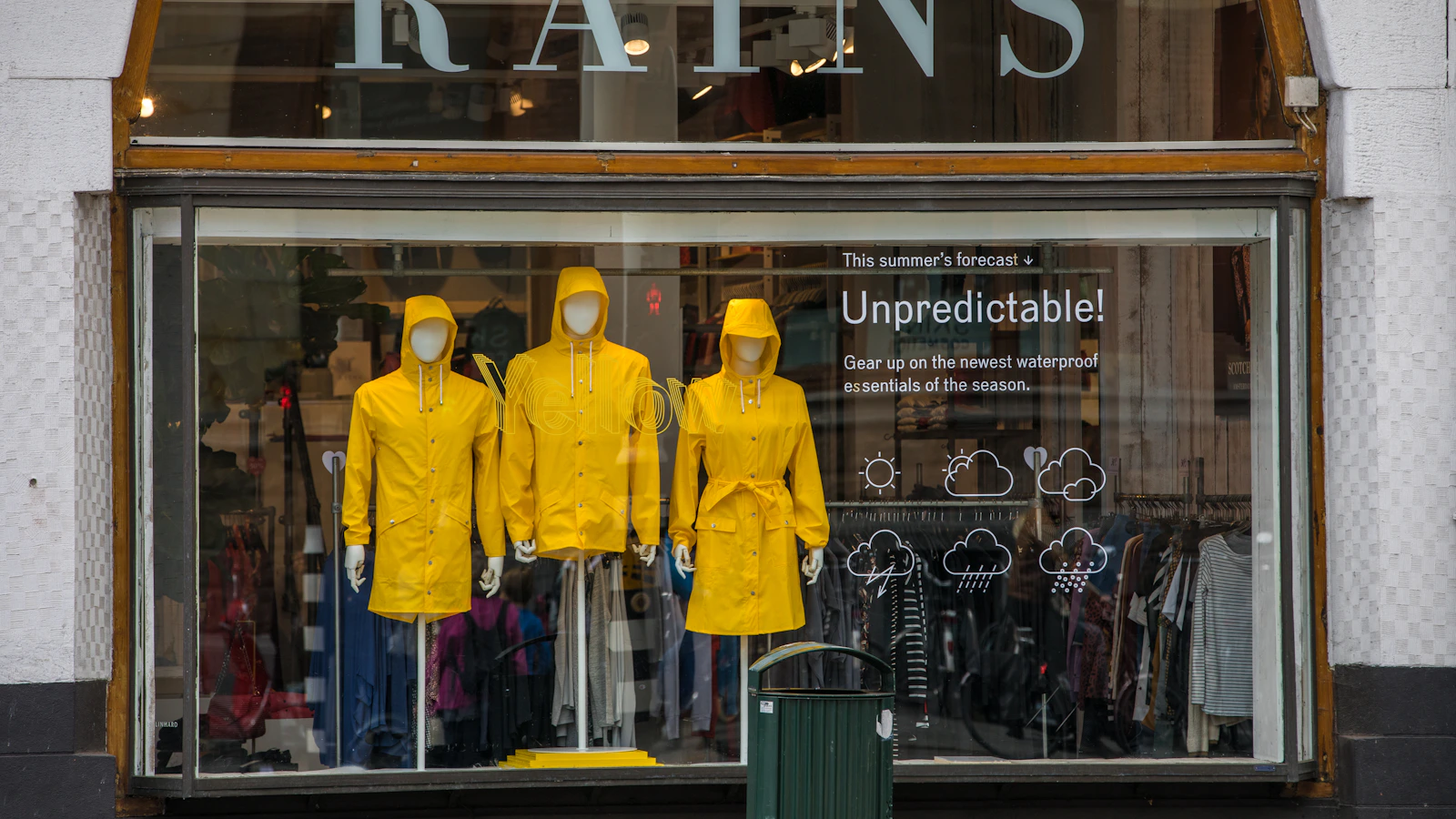
Weather data ranks high for predictive value relative to implementation cost, particularly for seasonal and outerwear categories. Retailers can license granular forecasts by geography and incorporate them into demand models with modest technical effort. The signal works best when tied to specific product attributes,temperature thresholds for knitwear, precipitation forecasts for rainwear,rather than broad seasonal assumptions.
The data is widely available from commercial meteorological services at relatively low cost, and accuracy has improved with advances in short-range forecasting. Limitations arise in translating weather conditions into demand adjustments: unseasonably warm weather may delay winter coat purchases or eliminate them entirely, and the relationship varies by market maturity and consumer behaviour patterns.
Do search trends translate into sales?
Search query volumes from platforms such as Google offer a leading indicator of consumer interest, but the correlation with fashion sales is inconsistent across categories. Search trends work better for event-driven demand,specific styles entering cultural conversation,than for staple products. The challenge lies in distinguishing research browsing from purchase intent, and in the time lag between search activity and transaction.
Data availability is good through commercial search analytics tools, though implementation requires analytical capability to build and maintain predictive models. Cost is moderate, primarily in the form of licensing fees and data science resources. Privacy regulations have narrowed the granularity of available search data in some jurisdictions, reducing the signal's precision for localised forecasting.
Can social media signals improve accuracy?
Social media metrics,mentions, sentiment, influencer activity,generate substantial interest but deliver inconsistent predictive value in practice. The relationship between social buzz and sales varies dramatically by brand positioning, with luxury and streetwear labels seeing stronger correlation than mass-market apparel. Viral moments can drive short-term demand spikes, but these are difficult to anticipate and often dissipate before inventory can respond.
Implementation costs are high, requiring natural language processing capabilities, continuous platform monitoring and expertise to interpret noisy signals. Data availability has declined as social platforms have restricted third-party access and algorithm changes have altered organic reach patterns. False positives are common: high engagement does not guarantee purchase behaviour, and the demographic skew of social platforms may not match a retailer's customer base.
What role does competitor pricing play?
Competitor pricing data offers theoretical value for understanding promotional intensity and relative positioning, but practical and legal barriers limit its use in demand sensing. Systematic price monitoring raises antitrust concerns in many jurisdictions, and retailers must navigate complex rules around data collection and competitive intelligence. Even where permissible, the signal is often reactive rather than predictive: price changes reflect decisions already made rather than future demand shifts.
Data availability depends on public web scraping or third-party aggregators, with costs ranging from modest to substantial based on coverage and frequency. Implementation requires governance frameworks to ensure compliance with competition law, adding legal overhead. The predictive value is highest in highly commoditised categories where price is the primary differentiator, but fashion's emphasis on brand, design and discovery reduces the signal's relevance for many merchandising decisions.
How should merchandisers prioritise these signals?
The optimal mix depends on category characteristics, supply chain lead times and existing technical infrastructure. A practical ranking for most fashion businesses prioritises POS data and weather for immediate implementation, followed by search trends where analytical resources allow. Social signals warrant investment primarily for brands with digitally native audiences and viral product cycles, whilst competitor pricing remains a secondary input constrained by legal and ethical considerations.
| Signal | Predictive value | Data availability | Implementation cost | Best use case |
|---|---|---|---|---|
| Point-of-sale data | High | Good (own stores), Poor (wholesale) | Moderate to high | Replenishment, fast fashion |
| Weather data | Moderate to high | Excellent | Low to moderate | Seasonal, outerwear |
| Search trends | Moderate | Good | Moderate | Event-driven, trending styles |
| Social signals | Low to moderate | Declining | High | Luxury, streetwear, viral products |
| Competitor pricing | Low to moderate | Moderate | Moderate (plus legal overhead) | Commoditised categories |
The evolution of demand sensing in fashion is less about discovering new data sources than improving the operational discipline to act on signals that already exist. Retailers with clean POS data and responsive supply chains will extract more value from established inputs than those chasing novel but unproven signals. The frontier lies in integration,combining multiple sources within planning workflows,rather than in the predictive power of any single feed.
Frequently asked questions
Which demand signal offers the best accuracy for fashion forecasting?
Point-of-sale data provides the strongest predictive signal because it measures actual transactions rather than proxies. Weather data offers the best value relative to implementation cost, particularly for seasonal categories such as outerwear and knitwear.
Why are social media signals difficult to use for demand sensing?
Social media signals require high implementation costs for natural language processing and platform monitoring, deliver inconsistent correlation with sales, and face declining data availability as platforms restrict third-party access. High engagement often fails to translate into purchase behaviour.
What limits the use of competitor pricing in fashion forecasting?
Competitor pricing faces legal barriers related to antitrust rules in many jurisdictions, requires governance frameworks to ensure compliance, and provides limited predictive value in fashion categories where brand and design matter more than price.