Fashion AI patent filings surge as brands stake claims to design and fit tech
Nike, Inditex and luxury groups lead a 2024-2026 wave of AI patent applications covering generative design, virtual try-on and merchandising, revealing strategic bets on automation.

KEY TAKEAWAYS Summary by the editors
- Nike generated approximately 9,015 patent publications between 2019 and 2025, far outpacing Adidas with 1,173 in the same period.
- AI patent filings in fashion trend forecasting accelerated sharply in 2024-2026, concentrated in social media analytics and multi-modal fusion architectures.
- LVMH committed over 100 million euros to AI initiatives in 2025, deploying its MaIA assistant to handle more than two million internal requests monthly.
- Patent litigation risk is rising as AI-generated fashion designs face inventorship challenges and limited copyright protection under current law.
Patent applications covering artificial intelligence technologies in the fashion and apparel sectors intensified markedly during 2024 to 2026, with major brands filing claims that span generative design systems, virtual fitting rooms, and demand forecasting algorithms. The surge reflects a strategic shift as companies seek to protect competitive advantage in merchandising, design automation and customer experience, not merely operational efficiency.
The activity also signals a defensive posture. As generative AI closes the loop between trend detection and actionable design output, brands face legal uncertainty over inventorship requirements, copyright validity and the risk of invalidation proceedings. Filing patterns reveal which technologies fashion companies believe will define the next decade, and which legal doctrines they are prepared to test in court.
This analysis examines who filed AI patents in 2025 and early 2026, which technology categories attracted the most applications, and what the filings reveal about competitive strategy and legal risk in a sector where intellectual property protection has historically been fragile.
Which fashion companies filed the most AI patents in 2025 and 2026?
Nike generated approximately 9,015 patent publications between 2019 and 2025, significantly outpacing every other company in the footwear industry. The next closest competitor, Adidas, produced approximately 1,173 patent publications during the same period, followed by Asics with 936. Mathys & Squire reported that Nike filed approximately 250 global patent applications for footwear in the twelve months preceding January 2025. Adidas filed 37 patent applications in the same twelve-month window, amounting to just 15 per cent of Nike's total.
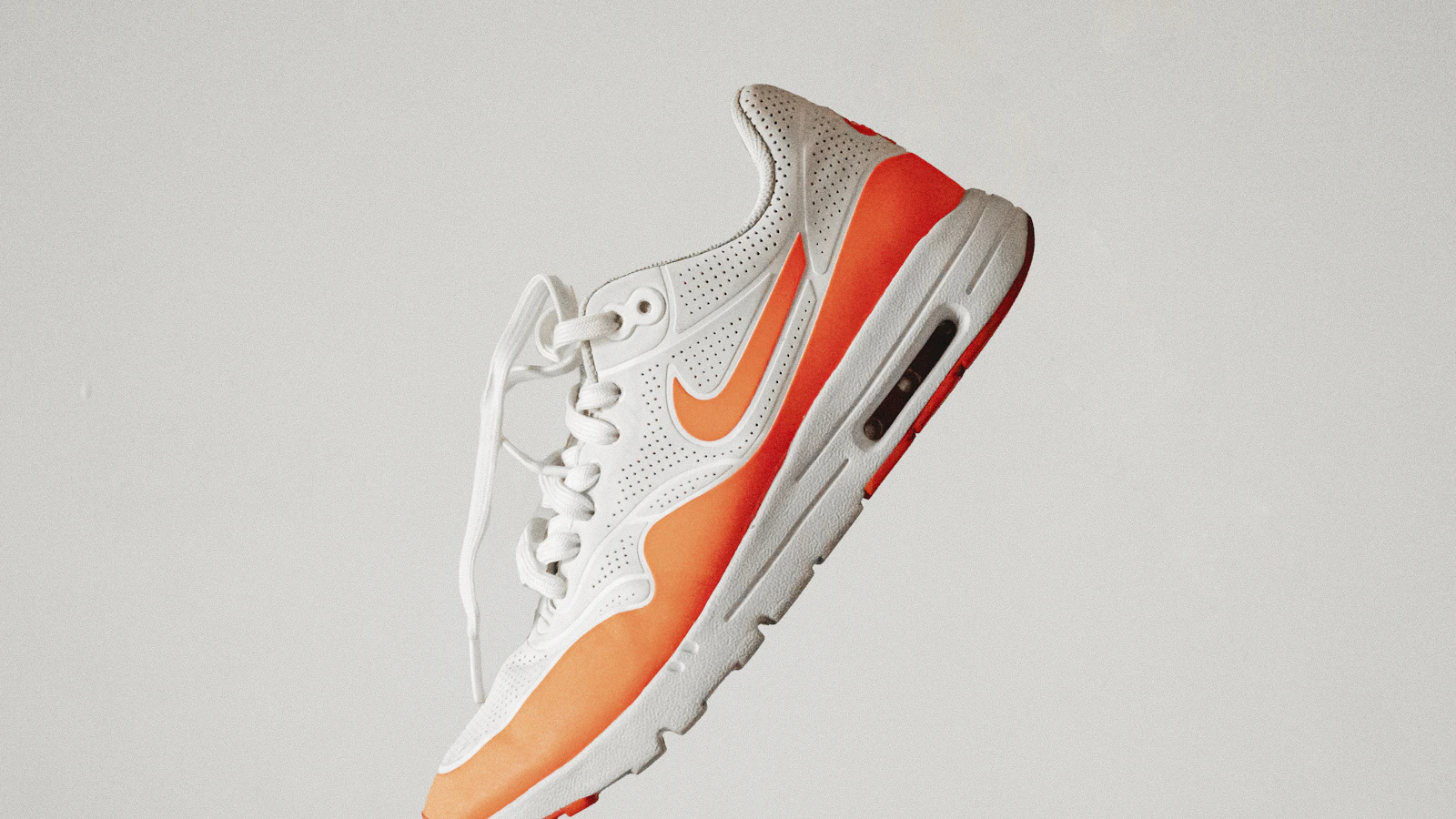
Nike's activity extended into intelligent footwear. A February 2026 patent publication covered intelligent electronic footwear with controller automated features and control logic for automated pedestrian collision avoidance. A February 2025 filing detailed a fluid movement controller system embedded in a shoe's sole, allowing for real-time, user-controlled adjustments to cushioning and support.
Among fashion retailers, Inditex, owner of Zara, announced an investment in Theker Robotics, a startup developing AI-powered robots for soldering and maintenance, in the third quarter of 2025. Inditex highlighted its AI-based virtual fitting experience, named Zara Try-on, which since December let customers create an avatar from their own photos. The technology was deployed in 43 global markets with more than seven million sessions by March 2026.
In the luxury segment, LVMH committed over 100 million euros to AI and expanded its Google Cloud partnership in 2025 to power search, customer experience and operations. Built using Google Gemini, Imagen and OpenAI's GPT models, MaIA handled over two million internal queries monthly across 40,000 employees. Kering, the group behind Gucci and Saint Laurent, deployed AI across customer intelligence and retail operations as part of a broader digital transformation push, with a focus on clienteling and demand forecasting.
- 2024ZOZO filed a thermochromic smart textile patent (JP); AI fashion forecasting filings accelerate
- Jan 2025StyleAI Inc. active US patent combines trend data retrieval with generative image synthesis
- Feb 2025Nike filed fluid movement controller system patent for real-time cushioning adjustment
- Q3 2025Inditex invested in Theker Robotics (AI-powered industrial robots); H&M announced digital twin models
- Dec 2025Inditex launched Zara Try-on virtual fitting in 43 markets; USPTO issued revised AI inventorship guidance
- Feb 2026Nike patent on intelligent electronic footwear with automated collision avoidance published
Source: USPTO, PatSnap, FashionUnited, company announcements (2024-2026)
What AI technologies are fashion companies patenting?
Patent filings clustered in three domains: design generation, fit and sizing, and merchandising and demand forecasting. Innovation activity accelerated sharply in the 2024-2026 generative AI era, with the highest volume of new patent filings concentrated in social media analytics and multi-modal fusion architectures.
StyleAI Inc.'s active US patent, dated January 2026, combined trend data retrieval with generative image synthesis, enabling brands to move from trend detection directly to design output without human intermediation. IBM held two active US patents on crowdsourced fashion trend systems combining image recognition with IoT and social location data, filed in 2021. Intuit Inc. filed a US patent focused on niche market social media forecasting in 2025, and another covering AI-driven automated social media content generation linked to trend detection.
Virtual fitting room patents concentrated on body scanning and avatar generation. Inditex's Zara Try-on technology let customers create an avatar from their own photos and generate images of the avatar wearing real products. The underlying methods built on patents for virtual body models and garment fit visualisation published over the preceding decade.
Smart textile filings also advanced. ZOZO filed a thermochromic smart textile patent in 2024, and Save Us Co., Ltd. filed a 2025 mycelium fabric NFT patent combining biological material innovation with blockchain-based digital identity. Samsung Electronics' repeated filings on design-switchable smart clothing anchored the high-end fashion-technology intersection, and ZOZO's thermochromic patent signalled upstream materials R&D ambitions unusual for a retail platform.
| Technology category | Example patents (2024-2026) | Strategic objective |
|---|---|---|
| Generative design | StyleAI trend-to-image synthesis (US, Jan 2026); Intuit social media content generation (US, 2025) | Compress design cycle; reduce reliance on human designers |
| Virtual fit and sizing | Inditex Zara Try-on avatar system (deployed Dec 2025); virtual fitting room body scan patents | Reduce returns; personalise e-commerce |
| Smart textiles | ZOZO thermochromic fabric (JP, 2024); Save Us mycelium + NFT (KR, 2025) | Material differentiation; authentication |
| Intelligent footwear | Nike fluid controller (Feb 2025); Nike collision avoidance (Feb 2026) | Performance enhancement; wearable integration |
| Merchandising | IBM IoT + image crowdsourced trends (US, 2021); H&M inventory AI | Demand forecasting; markdown optimisation |
How are luxury brands using AI patents to protect competitive advantage?
LVMH and Kering positioned AI as a tool for operational efficiency and personalisation, not design replacement. LVMH Group IT and Technology Director Franck Le Maol stated that tech is mandatory to become super-efficient and at the same time keep the spirit and the essence of luxury and offer the best possible luxury experience. The conglomerate built a centralised data platform with Google Cloud to house information across its 75 brands, using AI to optimise supply chain planning, pricing, product design, marketing and personalisation.
According to McKinsey in 2026, generative AI could add 150 billion to 275 billion dollars to fashion operating profits within three to five years. Luxury houses LVMH, Kering and Tapestry prioritised spending on internal efficiency: clienteling, demand forecasting and marketing copy.
Kering adopted a more experimental stance. Gucci parent company Kering established a dedicated AI design lab in Milan, staffed by 30-plus engineers and designers working collaboratively. The lab's activity suggested a willingness to integrate AI into creative workflows, not merely back-office operations.
What does the Inditex investment in robotics tell us about patent strategy?
Inditex invested in Theker, a Spanish startup that develops smart robots that can work in complex and heterogeneous industrial environments, using a vision and control system based on artificial intelligence. The robots adapt and learn from their environment in real time, allowing them to be used in a variety of industries without the need for customisation.
The Theker investment complemented Inditex's deployment of AI in customer-facing applications. Inditex rolled out new security technology in stores, replacing security tags with tiny chips amid efforts to deter shoplifters and streamline the shopping experience for customers. Generative AI technology allowed Inditex to overlay new collections onto existing photographs of models, accelerating the pace of digital catalogue updates without requiring additional physical photo sessions.
The dual approach, automation in production and generative tools in merchandising, suggested a strategy to compress time from design to shelf while reducing labour costs. Patent protection for the AI vision systems that enable real-time robot adaptation would create a barrier to fast-fashion competitors seeking similar automation.
How are fast-fashion retailers using AI for merchandising, and are they filing patents?
H&M deployed AI across inventory management and markdown optimisation, areas where real-time data processing yields measurable margin improvement. Merchandising strategies shifted from regional clusters to hyper-local allocation, using AI to predict which specific stores require which size curves. The AI now allows for store-level granularity.
H&M built digital twins of 30 real models, announced in March 2025; models kept the rights and were paid, and images carried a watermark and disclosure. Zalando's assistant was used by close to 10 million customers in the first quarter of 2026.
H&M's public disclosure emphasised responsible use, not patent protection. H&M dropped its first set of images featuring digital twins in July 2025. Co-created with a dedicated team and accompanied by a behind-the-scenes film, H&M wanted to show how generative AI can be used to amplify and elevate a creative process. No corresponding patent applications for the digital-twin system appeared in public filings, suggesting H&M treated the technology as a licensed service rather than proprietary intellectual property worth defending.
Source: GreyB, Vistoya, FashionUnited, Yahoo Finance (2025-2026)
What risks and limitations do AI patent filings expose for fashion companies?
Patent protection for AI-generated designs faces two structural barriers: inventorship requirements and the uncertain scope of human contribution. Only natural persons qualify as inventors or joint inventors on US patent applications, including those involving AI-assisted inventions. The same standard applies to all inventions: only natural persons qualify as inventors on patent applications and issued patents.
The USPTO stated that when a human makes a significant contribution to an AI-generated design, the human can be considered an inventor and the design will be eligible for design patent protection. A designer is unlikely to become an inventor by merely identifying or selecting an AI-generated design. This seems like a very fine line between an inventor and an instrument, and one that may lead to pricey litigation and invalidation proceedings in cases where AI-generative tools are used in creating fashion designs.
Copyright protection is even weaker. The District of Columbia Circuit confirmed in Thaler v. Perlmutter that purely AI-generated works without human authorship are not copyrightable under current US law. Brands using AI to generate prints, patterns or imagery need meaningful human creative input to claim protection.
Litigation risk is rising. Patent ownership is highly fragmented across core AI domains and litigation activity is beginning to intensify in mature areas such as machine learning and natural language processing. AI-related litigation has risen sharply, while patent assertion entities are actively acquiring portfolios covering core AI technologies, increasing the risk of future enforcement actions. Litigation activity in machine learning increased more than 2.5 times between 2024 and 2025, marking a substantial escalation in enforcement activity.
Fashion brands face a strategic dilemma. Deploying generative AI accelerates design and merchandising cycles, but the resulting output may lack enforceable intellectual property protection. Companies that invest heavily in proprietary AI systems risk generating unprotectable designs, eroding the IP portfolios that underpin brand value.
Are fashion brands facing patent infringement lawsuits over AI technologies?
Patent disputes in fashion have historically centred on functional innovations such as knitted footwear and performance fabrics, not AI systems. Nike actively enforces digital patents, exemplified by its ongoing patent infringement lawsuit against Lululemon Athletica concerning the Mirror Home Gym and related apps. Nike asserted that Lululemon infringed six patents covering technologies enabling users to target exertion levels, digitally compete and track performance.
Inditex faced a different challenge. In November 2025, Alpha Modus, a US-based retail technology company, filed a patent infringement lawsuit against Inditex and Zara in the US District Court for the Eastern District of Texas. The lawsuit asserted infringement of US patents covering real-time retail analytics, personalised shopper engagement, inventory intelligence and automated in-store purchase technologies. Alpha Modus sought a declaration of infringement, damages and an injunction to prevent the use of its technology.
The technologies covered by the asserted patents are central to modern in-store retail operations, including product-interaction analysis, dynamic inventory management, personalised marketing, shopper movement tracking and automated checkout workflows. The Alpha Modus suit highlighted the risk that retailers deploying AI-powered systems in stores may infringe existing patents held by technology companies, even when the retailer developed the applications internally.
The case also illustrated a broader trend. Patent ownership is highly fragmented across core AI domains and litigation activity has risen sharply, while patent assertion entities actively acquiring portfolios covering core AI technologies are increasing the risk of future enforcement actions. Fashion companies integrating AI face exposure from patent holders whose claims may predate the retailer's own development work.
FAQ
What should fashion companies do now?
- Audit AI tool usage and document human contribution. Establish protocols to record each person's contribution to specific design features or system architectures. Maintain version control for AI-generated materials to track how human inventors conceived, refined, selected and integrated AI outputs, including inputs provided to AI tools and any configuration or training.
- File design and utility patents early, even for incremental innovations. Patent applications for AI-assisted designs must demonstrate significant human contribution. File before disclosing technology publicly, and prioritise jurisdictions where enforcement is feasible. Update internal policies to prohibit filing patents for AI-conceived inventions and naming AI tools as inventors.
- Conduct freedom-to-operate analysis before deploying AI systems. Retailers integrating third-party AI platforms for merchandising, inventory or customer engagement face infringement risk from technology patent holders. Commission landscape searches in machine learning, natural language processing and computer vision domains relevant to your deployment.
- Negotiate AI-specific indemnification clauses with technology vendors. Contracts with AI platform providers should allocate liability for patent infringement, copyright claims and right-of-publicity violations. Require vendors to warrant that training data does not infringe third-party IP and that the vendor will defend against claims arising from use of the platform.
- Adopt a hybrid IP strategy combining patents, trade secrets and trademarks. AI-generated designs may lack copyright protection, but process patents, trade dress and trademark rights for distinctive brand elements remain enforceable. Protect proprietary training datasets and model architectures as trade secrets. Use design patents for ornamental product features with significant human creative input.
- Monitor patent assertion entity activity in core AI domains. Litigation activity in machine learning increased more than 2.5 times between 2024 and 2025. Subscribe to dockets covering AI patent litigation in your operating jurisdictions. Establish a cross-functional team to assess inbound demand letters and evaluate settlement versus defence strategies.
- Prepare for evolving regulatory frameworks on AI-generated content. The New York Fashion Workers Act, effective June 2025, requires written consent specifying scope, purpose, duration and compensation for AI use involving fashion models. The EU AI Act and platform transparency requirements mandate disclosure for AI-generated content. Implement watermarking and metadata tagging for synthetic imagery. Review contracts with talent to ensure AI rights are explicitly addressed.
Frequently asked questions
Can fashion brands patent AI-generated designs?
Only if a human made a significant contribution to the design. The USPTO requires natural persons as inventors; merely selecting or identifying an AI-generated design is insufficient. Brands must document how humans conceived, refined or integrated AI outputs to claim inventorship.
Which fashion company filed the most AI patents in 2025?
Nike generated approximately 9,015 patent publications between 2019 and 2025, far outpacing Adidas with 1,173 in the same period. Nike filed approximately 250 global patent applications for footwear in the twelve months preceding January 2025, compared to 37 for Adidas.
What is the biggest legal risk for fashion brands using generative AI?
Litigation over inventorship and copyright validity. Purely AI-generated works lack copyright protection under current US law, and design patents require significant human contribution. Patent assertion entities are actively acquiring AI portfolios, and litigation activity in machine learning increased more than 2.5 times between 2024 and 2025.
Sources
- GreyB: Nike Patents - Insights & Stats (Updated 2026)
- PatSnap: Fashion Trend Forecasting Using AI: Technology Landscape 2026
- FashionUnited: Apparel technology investments and innovation in Q3 2025
- Yahoo Finance: Sales jump for Zara owner Inditex as it taps into AI
- PYMNTS: LVMH Deploys AI Tools Across Operation
- American Bar Association: How Will AI Impact the Fashion Industry's Public Domain?
- USPTO: Revised Inventorship Guidance for AI-Assisted Inventions (November 2025)
- IAM: Analytics deep dive indicates new shape of AI patent risk