How DHL Supply Chain deployed AI agents with HappyRobot to automate logistics
The world's largest contract logistics provider is using autonomous AI agents to handle hundreds of thousands of emails and millions of voice minutes annually across its global operations.

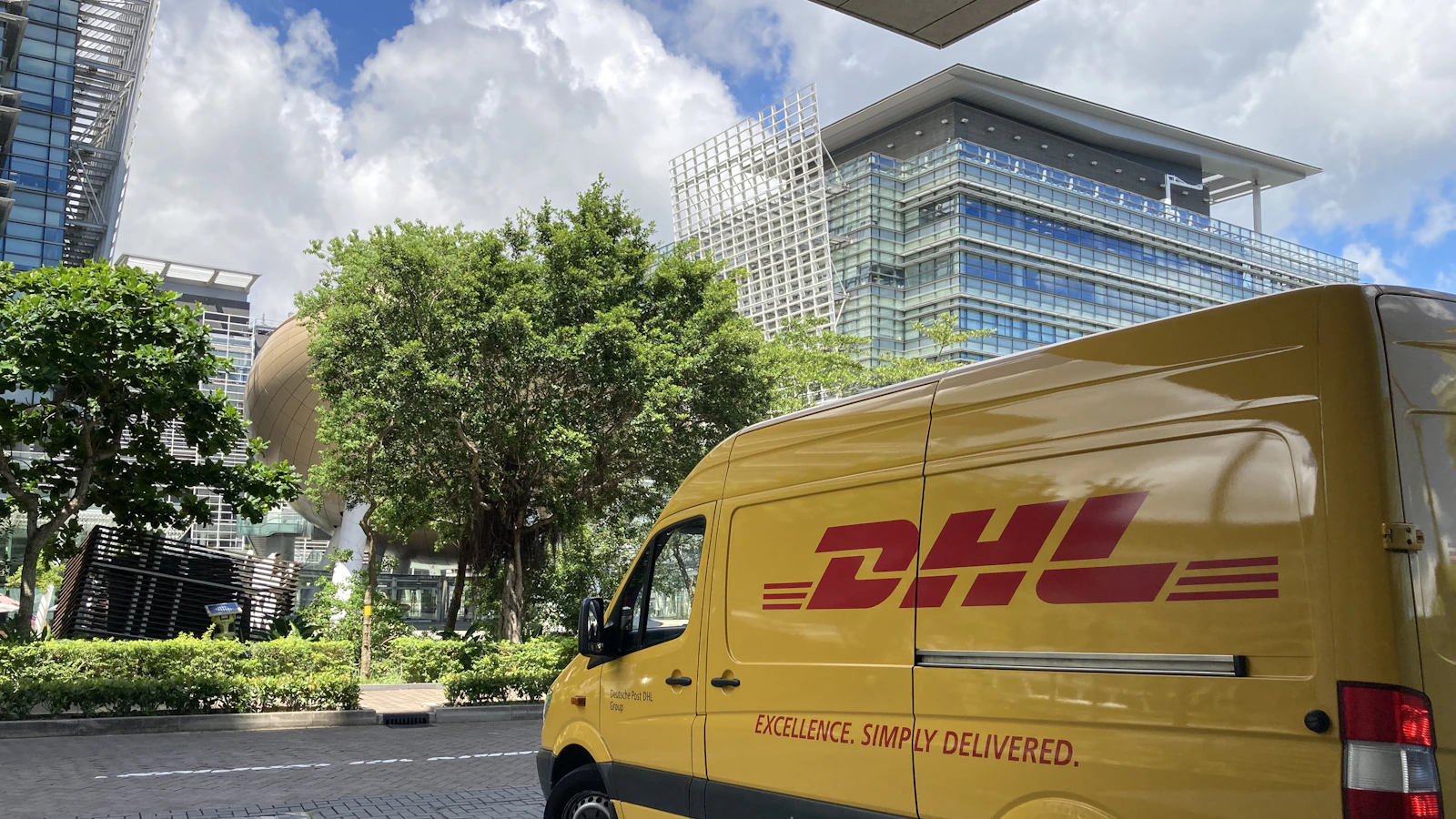
KEY TAKEAWAYS Summary by the editors
- DHL Supply Chain spent 18 months validating agentic AI use cases before partnering with startup HappyRobot in November 2025.
- The AI agents handle appointment scheduling, driver follow-up calls and warehouse coordination, targeting hundreds of thousands of emails and millions of voice minutes annually.
- HappyRobot raised 44 million US dollars in series B funding in September 2025, bringing total funding to 62 million dollars and serving more than 70 enterprise customers.
- Gartner research shows 55 per cent of supply chain leaders expect agentic AI to reduce entry-level hiring, while demand for senior AI-skilled roles rose 387 per cent since 2023.
In November 2025, DHL Supply Chain announced a partnership that signals a shift in how logistics operations are run. The contract logistics division of DHL Group began deploying autonomous AI agents from San Francisco startup HappyRobot across its global operations, automating high-volume communication workflows that previously required human coordination. The agents handle phone calls, emails and messaging around appointment scheduling, driver follow-ups and warehouse coordination tasks that directly determine whether shipments move on schedule.
For fashion companies using DHL's logistics services, the partnership represents a template for how artificial intelligence is moving from pilot projects to production systems that reshape the economics of supply chain operations. The deployment is part of a broader industry trend: retail and e-commerce held 34.87 per cent of the agentic AI in supply chain and logistics market in 2025, according to Evolvance Market Research, with the global market valued at 9.2 billion US dollars and projected to reach 46.15 billion dollars by 2035.
Unlike earlier generations of automation that handled narrowly defined tasks, agentic AI systems can plan, adapt and act toward goals with limited human oversight. The question for fashion supply chain leaders is not whether this technology will reshape logistics, but how quickly they can adopt it without introducing new operational risks.
What is agentic AI and how does it differ from previous automation?
Agentic AI refers to systems that autonomously pursue objectives by planning multi-step workflows, making decisions and executing actions across integrated software environments. Unlike robotic process automation, which follows fixed rules, or chatbots, which respond to prompts, agentic systems adapt to novel conditions and handle exceptions without predefined scripts.
In logistics, this distinction matters. A traditional system might flag a delayed shipment for human review. An agentic AI agent can assess the delay, evaluate alternative carriers, check inventory exposure, calculate the cost of expedited freight versus a late delivery and either execute a re-route or escalate to a human operator based on predefined authority limits.
HappyRobot's platform deploys AI agents that communicate via phone, email and messaging whilst integrating with backend logistics systems. According to DHL, current deployments target hundreds of thousands of emails and millions of voice minutes annually. Sally Miller, chief information officer at DHL Supply Chain, stated that the company spent more than 18 months systematically identifying and validating operational use cases for generative and agentic AI technologies before scaling the HappyRobot deployment.
The shift from assistance to autonomy is what defines 2025 and 2026 as an inflection point. DHL's September 2026 Logistics Trend Radar report identified agentic AI as one of the most significant trends, describing it as moving beyond digital assistance to taking action across supply chains.
Why did DHL Supply Chain choose HappyRobot over other AI vendors?
HappyRobot was founded in 2023 by Pablo Palafox, Javier Palafox and Luis Paarup, who met through robotics and deep learning projects at the Technical University of Munich. The startup participated in Y Combinator's summer 2023 cohort and pivoted to voice AI for logistics during the accelerator batch.
In September 2025, HappyRobot raised 44 million US dollars in series B funding led by Base10 Partners, with participation from Andreessen Horowitz, Y Combinator, Tokio Marine, WaVe-X and World Innovation Lab. The round came just 10 months after a 15.6 million dollar series A, bringing total funding to 62 million dollars. At the time of the DHL announcement, HappyRobot served more than 70 enterprise customers, including Ryder, Schneider and Werner, according to the company's series B statement.
DHL selected HappyRobot for vertical specialisation. Unlike general-purpose AI voice platforms, HappyRobot trains agents on logistics-specific workflows, terminology and exception handling. The agents handle multi-turn conversations, integrate with transportation management systems and operate across email, WhatsApp and SMS through a unified orchestration layer, according to statements from Danny Luo, a senior engineer on HappyRobot's founding team.
The partnership reflects DHL's broader AI strategy. In October 2025, DHL conducted a global survey of more than 2,500 supply chain professionals across sectors and regions. The survey found that 44 per cent of respondents identified AI as the leading driver of future logistics transformation, followed by robotics at 28 per cent. By 2026, DHL had deployed close to 10,000 automation and digitalisation projects globally, according to a press release from the company's Europe Innovation Center opening.
Which specific workflows are the AI agents handling at DHL?
DHL Supply Chain deployed HappyRobot's agents across three core workflows, all of which directly affect operational velocity in fashion logistics: appointment scheduling for transport and warehouse operations, automated driver follow-up calls for status updates and ETAs, and high-priority warehouse coordination communications.
These workflows share common characteristics. They are high-volume, exception-prone and time-sensitive. Manual handling creates bottlenecks because human coordinators must context-switch between systems, interpret incomplete information and escalate decisions through organisational hierarchies. Voice and email interactions are fragmented across phone systems, inboxes and messaging platforms, making it difficult to track resolution times or identify systemic delays.
The AI agents operate 24 hours a day, handling both inbound and outbound interactions. For appointment scheduling, agents coordinate with shippers, receivers and carriers to book dock slots, resolve conflicts and confirm delivery windows. For driver follow-ups, agents make proactive calls to verify shipment status, update estimated arrival times and flag delays before they cascade into service failures. For warehouse coordination, agents manage urgent communications around inventory allocation, labour scheduling and equipment availability.
According to FashionUnited's December 2025 supply chain outlook, Sally Miller explained that integrating AI agents drives greater process efficiency for customers whilst making operational roles more engaging and rewarding for employees by automating repetitive and time-consuming tasks. The company's technology VP, Jason Pawlowski, stated in January 2026 that with AI agents, work that previously took days or weeks can now be done in hours.
What ROI and efficiency gains has DHL reported?
DHL Supply Chain has not disclosed client-specific return on investment figures for the HappyRobot deployment. However, HappyRobot's public statements and industry benchmarks provide context for the financial impact of similar implementations.
In its September 2025 series B announcement, HappyRobot stated that appointment resolution times dropped from over a week to under 30 minutes for clients using the platform. Some clients reported returns exceeding 119 times their initial investment, according to the funding announcement. For outbound sales, HappyRobot agents delivered over 19 times ROI, whilst carrier sales operations saw returns above 5 times, the company stated.
Industry-wide data supports these claims. McKinsey research documents that AI in logistics can reduce inventory costs by 20 to 30 per cent and logistics operating costs by 5 to 20 per cent across supply chains. A 2026 global enterprise survey found that AI agents across supply chain coordination reduce logistics costs by 15 per cent and improve inventory accuracy by 35 per cent. Gartner benchmarks show that AI control towers, which integrate demand, supply, inventory and logistics into a unified AI-managed view, achieve 307 per cent ROI within 18 months.
For fashion companies, these efficiencies translate directly to margin improvement. Mid-market third-party logistics providers operate on net margins of 4 to 7 per cent, according to the European Logistics Association. A 2 to 3 per cent reduction in total cost through AI can therefore deliver 30 to 75 per cent margin improvement.
By November 2026, DHL had introduced more than 1,400 analytics and AI solutions across its network, including over 500 implementations during 2026. The company's conversational AI systems recorded more than 2.5 million minutes of interactions, according to a press release on adaptive robotics pilots.
How has the partnership affected DHL's workforce and employee engagement?
Lindsay Bridges, executive vice president of human resources at DHL Supply Chain, framed the technology as a workforce enabler rather than a replacement strategy. AI agents help relieve teams from repetitive, time-consuming tasks and give them space to focus on meaningful, high-value work, Bridges stated in the November 2025 announcement. DHL Supply Chain said HappyRobot's agents have already started to deliver faster, more customer-centric services, improve employee retention and create a more desirable work environment.
This messaging aligns with broader industry trends but sits alongside workforce reduction expectations. A Gartner survey of 509 supply chain leaders found that 55 per cent expect agentic AI to reduce the need to hire for entry-level positions, and 51 per cent believe the technology will drive overall workforce reductions. At the same time, demand for supply chain roles requiring AI skills rose 387 per cent between early 2023 and early 2026, most of it at mid-senior and director level, according to Gartner analysis of more than 35 million job postings.
The logistics sector faces acute talent shortages. Randstad's 2025 report confirms that 76 per cent of logistics firms face talent shortages, whilst 60 per cent of logistics roles are undergoing AI and robotics transformation. A large share of logistics workers say they have left roles because there was no clear career progression or because the job did not offer future-proofed skills, according to Randstad's Workmonitor 2026.
Research from Salesforce's agentic AI workforce survey in 2025 found that 61 per cent of employees are expected to remain in current roles with AI sidekicks, whilst 23 per cent will move into new positions. Microsoft's 2025 Work Trend Index reported that 47 per cent of business leaders prioritise AI-specific skilling of existing workforce, 45 per cent maintain headcount but use AI as digital labour, and 33 per cent use AI to reduce headcount.
For fashion logistics operations, the workforce shift means roles evolve from executing repetitive coordination tasks to supervising agent systems, resolving exceptions and managing supplier relationships. The companies that succeed with agentic AI in logistics redesign roles rather than simply cutting headcount, according to Gartner research.
- 2023HappyRobot founded by Pablo Palafox, Javier Palafox and Luis Paarup; completes Y Combinator S23
- December 2024HappyRobot raises 15.6 million USD series A led by Andreessen Horowitz
- May 2025DHL Supply Chain begins systematic testing of agentic AI use cases (18-month validation period)
- September 2025HappyRobot raises 44 million USD series B led by Base10 Partners, reaches 70+ enterprise customers
- November 2025DHL Supply Chain announces partnership with HappyRobot for global deployment of AI agents
- September 2026DHL Logistics Trend Radar 8.0 identifies agentic AI as top supply chain technology trend
- November 2026DHL reports 1,400+ AI implementations network-wide, 2.5 million+ minutes of conversational AI interactions
Source: DHL Group press releases, HappyRobot announcements, 2025-2026
What are fashion companies doing with agentic AI beyond logistics?
Fashion brands are deploying agentic AI across the value chain, not only in logistics. Pattern Group research published in January 2026 surveyed 1,000 senior leaders across the United States, United Kingdom, Germany and United Arab Emirates and found that 33 per cent of e-commerce brands have already deployed AI-powered shopping agents. The fashion sector is leading adoption, with 46 per cent of fashion brands prepared for AI agents to become a primary channel for customer discovery and purchase.
In warehouse operations, Otrium, a Netherlands-based outlet platform, implemented robotics and AI in its warehouse and reduced the workforce by 70 per cent whilst delivering efficiency gains that brought the company closer to profitability, according to FashionUnited's December 2025 supply chain outlook. Spanish fashion multinational Tendam operates a highly automated logistics centre in Illescas, Spain, equipped with automation solutions from Dematic, which handles 85 per cent of all online orders with capacity to scale operations by 30 to 50 per cent above current capabilities.
In sourcing and planning, McKinsey's fashion supply chain report notes that AI agents link product lifecycle management and enterprise resource planning systems to create a unified view of sourcing, enabling real-time analytics and unlocking double-digit cost savings. Automating parts of sourcing, inventory management and physical sampling operations helps save money, the report states.
Investment in AI is accelerating. Over the past year, e-commerce companies invested an average of 291,626 US dollars in AI, a figure projected to rise 11 per cent to 323,886 dollars in 2026, as brands prioritise AI-powered customer service, personalised advertising and intelligent product discovery, according to Pattern Group.
By October 2026, AI-referred traffic accounted for 5.46 per cent of United States retail site visits, up from 0.71 per cent in the first quarter of 2025, according to panel data compiled by First Page Sage. Agent-completed orders grew from 0.03 per cent to 1.52 per cent of e-commerce orders over the same period. Adobe data shows that AI traffic to US retail sites grew 693.4 per cent year over year during the 2025 holiday season.
What risks and limitations should fashion companies consider?
Autonomous agents introduce operational, legal and security risks that differ from previous generations of software. Unlike predictive tools that flag anomalies for human evaluation, agentic systems act on their own conclusions, according to a May 2026 analysis by law firm Foley. A logistics agent that misinterprets a data lag as an inbound delay might authorise expedited air freight at significant cost, only for the original shipment to arrive on time. Standard AI vendor contracts typically cap liability at fees paid, which are often just annual subscription costs, the analysis notes.
Data quality is the most common deployment blocker. Agents making decisions on dirty data produce bad decisions at machine speed, according to supply chain technology consultancy Workd. The answer is not to wait for perfect data, but to start where data is cleanest and use agents to identify quality issues elsewhere.
Gartner predicted in June 2025 that over 40 per cent of agentic AI projects will be cancelled by the end of 2027 because of rising costs, unclear business value or weak risk controls. An ORTEC survey in 2026 found that integration with existing systems, data quality and change management were the top barriers cited by logistics executives.
Security vulnerabilities are emerging as agents gain access to enterprise systems. A November 2026 Barracuda Security report identified 43 different agent framework components with embedded vulnerabilities introduced via supply chain compromise. In early 2026, a supply chain attack on the OpenAI plugin ecosystem resulted in compromised agent credentials being harvested from 47 enterprise deployments, according to Stellar Cyber research.
Supply chains are unusually challenging environments for autonomous agents because almost every decision is interconnected. Transportation affects inventory, inventory affects customer service, procurement affects production, production affects warehouse activity, and warehouse activity affects transportation, according to Logistics Viewpoints analysis. A decision that looks optimal inside one domain can create cost or risk somewhere else.
Human oversight remains non-negotiable. Agents should operate under least-privilege principles, with explicit action boundaries and clear escalation paths. An inventory agent might autonomously rebalance stock between facilities under normal circumstances but require human approval when the movement could create shortages elsewhere in the network. A transportation agent that needs shipment status and carrier-rate information should not automatically receive broad ERP access.
How widespread is agentic AI adoption in retail and logistics today?
Adoption is accelerating but remains concentrated in large enterprises. NVIDIA's State of AI in Retail and CPG survey, published in January 2026, found that 91 per cent of retail and consumer packaged goods companies are actively using or assessing AI, and 90 per cent plan to increase AI budgets in 2026. However, only 20 per cent have AI agents active now, whilst 47 per cent are using or assessing agentic AI specifically.
By industry vertical, retail and e-commerce lead agentic AI adoption at 23 per cent in 2026, followed by supply chain and logistics at 19 per cent, according to First Page Sage analysis of adoption data from McKinsey, Gartner and IDC spanning more than 15,600 businesses. Capgemini Research Institute reported in 2025 that only 14 per cent of organisations have AI agents in partial or full deployment, and 23 per cent are running pilots, with customer service among the first areas where agents are being used.
Among fashion brands specifically, Pattern Group found that 46 per cent are prepared for AI agents to become a primary channel for customer discovery and purchase, the highest rate among surveyed sectors. In contrast, only 28 per cent of business leaders in a 2025 Capgemini survey had begun piloting real-world agentic AI use cases, suggesting that awareness exceeds operational deployment.
The technology bottleneck is not capability but organisational readiness. Only 23 per cent of supply chain organisations have a formal AI strategy in place, and the skills gap remains the single biggest constraint on faster deployment, according to AI Learning Guides analysis of 2026 Gartner data.
What should fashion companies do now?
Fashion executives should approach agentic AI deployment with structured pragmatism, focusing on measurable operational improvements rather than technology experimentation. The following steps provide a framework for evaluating and implementing autonomous agents in logistics and supply chain operations.
- Identify high-volume, rules-heavy workflows. Start with processes that involve repetitive coordination tasks, such as appointment scheduling, shipment status updates or warehouse task allocation. These workflows generate measurable time savings and have clear success metrics.
- Assess data infrastructure before agent deployment. Agents require real-time access to inventory counts, order status and customer records. Conduct a data quality audit across ERP, warehouse management and transportation management systems. Document where data is clean, where gaps exist and what integration work is required.
- Run a 90-day pilot with human oversight. Deploy agents in a contained environment with approval workflows for all autonomous actions. Measure resolution time, error rate, escalation frequency and cost per transaction. Compare pilot metrics to baseline performance from manual processes.
- Define explicit authority boundaries. Establish dollar thresholds, approval requirements and escalation paths before expanding agent autonomy. An agent that can book standard freight should not automatically have authority to approve expedited shipments or change customer delivery commitments.
- Build vendor governance into contracts. Standard AI vendor agreements cap liability at subscription fees. Negotiate realistic liability provisions, audit requirements and service-level guarantees. Require vendors to document model training data, decision logic and version control.
- Invest in workforce reskilling, not just cost reduction. Identify which roles will shift from task execution to agent supervision. Provide training on how to monitor agent performance, interpret escalation signals and intervene when agents encounter edge cases. Document new workflows and responsibility structures.
- Establish a formal AI governance framework. Assign executive ownership for agent deployments. Create cross-functional review processes for new agent use cases. Implement monitoring dashboards, audit trails and incident response protocols. Revisit governance structures quarterly as agent capabilities expand.
| Deployment approach | Time to value | Risk profile | Best for |
|---|---|---|---|
| Pre-built agent platform (e.g. HappyRobot) | 3 to 6 months | Lower technical risk, vendor dependency | High-volume communication workflows with industry-standard processes |
| Custom agent development | 12 to 18 months | Higher cost and integration complexity | Proprietary workflows or unique system architecture |
| Hybrid (platform + custom tools) | 6 to 9 months | Moderate, requires internal AI capability | Companies with existing data infrastructure and engineering resources |
| Module-based rollout (single workflow) | 90 days pilot, 6 months scale | Lowest, contained scope | First-time adopters testing feasibility |
Source: Pattern Group, global enterprise survey, Gartner, 2025-2026
Frequently asked questions
What is the difference between agentic AI and robotic process automation in logistics?
Robotic process automation follows fixed rules and cannot adapt to novel conditions. Agentic AI systems plan multi-step workflows, make decisions and adjust to exceptions without predefined scripts. In logistics, this means an agentic system can assess a delayed shipment, evaluate alternatives and either execute a re-route or escalate based on authority limits, whilst RPA would simply flag the delay for human review.
How long does it take to deploy AI agents in fashion logistics operations?
Deployment timelines vary by approach. A pre-built platform like HappyRobot can reach initial production in 3 to 6 months. Custom development typically requires 12 to 18 months. DHL Supply Chain spent 18 months validating use cases before expanding its partnership with HappyRobot in November 2025. A 90-day pilot is recommended to measure resolution time, error rate and cost per transaction before scaling.
What ROI can fashion companies expect from AI agents in supply chain?
Industry benchmarks show AI in logistics can reduce costs by 15 per cent and improve inventory accuracy by 35 per cent. McKinsey documents 20 to 30 per cent inventory cost reduction and 5 to 20 per cent logistics cost reduction. HappyRobot reported clients seeing appointment resolution drop from over a week to under 30 minutes and returns exceeding 119 times initial investment. Most deployments reach breakeven in 8 to 14 months.
Sources
- DHL Group: DHL boosts operational efficiency with HappyRobot's AI Agents
- HappyRobot: Series B Announcement
- FashionUnited: 2026 Supply chain in fashion outlook
- Pattern Group: AI-Powered Commerce report (via FashionNetwork)
- Gartner: AI in logistics workforce impact (via nShift)
- Evolvance Market Research: Agentic AI in Supply Chain & Logistics Market