Hidden Champion: Shima Seiki, the maker of seamless knitting machines
The Japanese company invented WholeGarment technology that knits entire sweaters in one piece, eliminating waste and revolutionising how knitwear is made.

KEY TAKEAWAYS Summary by the editors
- Shima Seiki holds the largest market share in computerised flat knitting machines worldwide and has sold 200,000 machines since entering the industry in 1967.
- The company's WholeGarment technology, introduced in 1995, produces garments in one piece without sewing, eliminating fabric waste and reducing production time to 30 minutes per sweater.
- With 1,654 employees and revenue of 33.5 billion yen (£222 million) in fiscal 2026, the publicly traded company operates globally through subsidiaries in Europe, Asia and the Americas.
- Shima Seiki uses AI-powered design search functions and IoT-based production management software to connect digital yarn data, virtual sampling and automated knitting.
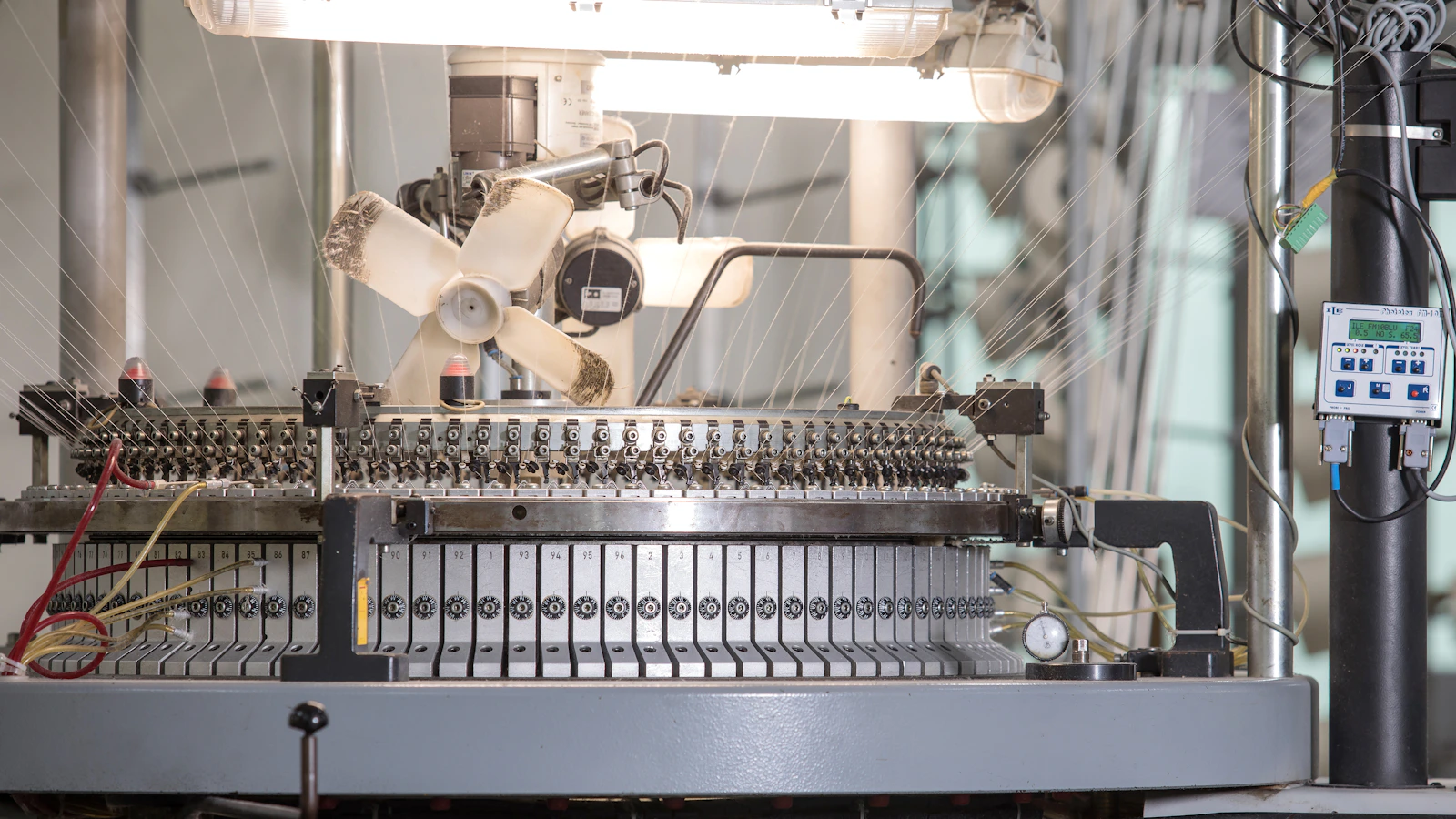
Every time a consumer pulls on a seamless knitted jumper from Uniqlo, Patagonia or The North Face, there is a good chance the garment was produced on a machine built by a company most shoppers have never heard of. Shima Seiki, based in Wakayama, Japan, manufactures the computerised flat knitting machines that turn yarn into finished knitwear, including the revolutionary WholeGarment machines that knit entire garments in three dimensions without any seams.
Fashion needs Shima Seiki because knitting is one of the few apparel manufacturing processes that can be fully automated, yet still produce custom-fit, waste-free garments. The most surprising fact: 13,000 WholeGarment machines were manufactured from 1998 through 2022, yet these machines only produce 1 percent of the total garment supply, suggesting vast untapped potential for the technology.
What does Shima Seiki make and who uses it?
Shima Seiki of Wakayama, Japan is a leading technology provider in the computerised flatbed knitting machine industry. The company manufactures computerised flat knitting machines for shaped knitwear, WholeGarment machines for seamless production, glove and sock knitting machines, 3D design systems, and automatic fabric cutting machines.
Shima Seiki's WholeGarment is a seam-free knitwear knitted in three dimensions directly from the knitting machine. In 1995, Shima Seiki pioneered the world's first knitting machine capable of producing an entire garment in three dimensions. Simply feed yarn into a WholeGarment machine, and in around 30 minutes you will have a pullover.
According to Shima Seiki's website, the WholeGarment line is currently used by 25 fashion brands, including Uniqlo. The company has documented case studies showing its technology used by AlphaTauri, Red Bull's innovation-oriented fashion brand, John Smedley, and Decathlon. Its sports and outdoor clients include ANTA, Asics, New Balance, The North Face, Patagonia and Snow Peak. According to the Uniqlo parent company, Shima Seiki is the world's largest company in the computerised flatbed knitting machine field.
How big is Shima Seiki and who owns it?
The company was established on February 4, 1962, when founder Masahiro Shima, when he was twenty-four years old, set out to address the difficult challenge of fully automating the glove knitting machine. Shima Seiki entered the flat knitting machine industry in 1967.
In the fiscal year ending March 31, 2026, Shima Seiki had annual revenue of 33.51 billion yen with 3.04% growth. The company reported 27,579 million Japanese yen in non-consolidated sales and consolidated sales of 33,509 million Japanese yen for the fiscal year ended March 2026, with 1,256 employees at the parent company and 1,654 employees group-wide as of March 31, 2026.
Source: Shima Seiki, 2026
Shima Seiki is a publicly traded company listed on the Tokyo Stock Exchange. As of 25 September 2026, Shima Seiki's stock price was $5.84 with a current market cap of $198 million. The company operates globally through subsidiaries including Shima Seiki (Hong Kong) Ltd., Shima Seiki Italia S.p.A., Shima Seiki Europe Ltd., Shima Seiki U.S.A. Inc., and operations in Thailand, Korea, Vietnam, France, Spain, Portugal and Morocco.
Why does Shima Seiki lead its niche worldwide?
Shima Seiki of Wakayama, Japan is the leading manufacturer in the computerised flatbed knitting machine industry, with the largest market share worldwide. An older company document stated that Shima Seiki had global market shares of above 60% for computerised flatbed knitting machines and of more than 80% for glove knitting machines.
The company's competitive advantage rests on proprietary technology developed over decades. Shima Seiki has sold a total of 200,000 machines, 10,000 WholeGarment knitting machines, and holds 4,500 patents. The company features Shima Seiki's original SlideNeedle on four needle beds instead of the usual two, capable of performing true, high-quality, high-speed WholeGarment knitting.
The company is currently the only glove knitting machine manufacturer with proprietary technology in the world. In the flat knitting machine area, the company sees no competition in Japan, although there is no statistical data. The company's philosophy, throughout our history, we have cultivated our corporate spirit of 'If it can't be found anywhere, let's create it', has driven continuous innovation.
How does Shima Seiki use digital technology and AI?
Shima Seiki has integrated digital design, AI and IoT throughout its product ecosystem. The latest manifestation of Shima Seiki's SDS-ONE APEX series 3D design systems, SDS-ONE APEX4, features the latest search functions using Artificial Intelligence (AI).
The Shima KnitPLM website features the world's first PLM system dedicated to the flat knitting industry. Shima KnitPLM connects Shima Seiki products with the customer's core systems such as ERP and SCM using the latest IoT technology, and ensures traceability and improved productivity throughout the value chain. In addition, seamless data link among software eliminates the need for data input at each stage, achieving workflow automation and labour savings.
The company offers a digital ecosystem that includes yarnbank, which provides digitised yarn data, SHIMA Datamall for design content, and KnitManager for monitoring machine status and production progress. Shima Seiki demonstrates the SDS-ONE APEX4 3D design system and APEXFiz Design software. Once a design is approved, digital knitting data can be converted into machine-ready information, tightening the link between designers and knitting factories. Shima Seiki says this can reduce physical sampling, development time, material consumption and associated cost.
The company's 3D virtual sampling capability represents a fundamental shift in how knitwear is developed. The integration of the SDS-ONE APEX4 3D design system into the factory floor uses 3D virtual sampling technology designed to replace physical prototypes, which often consume weeks of production time and substantial material resources.
What are the risks and who are the competitors?
Shima Seiki faces competition primarily from German manufacturer Stoll, now owned by Karl Mayer. For seamless flat-bed knitting machines, two suppliers, Shima Seiki and Stoll, are the leaders in machine manufacturing. The top companies in the 3D knitting machines market include Shima Seiki, Stoll, Santoni and Steiger and they collectively hold a share of 25 to 30 percent in the market.
However, in October 2025, Stoll machines were discontinued, potentially strengthening Shima Seiki's position. Chinese competitors are also emerging: Cixing's annual production capacity exceeds 30,000 machines, and the company has progressively moved upmarket with its computerised CX series, directly challenging Shima Seiki and Stoll in the mid-to-high automation segment.
Financial performance remains volatile. Non-consolidated net sales for the fiscal year ended March 31, 2026 rose 6.6 percent year on year to 27.6 billion yen, driven mainly by steady sales of flat knitting machines in the Italian market. While the company remained in the red, operating and ordinary losses narrowed significantly, and profit loss shrank to 1.36 billion yen from 9.73 billion yen in the previous year.
The slow adoption of WholeGarment technology presents both a challenge and an opportunity. Despite the sustainability benefits and time savings, the technology requires manufacturers to invest in new equipment and retrain staff, while the higher upfront cost of WholeGarment machines compared to conventional flat knitting equipment can deter price-sensitive buyers in mass-production markets.
- 1962Masahiro Shima founded Shima Seiki to develop fully automated glove knitting machines
- 1964Successfully produced world's first fully automated glove knitting machine
- 1967Entered flat knitting machine industry with fully automated collar knitting machine
- 1978Developed SNC computerised flat knitting machine
- 1995Introduced WholeGarment technology at ITMA exhibition in Milan
- 2016Fast Retailing (Uniqlo) formed joint venture for WholeGarment production
- 2026Total of 200,000 machines sold, including 10,000 WholeGarment machines
Source: Shima Seiki company history
What can fashion companies learn from Shima Seiki?
Shima Seiki demonstrates how a medium-sized manufacturer can dominate a global niche through relentless innovation and vertical integration. The company develops not just machines but complete ecosystems, from yarn databases to 3D design software to production management systems, making it difficult for customers to switch to competitors.
The WholeGarment story offers a sobering lesson about the gap between technological capability and industry adoption. Despite eliminating waste, reducing labour requirements and enabling on-demand production, the technology has captured only a tiny fraction of the global knitwear market after three decades. Fashion's traditional supply chains, built around cutting and sewing, resist wholesale transformation even when superior alternatives exist.
For fashion brands, Shima Seiki's technology addresses three critical pressures: sustainability mandates that require waste reduction, labour shortages in developed markets that make local production uneconomical, and consumer demand for customisation and faster delivery. Brands exploring these machines must weigh higher capital costs against long-term savings in materials, labour and inventory.
The company's focus on proprietary technology protected by thousands of patents shows the value of controlling core intellectual property. While competitors can copy designs, replicating the SlideNeedle mechanism or four-bed architecture requires years of development. Fashion companies building their own manufacturing capabilities should consider which technologies offer similar defensibility.
Frequently asked questions
What is WholeGarment knitting technology?
WholeGarment is Shima Seiki's proprietary technology that knits complete garments in three dimensions directly on the machine, eliminating the need for cutting and sewing. A sweater can be produced in approximately 30 minutes with zero fabric waste, as the machine uses only the exact amount of yarn needed for the finished garment.
Which fashion brands use Shima Seiki machines?
Confirmed clients include Uniqlo (through a joint venture with parent company Fast Retailing), sports brands such as Asics, New Balance, The North Face and Patagonia, and fashion brands including AlphaTauri, John Smedley and Decathlon. The company states 25 fashion brands use WholeGarment technology, though many do not permit public disclosure.
Who are Shima Seiki's main competitors?
The primary competitor is Stoll of Germany (now part of Karl Mayer), though Stoll discontinued its machines in October 2025. Chinese manufacturer Cixing is emerging as a challenger in the mid-to-high automation segment. Together, Shima Seiki, Stoll, Santoni and Steiger hold 25 to 30 percent of the global 3D knitting machines market.
Sources
- Shima Seiki: Company Profile
- Stock Analysis: Shima Seiki Mfg Revenue
- Nippon.com: Shima Seiki Sets Sights on Sustainable Fashion
- Knitting Industry: Shima Seiki at ITMA
- DataIntelo: Flat Knitting Machines Market Report
- Fashion Network: Fast Retailing forms joint venture with Shima Seiki
- Globe and Mail: Shima Seiki Narrows Losses
- Knitting Industry: Achieving sustainability with WHOLEGARMENT