Over 35% of fashion executives use GenAI daily: State of Fashion 2026
BoF and McKinsey data show more than a third of fashion leaders now deploy generative AI in customer service, image creation and product discovery, yet 90% of pilots fail to scale.

KEY TAKEAWAYS Summary by the editors
- More than 35 per cent of fashion executives report using generative AI in daily operations for customer service, image creation, copywriting and product discovery.
- Executives rank artificial intelligence as the single biggest opportunity for the fashion industry, surpassing product differentiation and sustainability.
- Approximately 90 per cent of AI initiatives remain stuck in pilot phase and fail to scale to enterprise deployment.
- Zalando reduced image production time from six to eight weeks to three to four days whilst cutting costs by 90 per cent using generative AI.
More than 35 per cent of fashion executives report already using generative AI in areas such as online customer service, image creation, copywriting, consumer search or product discovery, according to the State of Fashion 2026 report published by The Business of Fashion and McKinsey & Company. Executives cite artificial intelligence as the biggest opportunity for the industry, surpassing other business priorities like product differentiation and strengthening sustainability.
The findings, drawn from the BoF-McKinsey State of Fashion Executive Survey, mark a sharp acceleration in adoption since the previous year. Yet beneath the headline figures lies a starker reality: 90 per cent of pilots fail to scale, and only 1 per cent report having mature deployments.
What functions are using generative AI most?
Whilst finance and manufacturing roles will see the greatest overall impact from automation without gen AI, automation with gen AI could lead to huge productivity gains for fashion players in their marketing and sales functions, with communications and marketing functions seeing the greatest increases in time savings from automation with gen AI in the US fashion industry.
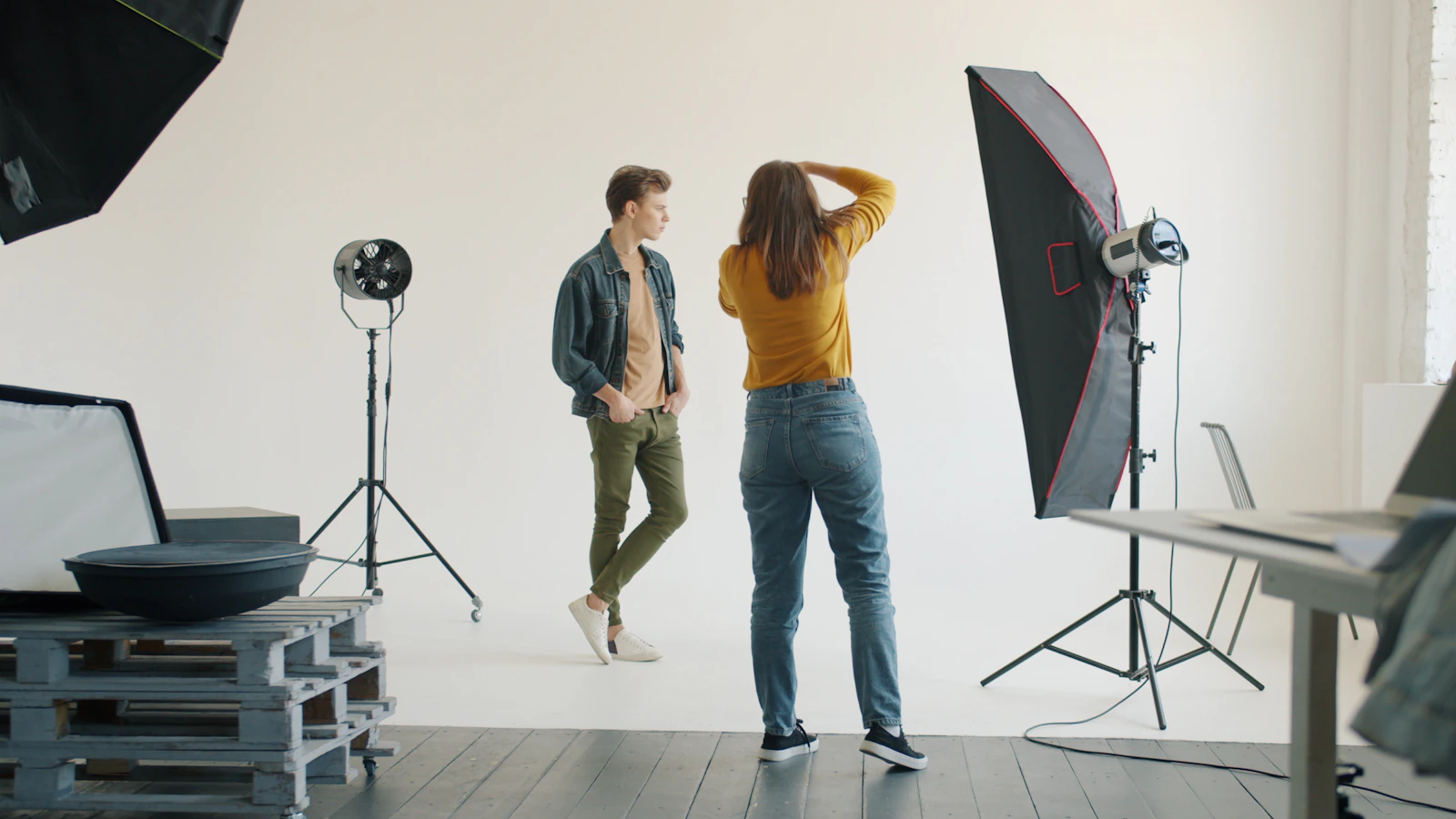
The concentration in consumer-facing and marketing functions reflects where early use cases deliver rapid, measurable returns. Approximately 70 per cent of Zalando's editorial campaign assets were AI-generated in the fourth quarter of 2024. Matthias Haase, vice president of content solutions at Zalando, told Reuters that using generative AI cuts the time needed to produce imagery to around three to four days from six to eight weeks, whilst reducing costs by 90 per cent.
How are consumers using AI to shop for fashion?
Shopping-related generative AI searches grew 4,700 per cent between July 2024 and July 2025, with AI supporting inspiration and product comparison. Twenty-three per cent of consumers admit to utilising AI to discover new products, whilst 41 per cent of consumers say they trust generative AI.
Whilst search engines remain dominant, driving around 80 per cent of all search traffic, the rapid rise of AI-driven discovery highlights a fundamental change in how people find and evaluate products. As shoppers shift from apps and websites to AI agents, fashion players risk losing ownership of the consumer relationship.
Why do most AI projects fail to scale?
Generally speaking, most companies have trouble scaling up their pilot AI projects, and surveys suggest that many companies hit a wall with their pilot projects, leaving them at stage two, according to MIT research scientist Stephanie Woerner. A Sourcing Journal survey found over half of companies are still running AI pilot programmes.
The State of Fashion 2026 identifies several structural barriers to scaling. Up to 90 per cent of AI initiatives fail to scale beyond the pilot phase, predominantly because the underlying tech and data are poor and insufficient to support such programmes. To harness this technological change, companies must redesign their processes and compete for AI talent, looking beyond the fashion ecosystem to find it whilst protecting the essential creativity that makes fashion tick.
Which regions and company sizes lead adoption?
Whilst the State of Fashion 2026 report does not break down the 35 per cent adoption figure by geography or company size, broader market research shows North America leads global AI adoption in fashion. North America held the dominant position in the global AI in fashion market in 2025, commanding 1.77 billion dollars in revenue, equivalent to a 38.5 per cent share of the total global market.
Large brands and online platforms currently lead adoption, whilst mid-tier and niche labels are increasingly using subscription-based AI tools to scale design iterations and storytelling without proportional increases in creative headcount. More than 61 per cent of European fashion companies implemented AI-powered customer engagement platforms during 2025, with Germany, France, Italy and the United Kingdom collectively accounting for over 70 per cent of regional AI adoption in fashion operations.
What separates leaders from laggards?
The gap between experimental pilots and production deployment defines the current state of generative AI in fashion. Leaders share common characteristics: they invest in data infrastructure before models, redesign workflows around AI rather than bolting tools onto existing processes, and secure scarce AI talent from outside traditional fashion recruitment channels.
Brands such as Bershka and Nike are using generative AI across functions, from image generation to product design and personalisation. Artificial intelligence investments are set to boost productivity, meaning some existing positions will become AI-centric and new roles will emerge, and fashion leaders must prioritise upskilling their workforces and acquiring new talent to stay competitive.
Laggards, by contrast, treat AI as a technology problem rather than an organisational transformation. They purchase licences, run disconnected pilots across departments, and lack the data foundations or change management structures to move beyond proof of concept. The same McKinsey survey that predicted the 275 billion dollar impact also highlighted a maturity gap, with most brands purchasing licences, running pilots, but then stalling.
What does this mean for 2026 and beyond?
With turbulent conditions including volatile input costs, supply chain disruptions and slow growth straining fashion's economic model, AI is shifting from a competitive edge to a business necessity. The 35 per cent adoption figure represents early momentum, but the true test lies in whether the industry can close the gap between pilot enthusiasm and production reality.
By 2030, 30 per cent of employee time could be automated by gen AI and other tech across Europe and the US. For the majority still running pilots, the path forward requires investment not in more AI tools but in the data infrastructure, process redesign and talent strategies that enable those tools to deliver returns at scale.
Frequently asked questions
What percentage of fashion executives use generative AI daily?
More than 35 per cent of fashion executives report already using generative AI in areas such as online customer service, image creation, copywriting, consumer search or product discovery, according to the State of Fashion 2026 report by The Business of Fashion and McKinsey & Company.
Why do most fashion AI projects fail to scale?
Up to 90 per cent of AI initiatives fail to scale beyond the pilot phase, predominantly because the underlying technology and data are poor and insufficient to support such programmes. Most companies hit a wall with their pilot projects, leaving them at stage two of AI maturity rather than scaling to enterprise deployment.
How much time and cost does generative AI save in fashion content production?
Zalando reported that using generative AI cuts the time needed to produce imagery to around three to four days from six to eight weeks, whilst reducing costs by 90 per cent. In the fourth quarter of 2024, approximately 70 per cent of the retailer's editorial campaign assets were AI-generated.