Shein and Temu face a wall of new rules aimed at their parcels and algorithms
A EUR 3 EU duty, the end of US de minimis, a EUR 200 million DSA fine and a French law on ultra-fast fashion all target the test-and-reorder machine.

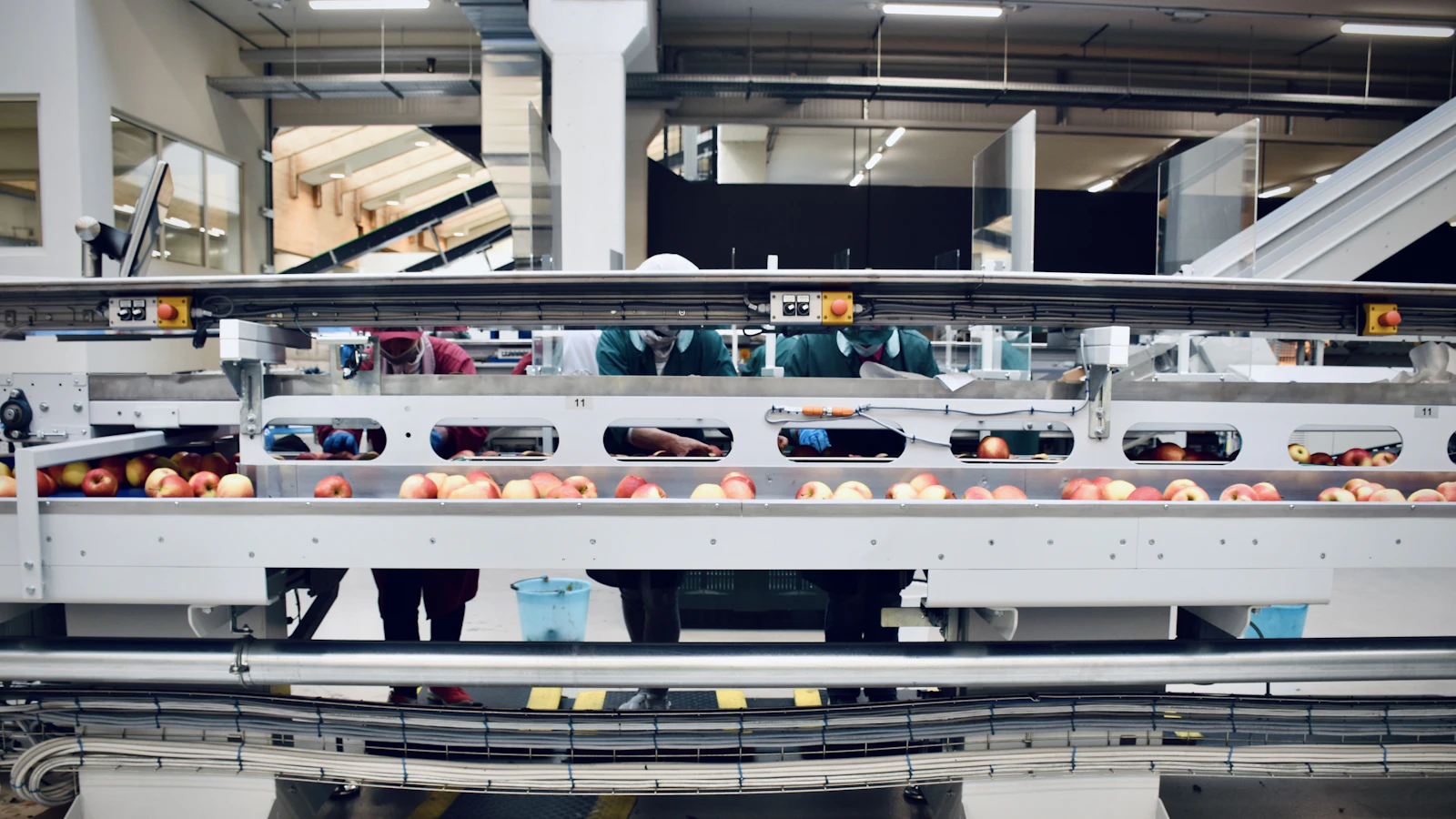
KEY TAKEAWAYS Summary by the editors
- Since 1 July 2026 the EU charges EUR 3 per item category on parcels under EUR 150; 4.6 billion such parcels entered the EU in 2024, 91% from China.
- Austrian Post reported parcels from Chinese platforms fell by around 50% in the first two weeks of July 2026.
- The Commission fined Temu EUR 200 million under the DSA in May 2026 and is investigating Shein's recommender system and addictive design.
- France's law, adopted on 29 June 2026, sets a penalty of up to EUR 20 per item by 2030, capped at 50% of the pre-tax price.
In the first two weeks of July 2026, the number of parcels arriving in Austria from Chinese online platforms such as Temu and Shein fell by around 50%, according to figures from Austrian Post reported by Vienna.at. The cause was a single number: on 1 July the European Union began charging a flat customs duty of EUR 3 on items in low-value parcels, ending a duty exemption for goods worth EUR 150 or less that had underpinned cross-border ultra-fast fashion for years.
E-commerce parcels valued under EUR 150 that entered the EU in 2024; 91% of them came from China
Volumes had doubled every year since 2022, which is why Brussels abandoned the EUR 150 duty exemption.
Source: Council of the EU, 2026
The duty is only one front. Within twelve months, the United States ended its USD 800 de minimis exemption for all countries, the European Commission fined Temu EUR 200 million under the Digital Services Act and opened formal proceedings against Shein, consumer authorities across the EU accused Shein of fake discounts and false deadlines, and France adopted what its lawmakers describe as the first law aimed specifically at ultra-fast fashion. The short answer to the question in our headline is that the pressure is real and is now arriving through customs, consumer law, platform regulation and environmental policy at the same time.
What makes the moment different is the target. Earlier debates were about cheap clothes. The new rules go after the machinery: the economics of the single parcel sent direct from a Chinese warehouse, and the design of the app that decides what each shopper sees. Shein calls its operating model Large-scale Automated Test and Reorder. Regulators are now testing whether that model still works once each parcel carries a duty and each recommendation feed carries a legal duty of care.
What has changed for Shein and Temu since 2025?
The sequence matters, because each measure closed a gap left by the previous one. Consumer authorities moved first in Europe. In May 2025 the Consumer Protection Cooperation network of national authorities, coordinated by the Commission, told Shein that it had identified six types of practice that appeared to breach EU consumer law: price reductions measured against prices that were not genuine, artificial time limits that pushed shoppers to buy, incomplete information on returns and refunds, labels that presented legal requirements as special features, misleading sustainability claims and contact details that were hard to find. Shein was given one month to propose commitments, Ireland's Competition and Consumer Protection Commission said.
Washington moved on trade. After ending the exemption for China and Hong Kong in May 2025, President Donald Trump signed an executive order on 30 July 2025 suspending duty-free de minimis treatment for all countries from 29 August. CBS News reported that low-value parcels entering the US had risen from 134 million a year in 2015 to nearly 1.4 billion in 2025, with US Customs and Border Protection processing more than 4 million de minimis shipments a day. When the China exemption ended, Temu halted shipments of Chinese goods to US customers and switched to items held in US warehouses.
- May 2025EU consumer authorities tell Shein six practices appear to breach consumer law
- Aug 2025US suspends duty-free de minimis treatment for all countries from 29 August
- Dec 2025Paris court rejects government request to suspend Shein's site for three months
- Feb 2026Commission opens formal DSA proceedings against Shein; Council approves EUR 3 duty
- May 2026Commission fines Temu EUR 200 million, the largest DSA fine to date
- Jun 2026French Parliament definitively adopts the anti-ultra-fast-fashion law
- Jul 2026EU starts charging EUR 3 per item category on parcels under EUR 150
Source: CCPC, CBS News, Asharq Al-Awsat, Lewis Silkin, Eunews, Public Sénat, Council of the EU, 2025 to 2026
Brussels then turned to customs and platform rules in parallel. The scale explains the urgency: 4.6 billion e-commerce parcels valued under EUR 150 entered the EU in 2024, 91% of them from China, and the Commission says volumes had doubled every year since 2022. Finance ministers agreed in November 2025 to remove the EUR 150 duty relief. The Council gave formal approval on 11 February 2026, six days before the Commission opened Digital Services Act proceedings against Shein. In May the Commission fined Temu, and in June the French Parliament completed a law it had debated since January 2024. On 1 July the EUR 3 duty went live.
How does the EU's EUR 3 duty work, and is it already biting?
The duty is charged per item category, not per parcel, which is what makes it bite for a basket of cheap fashion. The Council's own example: a parcel containing one silk blouse and two wool blouses falls under two distinct tariff sub-headings and therefore owes EUR 6. A parcel with three categories pays EUR 9. The flat rate is an interim fix that applies from 1 July 2026 to 1 July 2028 and may be extended. Normal tariffs are meant to apply to all goods once the planned EU customs data hub is running, currently expected in 2028.
Two further changes shift responsibility onto the platforms. Under the reform, platforms and sellers are treated as the importer and are responsible for customs obligations, with financial penalties for repeated failures. Separately, the Council and the European Parliament agreed on 26 March 2026 to introduce a handling fee on small distance-selling consignments. Its amount had not been specified on the Council's policy page when it was last reviewed in June 2026, so companies should not yet build a number into their models.
Early evidence from the ground is striking but partial. Austrian Post said parcels from Chinese platforms fell by around 50% in the first two weeks of July. The country received about 25 million packages from the Far East in 2025, of which the Post carried about 19 million, and it estimated that it may have missed several hundred thousand shipments within a few weeks. It added that it could not yet confirm a shift of customers to European online retailers. One national postal operator over two weeks is not a European trend, and part of the decline may reflect platforms shipping in bulk to European warehouses instead of sending single parcels, which the duty is designed to encourage.
What does France's anti-ultra-fast-fashion law actually do?
France's Senate gave the final vote on 29 June 2026, after a joint committee of both chambers agreed the text on 16 June, Public Sénat reported. The bill had been tabled by Anne-Cécile Violland, a Horizons deputy, in January 2024. Its central tool is a financial penalty, or malus, on each product sold by companies classed as ultra-fast fashion. The penalty rises over time to up to EUR 20 per item by 2030 and is capped at 50% of the product's pre-tax price. Part of the proceeds is earmarked for collection and recycling infrastructure.
Classification rests on two cumulative criteria, according to FashionUnited: the breadth of the range, meaning the volume of new garments placed on the market, and a repair-incentive coefficient that compares a product's price with the cost of repairing it. The thresholds will be set by government decree. The law also bans advertising for ultra-fast fashion, including through influencers, and requires sites to display messages encouraging reuse and repair. The advertising ban is the legally fragile part: the European Commission raised reservations about its compatibility with EU law, and Public Sénat reported that the measure is on hold, with a fallback that would limit it to influencers.
The final text is narrower than the first draft. Zara, Kiabi and Primark, which could have been caught by the original wording, are exempt, and Public Sénat describes the penalties as targeting Chinese platforms, mainly Shein and Temu, plus AliExpress. The sponsor made no secret of it. "Je suis à l'aise avec le fait de dire, dans un premier temps, on tape très fort sur Shein" (I am comfortable saying that, at first, we hit Shein very hard), Ms Violland said, as quoted by FashionUnited. The Stop Fast Fashion coalition called the result "une version très amoindrie", a much-watered-down version.
The law follows a year in which French authorities tested every other lever. Shein received a EUR 40 million fine in 2025, and France's consumer watchdog, the DGCCRF, has since ordered it to pay more than EUR 21 million, according to Public Sénat. After the DGCCRF found child-like sex dolls and banned weapons for sale on Shein's marketplace in 2025, the government asked the courts to suspend the whole site for three months. A Paris court refused in December 2025, calling a full suspension disproportionate, and the Paris Court of Appeal rejected the government's appeal on 19 March 2026, Asharq Al-Awsat reported. Shein had banned all sex dolls and suspended its adult products category globally on 3 November 2025.
Why are regulators now looking at the algorithms?
Because the Digital Services Act makes the design of a very large platform a compliance question. Temu's fine, announced on 28 May 2026, was not for any single product. The Commission found that Temu had underestimated how often European consumers may encounter illegal products, relied on general e-commerce data instead of evidence about its own platform, and failed to assess properly how its service design, including recommendation systems and influencer promotions, could spread illegal products such as flammable chargers and toys posing a choking hazard. A mystery-shopping exercise commissioned by the Commission found a high share of non-compliant chargers, toys and jewellery.
At EUR 200 million the penalty is the largest DSA fine to date, above the EUR 120 million imposed on X, Eunews reported. "Risk assessment is not merely a bureaucratic exercise, but the heart of the DSA," said Henna Virkkunen, the Commission's executive vice-president for tech sovereignty. Temu had until 28 August 2026 to submit an action plan, and other proceedings covering researcher access to data and addictive design remain open.
Shein is next in line. Designated a very large online platform in April 2024 after passing 45 million monthly users in the EU, it received requests for information in June 2024, February 2025 and November 2025. On 17 February 2026 the Commission opened formal proceedings covering three issues, according to law firm Lewis Silkin: addictive design such as rewards for engagement, the lack of transparency of the recommender system that suggests content and products, and the sale of illegal products. A non-compliance decision could bring a fine of up to 6% of global annual turnover.
For fashion executives the significance lies in the second item. A recommender system is the commercial core of a test-and-reorder business: it decides which of thousands of new styles each shopper sees first, and therefore which ones generate the sales signal that triggers a reorder. Regulators are not yet telling platforms how to rank products. They are requiring them to explain, assess and mitigate what their ranking does.
How does Shein's test-and-reorder model work?
Shein described the system in the prospectus for its Hong Kong listing, which began trading on 1 September 2026. According to Modaes, which analysed the filing, new products launch in initial batches of 100 to 200 units. Customer reaction is measured in near real time; items that sell are reordered, and those that do not are dropped. Shein says it can launch an initial batch and restock within five days. The process is highly automated and applied across a vast range: Shein launched nearly 4,700 new garment designs a day in the first quarter of 2026.
The model rests on scale at both ends. Shein had about 273 million active customers and received 1,078 million orders in 2025, serving about 160 markets. On the supply side it worked with an average of 7,500 active suppliers in 2025, up from 5,800 in 2023, and gives them cloud-based software for orders, production, quality control and shipping. The prospectus also cites AI-powered design capabilities, including pattern development and AI-based fashion photography. FashionUnited reported that Shein moves from sample approval to micro-batch production within 48 hours, against three to five weeks for conventional fast fashion, and that the first run of a new style at Inditex is about 500 units.
| Feature | Shein (company figures) | Conventional fast fashion |
|---|---|---|
| Initial run of a new style | 100 to 200 units, sometimes as few as 50 | About 500 units at Inditex |
| Sample approval to production | Within 48 hours | Three to five weeks |
| New designs | Nearly 4,700 a day (Q1 2026) | Not comparable, disclosed by season |
| Decision signal | Real-time sales data, automated reorder | Buyer judgement plus sales data |
| Delivery to EU shopper | Often a single parcel from China | Bulk import to EU stores and warehouses |
The last row of the table is where the new rules strike. A model built on testing small batches directly with consumers works best when each test order travels as an individual, duty-free parcel. A EUR 3 charge per item category adds a fixed cost to precisely the cheapest, most experimental items, and the DSA scrutinises the feed that generates the test signal. Neither measure bans the model. Both make its marginal transaction more expensive and more accountable.
Can the ultra-fast-fashion model absorb the pressure?
The financials suggest the squeeze began before the duty. Shein's revenue rose from USD 32.1 billion in 2023 to USD 38.8 billion in 2024 and USD 41.85 billion in 2025, FashionUnited reported from the prospectus. Profit went the other way: net profit fell almost 40% in 2024 while sales rose 19%, and fell a further 38.7% to about USD 2.06 billion in 2025. In the first quarter of 2026 Shein reported a net loss of USD 99 million, including a non-cash charge of USD 328 million, against a profit of USD 395 million a year earlier, and an operating margin of 2.9%.
Europe is the region most exposed. It generated USD 14.8 billion, or 35.4%, of Shein's 2025 revenue, more than the United States at 24.1%. Shein warned investors of a short-term negative impact on European sales as it protects its margins, Modaes reported.
- Europe35.4%
- United States24.1%
- Rest of world40.5%
Source: FashionUnited from Shein prospectus, 2026 (2025 revenue)
Investors have priced in the change. At listing, Shein was valued at up to USD 26.8 billion, roughly 0.7 times forecast sales and about 70% below the almost USD 100 billion of 2022, according to FashionUnited, which concluded that investors were pricing a retailer rather than a platform. The valuation implies a business that will keep growing, but with lower margins and higher compliance costs than its private backers once assumed.
What are the risks, limits and counter-arguments?
The first limit is legal. France's advertising ban may not survive scrutiny under EU law, and the penalty thresholds will only be known when the government publishes its decree. Ms Violland said she believed the law did not contravene EU rules; the Senate rapporteur, Sylvie Valente Le Hir, called it a risk. A law that targets companies by origin rather than conduct could also invite challenge, and the Green deputy Charles Fournier argued that lobbying had considerably reduced the text's original ambition.
The second limit is enforcement capacity. The EUR 3 duty is an interim measure precisely because EU customs systems cannot yet apply normal tariffs to billions of low-value items. The DSA cases take years: Temu's ran from October 2024 to May 2026.
The third is displacement. Platforms can move stock into European warehouses, shift advertising budgets or route goods through third countries. Temu showed in the United States how quickly a platform can switch from direct shipping to local inventory. If that happens at scale in Europe, the parcel numbers will fall but the competitive pressure on European retailers will not disappear; it will take a different logistical form. Austrian Post's caution about customer shifts to European retailers is a warning against early conclusions.
Finally, the case against the rules deserves a hearing. The duty raises prices for consumers who chose these platforms because they were cheap, and the French law's exemption of European fast-fashion groups weakens its environmental logic, since the climate impact of a garment does not depend on its brand's nationality. Shein argues that its test-and-reorder model reduces inventory risk and waste compared with traditional forecasting, though it has published no figures that allow that claim to be checked.
What should fashion companies do now?
- Recalculate landed cost by category Model the EUR 3 duty per tariff category on any direct-to-consumer cross-border flows, and leave room for the handling fee once its amount is set.
- Map your own exposure to importer liability If you sell through marketplaces or ship small parcels into the EU, check who is now the declared importer and who carries penalties for errors.
- Audit recommendation and pricing practices The CPC and DSA cases make fake reference prices, countdown timers and opaque ranking legal risks; review your own before a regulator does.
- Prepare for French classification criteria Track the government decree on range breadth and repair coefficients, and check whether any of your ranges or partners could fall within scope.
- Use test-and-reorder selectively Small-batch testing with real demand data is not illegal; apply it to bulk-shipped, locally stocked assortments where the economics no longer depend on duty-free parcels.
- Watch warehouse shifts, not parcel counts Monitor whether platforms move inventory into EU fulfilment centres, which would change price and delivery competition in your markets.
Frequently asked questions
What is the new EU customs duty on Shein and Temu parcels?
Since 1 July 2026 the EU charges a flat EUR 3 customs duty per item category in parcels valued under EUR 150 sent directly to consumers. A parcel with two tariff categories pays EUR 6. The interim duty runs until 1 July 2028 and may be extended; a separate handling fee was agreed in March 2026.
What does the French anti-fast-fashion law do?
Adopted on 29 June 2026, it imposes a rising penalty on products of companies classed as ultra-fast fashion, up to EUR 20 per item by 2030 and capped at 50% of the pre-tax price. It also bans their advertising, including via influencers, although that ban is on hold over EU law concerns.
Why was Temu fined under the Digital Services Act?
On 28 May 2026 the European Commission fined Temu EUR 200 million for failing to assess properly the risk of illegal products on its platform, including the role of its recommendation systems. It is the largest DSA fine to date.
How does Shein's business model work?
Shein calls it Large-scale Automated Test and Reorder. New items launch in batches of 100 to 200 units, real-time sales data decides which are reordered, and Shein says it can restock within five days. It launched nearly 4,700 new designs a day in the first quarter of 2026.
Sources
- Council of the EU: EU action on the influx of small parcels
- EACCNY: Council gives final green light to new customs duty rules for small parcels
- Vienna.at: Temu shock, China packages drop by 50%
- CBS News: Trump ends de minimis loophole on imports
- Public Sénat: Loi anti fast-fashion, le Sénat adopte définitivement le texte
- FashionUnited: Shein dans le viseur, le Parlement entérine une loi contre l'ultra fast fashion
- Eunews: The EU Commission fines Temu EUR 200 million, Digital Services Act breached
- Lewis Silkin: Digital Services Act, Shein becomes the latest VLOP to face formal proceedings
- CCPC: CCPC and EU consumer authorities urge SHEIN to stop pressuring consumers to buy
- Asharq Al-Awsat: Paris appeals court rejects government's request for suspension of Shein's marketplace
- FashionUnited: Shein business model, into fashion's top 15 at a 70 percent discount
- Modaes: Inside Shein's disruptive model, the secrets behind its 5-day restock system