Synthetic faces, real money: who actually profits from AI models
Virtual influencers earn far less than the headlines suggest. The real money in synthetic faces is in e-commerce imagery, and so are the new legal duties.

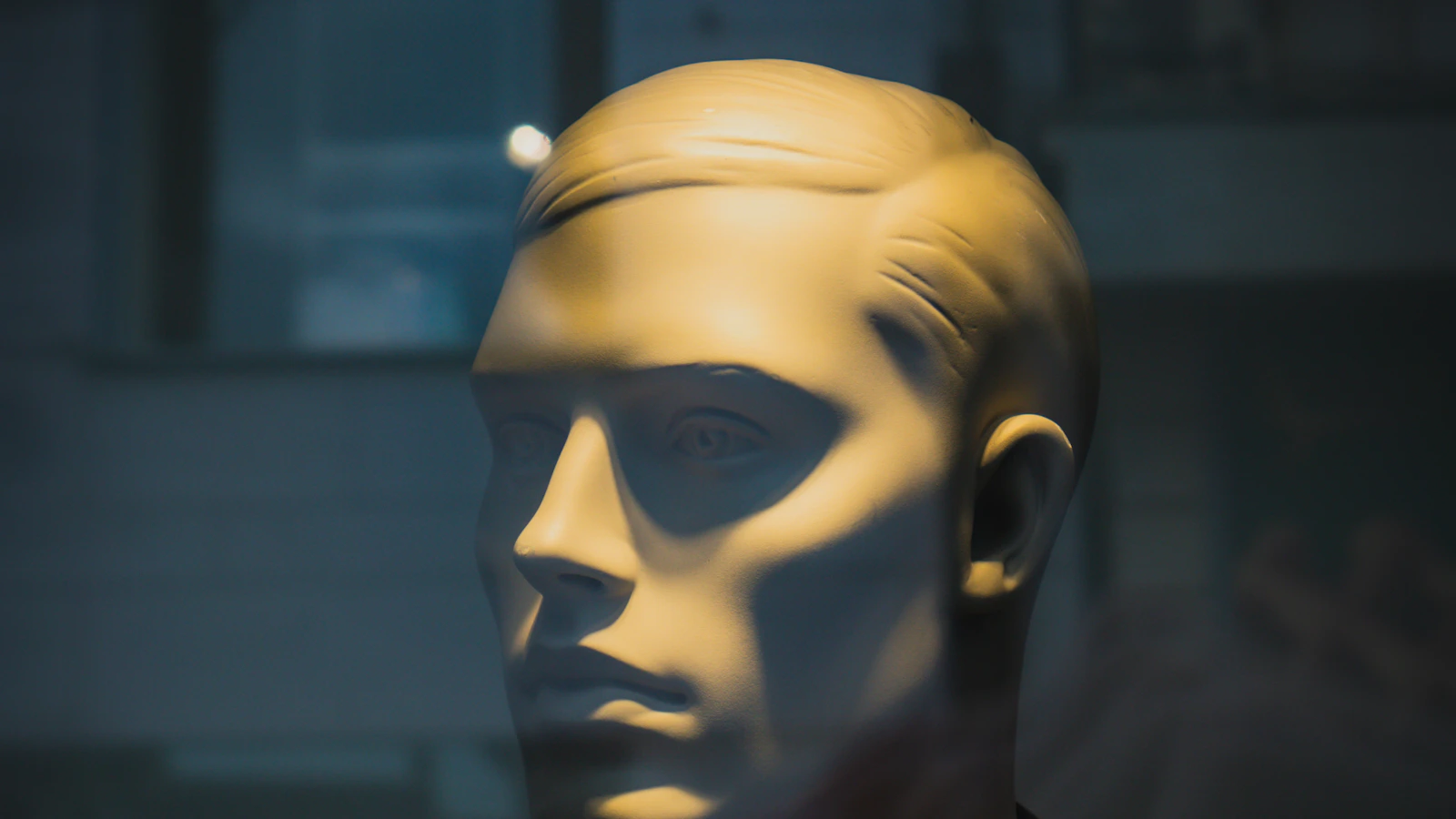
KEY TAKEAWAYS Summary by the editors
- Reuters reported on 27 October 2026 that AI-generated models could cut photo-shoot costs by 90% or more, and agencies say bookings are falling.
- Kapwing estimates that Lu do Magalu earned $2,539,680 from sponsored Instagram posts in a year, 34 times more than Lil Miquela at $73,920.
- New York has required written, paid and time-limited consent for any digital replica of a model since 19 June 2025.
- Since 2 August 2026 the EU AI Act requires clear labels on deepfakes, with fines of up to EUR 15 million or 3% of worldwide annual turnover.
On 27 October 2026 Reuters published the results of an investigation that read like a balance sheet for the modelling trade. The news agency interviewed 15 model agency directors and reviewed more than a dozen confidential photo-shoot contracts. It found falling bookings, closing studios and contracts asking models to sign away rights to AI face swaps, digital clones and the use of their images to train AI, often without extra pay. AI-generated models, the report said, could cut photo-shoot costs by 90% or more.
That figure explains where the business of synthetic faces really sits. For a decade the public conversation has been about virtual influencers such as Lil Miquela, Aitana Lopez and Imma, characters with names, personalities and brand deals. Their earnings are real but modest, and highly concentrated. The larger money is less glamorous: replacing or multiplying the human models who appear in millions of product images on e-commerce sites.
The misuse of models' images is not new, but with AI that problem is accelerated tenfold.
Source: Reuters, 27 October 2026
This matters now because the rules have changed. New York's Fashion Workers Act has required written consent for digital replicas since June 2025, and the EU AI Act's transparency obligations for deepfakes have applied since 2 August 2026. Brands that treat synthetic faces as a cheap creative shortcut are now handling a regulated asset.
How much do virtual influencers actually earn?
Less than the legend suggests, and the best estimates are only estimates. The most systematic attempt comes from the video platform Kapwing, which published a ranking in July 2025 based on data as of May 2025. Its method is transparent and crude: it took the average fee per follower that human influencers charge, multiplied it by each virtual character's follower count, and multiplied the result by the number of clearly paid partnerships it counted in the previous 12 months.
On that basis, Lu do Magalu, the virtual mascot of the Brazilian retailer Magalu, is the clear leader. Kapwing estimates a fee of $34,320 per sponsored post across 7.8 million Instagram followers, and 74 sponsored posts in a year, giving estimated annual earnings of $2,539,680. Lil Miquela, the best-known virtual influencer in fashion, came second with an estimated $73,920. Kapwing says Lu earns 34 times as much as Miquela.
Source: Kapwing, 2025
The gap is instructive. Lu is not an independent personality looking for sponsors; she is the in-house face of a large retailer, used constantly in its own marketing and lent to partners. Miquela, created in 2016 by the start-up Brud, has appeared in campaigns for Calvin Klein and Prada and has 2.4 million followers, according to The New York Times. Brud was acquired by Dapper Labs in 2021, and Dapper Labs says about 75% of her fanbase is female. Fame in fashion circles has not translated into a large sponsored-post business.
A note of caution on the numbers. The New York Times, in a September 2025 article, reported Miquela's $73,920 as earnings per post. Kapwing's own report lists the same figure as her total estimated earnings for the year. Published figures in this field are frequently recycled, rounded and mislabelled, and almost none come from audited accounts.
Who are the main synthetic faces in fashion, and who owns them?
The commercial models differ sharply. Aitana Lopez, a pink-haired 'fitness enthusiast from Barcelona', was created by the Spanish agency The Clueless. Its founder Rubén Cruz told Euronews in December 2024 that she can earn up to EUR 10,000 a month but averages about EUR 3,000, and just over EUR 1,000 per advert. At that time she had more than 343,000 Instagram followers, was the face of the supplement company Big and also posted on the subscription platform Fanvue. Cruz explained why the agency built her: 'We did it so that we could make a better living and not be dependent on other people who have egos.'
Imma, created by the Tokyo company Aww Inc., represents a different model: the virtual human as a campaign medium. In 2020 IKEA built her living room inside its new Harajuku store opposite the station, with LED screens that adjusted to outdoor daylight, and streamed her daily life for three days on IKEA Japan's YouTube channel, according to Designboom. The aim was to reach young Tokyo residents with small-space furnishing ideas.
Then there are the anonymous AI models produced by agencies for single campaigns. In August 2025 Guess ran an advertisement in the American edition of Vogue featuring two AI-generated women, a blonde called Vivienne and a brunette called Anastasia, made by the London agency Seraphinne Vallora. The reaction on social media was hostile. Co-founder Andreea Petrescu told ABC News that the work was 'meant to just supplement and to add, you know, a new avenue of marketing'. Neither Guess nor Vogue had commented when ABC published its report.
| Type | Example | Who owns the face | How it makes money |
|---|---|---|---|
| Retail mascot | Lu do Magalu | The retailer Magalu | Own marketing plus sponsored posts |
| Independent virtual influencer | Lil Miquela | Dapper Labs (since buying Brud in 2021) | Brand campaigns, music, sponsorship |
| Agency-built influencer | Aitana Lopez | The Clueless agency | Adverts, brand ambassador roles, subscription content |
| Campaign AI model | Guess advert in Vogue, August 2025 | Agency or brand | Fee for creating campaign imagery |
| Licensed digital twin | H&M's model twins | The model and her agency | Usage fees paid like photo fees |
Why are brands like H&M building digital twins of real models?
Because a licensed twin of a real person is easier to defend than an invented one. In March 2025 H&M said it would create AI 'digital twins' of 30 models who had given permission, including Mathilda Gvarliani, according to FashionUnited. H&M said the models would keep control over how their replicas were used and would be paid for them in the same way as for their photographs, and that the first images shared on social media would carry watermarks. Gvarliani's comment on her twin: 'She's just like me, but without the jet lag.'
The campaign debuted in July 2025. In an October 2025 interview with FashionUnited, chief creative officer Jörgen Andersson explained the strategy. The first twin was built in Stockholm with the agency MIKAs; H&M then presented the idea to New York agencies. 'Early on we made the decision not to use avatars,' he said. 'Avatars may cost nothing, but there is no such thing as a free lunch.' The twins, he said, belong to the models and their agencies, which retain ownership and are reimbursed.
H&M also tested how audiences react. In a study with a Swedish university, 100 people were shown images of real models, digital twins and invented avatars. The avatars were quickly spotted; participants could not tell the real models from the twins. Consumer reaction to the published images was nonetheless mixed, with some accusing the company of making models and photographers disappear. Andersson said social media had been the wrong place to release them because it offered no context. H&M is now setting up an AI studio in Stockholm for content production, including product shots and e-commerce imagery.
Where is the real money in AI-generated models?
In e-commerce production. Reuters reported that Zalando, Europe's largest online fashion retailer, closed both of its Berlin photo studios last year and cut more than 340 jobs, while keeping some staff in other roles. About You, which Zalando acquired in July 2025, also closed its studio. About You's Scayle Studios uses AI-generated models, promises production cost reductions of more than 90%, has 130 brand clients and generated 190,000 outfits in a single month, according to the same report. 'We are saving so much money,' Julian Jansen, About You's vice-president of marketing, told Reuters.
Mango offers the clearest example from a large fashion brand. In July 2024 it launched its first AI-generated campaign for the Mango Teen line, built by internal teams spanning design, styling, dataset and model training and its photo studio, according to FashionUnited. Mango says it has developed more than fifteen AI platforms since 2018. Chief executive Toni Ruiz later told Bloomberg, as reported by eMarketer, that the company used AI-generated avatars in place of human models to speed up content creation and compete with Zara and H&M, that some images on its website carry a disclaimer, and that it was considering extending the approach to its women's and men's ranges.
For models, this is where the pressure is felt. Fast-fashion e-commerce shoots are a major share of their income, Reuters noted. The contracts it reviewed included a request from the skincare brand Reale Actives for AI replicas the brand could 'own' and use for a year without further payment, and a Calvin Klein draft proposing to train AI on 'reasonably unrecognizable' images without extra pay. Reale Actives said it uses real models and that the language came from a production partner; Calvin Klein said it is 'testing and learning' and respects models' rights.
What do the new rules in New York and the EU require?
New York's Fashion Workers Act, effective since 19 June 2025, deals specifically with AI replicas of models. It defines a digital replica as a significant computer-generated or AI-enhanced representation of a model's likeness, including face, body or voice. Routine retouching and colour correction are excluded.
- 2016Lil Miquela launches on Instagram, created by the start-up Brud
- 2021Dapper Labs acquires Brud and takes over Lil Miquela
- Jul 2024Mango launches its first AI-generated campaign, for Mango Teen
- Mar 2025H&M announces digital twins of 30 consenting models
- Jun 2025New York's Fashion Workers Act takes effect, with consent rules for digital replicas
- Aug 2025Guess advert with AI-generated models runs in American Vogue
- Aug 2026EU AI Act deepfake labelling obligations apply
Source: The New York Times 2025; FashionUnited 2024 and 2025; Mondaq 2025; ABC News 2025; Faegre Drinker 2026
- Clients, a term that covers retailers, manufacturers, designers, advertising agencies and publishers, must obtain clear, prior written consent before creating or using a model's digital replica.
- The consent must specify the scope, purpose, rate of pay and duration of use.
- Model management companies need separate written consent for replicas, outside the representation agreement.
- Agencies had to register with the state Department of Labor by 19 June 2026.
- The Labor Commissioner can impose penalties of $3,000 for a first violation and $5,000 for each further one, and models have a private right of action.
The practical effect is that an open-ended clause granting 'all AI uses' is hard to reconcile with the law for any shoot connected to New York. Melanie Howard of the law firm Loeb & Loeb told Reuters that sweeping contract language 'is dangerous in its ambiguity'. Reuters also reported that John Horner, head of the British Fashion Model Agents Association, warned that without binding rules in Britain or Europe models remain exposed to less scrupulous agents.
Article 50 of the EU AI Act has applied since 2 August 2026. Deployers who publish deepfakes must disclose them with a clear label at first exposure; the Commission's standard icon satisfies this. The European Commission published its final guidelines on 20 July 2026, according to the law firm Faegre Drinker, and confirmed in the same month that the code of practice on transparency was adequate. Fines can reach EUR 15 million or 3% of worldwide annual turnover.
Two points matter for fashion. First, the test is about the audience: under the final guidelines, content counts as a deepfake if it 'would falsely appear to a person to be authentic or truthful', whatever the intention behind it. Second, the guidelines treat AI-generated marketing that makes products appear different from reality as a deepfake requiring disclosure, and most advertising examples do not qualify for the lighter regime for creative work. A photorealistic AI model wearing a real garment on a product page is squarely in the territory regulators have in mind. Providers of generative systems already on the market have until 2 December 2026 to add machine-readable marking; the deepfake labelling duty for deployers had no such extension.
Do consumers trust AI models and virtual influencers?
The evidence points to curiosity without much trust. A 2024 survey by The Influencer Marketing Factory, reported by BetaNews in September 2025, found that 53% of respondents follow at least one virtual influencer but only 15% trust them. H&M's own test suggests that people readily spot invented avatars, and that is part of why the company chose licensed twins.
Disclosure alone does not solve the problem. A study by researchers at Southern Methodist University, published in the Journal of Advertising and reported in April 2026, ran three experiments with more than 700 American women aged 18 to 54. When body-positive advertisements disclosed that their plus-size models were AI-generated, brand attitudes, purchase intent and willingness to recommend all fell, which the authors attribute to perceived hypocrisy. A plain 'AI-generated' label did not repair the damage. Adding a sentence explaining that the AI had been trained only on licensed photos of real people with diverse bodies did: those brands performed as well as brands using no AI.
What are the risks and limits of synthetic faces?
The first risk is reputational. The Guess advertisement in Vogue showed how quickly a single AI image can become a story about beauty standards and lost jobs. The second is legal, and it now runs in two directions: consent and pay for replicas of real people in New York, and labelling of realistic synthetic content in the EU. The third is economic. The earnings data on virtual influencers are thin and mostly modelled, and the leader in Kapwing's ranking is a retailer's own mascot rather than a fashion personality.
There is also a counter-argument worth taking seriously. Models told H&M that twins let them work globally without travelling and combine modelling with motherhood. Licensed replicas with clear pay terms could create a new income stream rather than simply removing one. The difference lies in the contract. Patrick Staal, owner of the Barcelona agency Uniko Models, put the long-term risk plainly to Reuters: 'Signing away AI rights at 20 years old could still affect someone ten years later.'
What should fashion companies do now?
- Map every synthetic face in use List all AI models, twins, avatars and AI-altered images across campaigns, product pages and social channels, including those produced by agencies and production partners.
- Rewrite model contracts now Replace blanket AI clauses with specific consent covering scope, purpose, pay and duration, as New York already requires, and apply the standard globally rather than by market.
- Prefer licensed twins over inventions Where synthetic imagery is needed, work with consenting, paid models whose replicas they and their agencies control, and keep the paper trail.
- Label realistic AI imagery in the EU Treat photorealistic AI models on product pages and in adverts as deepfakes under Article 50 and apply a clear label at first exposure.
- Explain, do not just disclose Pair any AI label with a concrete statement of how the images were made and with whose consent; research shows this restores trust better than a bare tag.
- Audit production partners Check what AI rights photographers, studios and agencies are requesting in your name, since several brands told Reuters that contested clauses came from partners.
- Measure before you scale Test AI imagery against human shoots on conversion and returns before replacing whole categories, and report the results internally.
Frequently asked questions
How much does Lil Miquela earn?
Kapwing estimated her sponsored Instagram earnings at $73,920 for a year, based on data as of May 2025. The figure is a model built from follower counts and typical influencer fees, not reported revenue. Some outlets have reported the same number as earnings per post.
Is it legal to use AI-generated models in fashion advertising?
Yes, but conditions apply. In New York, creating or using a digital replica of a real model has required written consent specifying scope, purpose, pay and duration since 19 June 2025. In the EU, realistic AI-generated content that could appear authentic must carry a clear label since 2 August 2026.
What are H&M's digital twins?
They are AI replicas of real models created with their permission. H&M announced twins of 30 models in March 2025 and said the models keep control over their use and are paid as for photographs. The campaign debuted in July 2025.
Do consumers trust virtual influencers?
Mostly not. A 2024 survey by The Influencer Marketing Factory found 53% follow at least one virtual influencer but only 15% trust them. A 2026 study of more than 700 American women found that disclosing AI models in body-positive adverts lowered purchase intent unless the brand also explained how the AI was responsibly trained.
Sources
- Reuters via KFGO: Fashion's AI era: face swaps and digital clones
- Kapwing: Virtual Influencers: The Most Followed and Top-Earning AI Celebrities
- The Star (The New York Times): They're famous, they're everywhere and they're fake
- FashionUnited: H&M to create 'twins' of models with AI
- FashionUnited: H&M's chief creative officer Jörgen Andersson on the Digital Twin journey
- Euronews: Meet the first Spanish AI model earning up to EUR 10,000 per month
- ABC News: Controversy stirs over AI generated 'models' in new Guess ads appearing in Vogue
- Mondaq: New York Fashion Workers Act creates new consent requirements for digital replicas
- BetaNews: Brands are increasingly testing AI influencers but trust in them is low
- Faegre Drinker: Commission confirms transparency code of practice as adequate and publishes final guidelines
- SMU: AI models in body-positivity ads feel hypocritical; disclosures can help
- FashionUnited: Mango debuts first AI-generated campaign