Digitising a brand archive for AI: scanning, tagging and rights
How to turn garments, textiles and paperwork into a searchable, usable archive, and which rights questions to settle before training or prompting anything on it.

KEY TAKEAWAYS Summary by the editors
- A 2025 review by Politecnico di Milano researchers groups archive items into five categories: garments and accessories, textiles and samples, technical and production documents, visual and promotional materials, and historical and corporate records.
- AI can help with metadata, restoration and 3D reconstruction, but the review notes that many archives are only partly digitised and that their metadata is often incomplete or inconsistent.
- The Virginia Tech example in the review used word embeddings to generate additional descriptive metadata for a costume and textile collection with a human in the loop.
- The review flags copyright, data ownership and intellectual property as concerns when archival content is used to train custom generative models.
- Under US Copyright Office guidance, output from a model trained on an archive is protectable only for its human contribution, so an archive does not by itself make generated designs ownable.
Digitising a brand archive for AI means capturing every item at a consistent quality, describing it with a controlled vocabulary, recording who owns the rights to each item, and only then deciding how AI may use it. The scanning is the easy part. Most of the lasting value, and most of the risk, lies in the metadata and in the rights record.
What does a fashion archive contain?
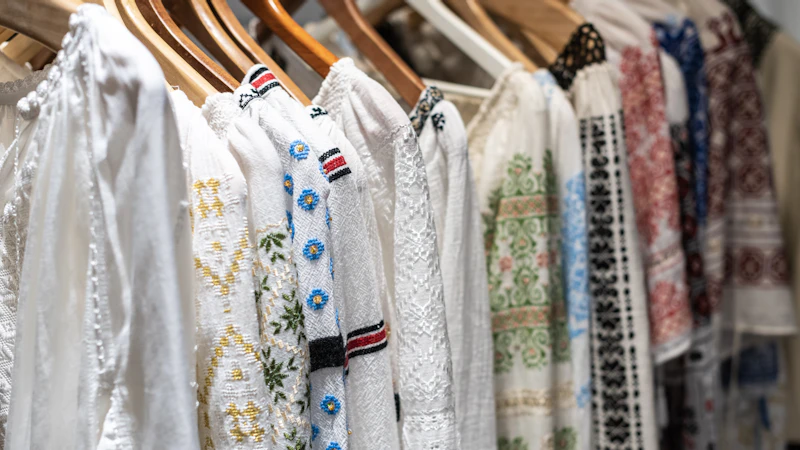
A 2025 integrative review by Greta Rizzi and Daria Casciani of the Politecnico di Milano, published in the European Journal of Cultural Management and Policy, maps five categories of archival items. They are garments and accessories, textiles and fabric samples, technical and production documents, visual and promotional materials, and historical and corporate records. Each needs a different capture method and carries different rights. A technical drawing made by an employee, a photograph by a freelance photographer and a licensed print are three different ownership situations.
The review also warns that many archives are only partly digitised and that metadata is often incomplete or inconsistent. That matters for AI, because a model or search system is only as good as the descriptions and links it can read.
How should you scan and capture archive items?
Capture decisions depend on the object. Flat items such as sketches, swatches and printed material suit high-resolution flat scanning with colour reference targets. Garments need standardised photography, and sometimes 3D capture. The Politecnico di Milano review notes that 3D scanning of textiles has limits, such as capturing fine surface detail and handling varying reflectivity, and suggests AI can help fill gaps and correct scan errors. Treat any AI-repaired image as a derivative and keep the untouched original.
- Use a consistent resolution, colour profile and file format across each item type.
- Include a colour and scale reference in every capture.
- Store original masters separately from working copies and AI-restored versions.
- Give each item a persistent identifier that links images, records and rights data.

How can AI help tag and catalogue an archive?
The review describes several examples. Virginia Tech's Fashion Merchandising and Design department used word embeddings to generate additional descriptive metadata for the Oris Glisson Historic Costume and Textile Collection, using a human-in-the-loop approach. The SILKNOW project combined neural networks, knowledge graphs and natural language processing to improve search and standardise multilingual silk heritage data. A project called FabricNet applies convolutional neural networks to recognise textile fibre types from surface images.
The common pattern is that the model proposes and a specialist confirms. A model can suggest that a photograph shows a double-breasted wool coat, but a curator knows the season, the atelier and whether the item is a replica. Build review into the process, and record whether each tag was entered by a person, proposed by a model, or confirmed by a person.
Which rights questions should you settle first?
The review identifies copyright, data ownership and intellectual property as concerns, especially when archival content is used to train custom generative models. It also raises questions of authorship and creative agency. Before an archive feeds any generative tool, build a rights register that answers the following for each item or group of items.
| Field | Question to answer | Why it matters |
|---|---|---|
| Creator | Employee, freelancer, agency or unknown? | Determines who holds copyright and whether assignment is documented |
| Third-party content | Does the item include licensed prints, photographs or logos? | Licences may not allow AI training or derivative use |
| Duration and territory | Is the licence still valid and where? | Archive reuse often outlives original licences |
| Personal data | Do images show identifiable people? | Privacy and consent requirements apply |
| Permitted AI use | Search only, internal fine-tuning, or external tools? | Limits what can leave the company |
| Provenance of tags | Human, model-proposed or confirmed? | Supports quality control and audit |
Can you train a model on your own archive?
Companies have tried. The Politecnico di Milano review lists examples including Adidas's AI ARCHIVE, a diffusion model trained on sneaker images, and a generative system trained by Norma Kamali with Maison Meta on 57 years of brand imagery, as well as Burberry and Lanvin using AI animation of archival imagery. The review draws on company reports and grey literature, and acknowledges that this may introduce optimistic bias toward technology outcomes, so it should not be read as evidence of commercial results.
Training or fine-tuning on an archive you own does not remove the other questions. Outputs that resemble archive pieces may be close to the originals, and the US Copyright Office's January 2025 report says AI output is protectable only for the human-authored contribution. An archive-trained model can inspire new work, but it does not make the output automatically ownable or free of similarity risk.
What does a sensible rollout look like?
- Inventory the archive by the five categories and estimate what share is digitised.
- Pilot on one well-understood collection, such as a single season or product line.
- Define a controlled vocabulary and a tagging template before any AI tagging begins.
- Build the rights register for the pilot collection and mark items cleared for each level of AI use.
- Run AI tagging with human confirmation and measure how often curators correct it.
- Decide whether any generative use is justified, and keep outputs labelled and logged.
Budget and skills are a further constraint. The review lists limited budgets and skills in many institutions among the economic concerns, alongside possible market concentration and marginalisation of smaller organisations. A brand with a modest archive can still make progress by starting with the most valuable and best-documented pieces, rather than attempting complete coverage before any benefit is visible.
Frequently asked questions
How do you digitise a fashion archive?
Capture flat items with high-resolution scanning and a colour reference, photograph garments consistently, and consider 3D capture where useful. Give each item a persistent identifier, keep untouched masters, and link every record to a rights register.
Can AI tag fashion archive images automatically?
Yes, as a first pass. Examples in a 2025 Politecnico di Milano review include word-embedding metadata for a historic costume collection and neural networks for silk heritage data, in both cases with human review. Specialist confirmation is still needed for dates, makers and context.
Can I train an AI model on my brand's archive?
Technically yes, and some brands have tried. First confirm ownership and licences for every item, check personal data, and decide who may use the model. Outputs still need similarity checks, and copyright protection applies only to human-authored contributions in the US.
What are the main risks of archive digitisation for AI?
The 2025 review lists copyright and data ownership, bias and aesthetic homogenisation, incomplete or inconsistent metadata, and limited budgets and skills. Poor metadata quality is the most common practical obstacle.
One edition every weekday morning. Read in five minutes. Free for industry professionals.
SOURCES
- Rizzi and Casciani: Scouting emerging AI applications in fashion heritage and archival practices (European Journal of Cultural Management and Policy)
- US Copyright Office: Copyright and Artificial Intelligence, Part 2: Copyrightability
- Chauvin et al.: Weaving the Future: Generative AI and the Reimagining of Fashion Design (arXiv)