
Theo Bellini
Covers stores, omnichannel retail and the economics of the shop floor.
Articles by Theo Bellini
How does Saks use AI agents in customer service and personal shopping?
Saks set out a plan in 2024 to let AI agents handle routine service requests and to give advisors AI recommendations from a unified customer profile. Here is what was announced, what is known and what is not.
How Nordstrom uses AI for personalisation, search and stylists
Nordstrom's refreshed app blends generative AI with stylist content, learns from shopper behaviour and keeps a direct route to human stylists. What the retailer has announced, and what it has not.

How does Myntra use generative AI? From MyFashionGPT to AI sizing and try-on
India's Myntra launched a ChatGPT-based shopping assistant in 2023 and has since added AI sizing, try-on and seller tools. What it has published, what is still piloting, and the lessons.

What is agentic commerce? How AI agents will shop for fashion customers
AI agents that search, compare and buy on a shopper's behalf are moving from demos into live checkout flows. What agentic commerce means for fashion brands and retailers, and what is still unproven.
How to prepare fashion product feeds for ChatGPT, Gemini and Perplexity shopping
AI assistants recommend products from structured feeds. A practical guide to the fields, variant logic and update discipline fashion retailers need to appear accurately in ChatGPT, Gemini and Perplexity.
Launching an AI shopping assistant: a 20-point checklist for fashion e-commerce
From product data and guardrails to EU AI Act transparency and measurement, the 20 checks fashion e-commerce teams should complete before an AI shopping assistant goes live.

How to audit your fashion brand's visibility in ChatGPT, Gemini and Perplexity
A repeatable audit shows whether AI assistants mention your brand, what they say about it and which pages they cite. Here is a practical method, from prompt sets to crawler checks.

GEO vs SEO: what changes for fashion brands when answers replace search results?
Generative engine optimisation builds on SEO rather than replacing it. What changes is the unit of success: being cited and described correctly inside an answer, not only ranking on a page.

How do you measure traffic and sales from AI assistants on a fashion website?
AI assistants send fewer but often well-informed visitors, and much of their influence is invisible in standard reports. Here is how to set up analytics to see what can be seen.

Google AI Mode and AI Overviews: what do they mean for fashion retail traffic?
Google now answers many fashion questions itself and is building shopping, try-on and checkout into AI Mode. Fashion retailers should expect fewer informational clicks and more competition inside Google.
Virtual try-on in fashion: how does it work and does it reduce returns?
Generative AI can now show a garment on a photo of the shopper. That helps with style decisions, but fit and size are a different problem. What the technology does, what it needs and what the evidence says.

What is GEO, and how can fashion brands be found in AI search?
Generative engine optimisation aims to make a brand's products and content visible in AI-generated answers. What the research and the platforms actually say, and what fashion brands can do now.
How Zalando uses AI: the assistant, personalisation and size advice
Zalando has put AI into search, discovery and fit. What it built, how the data and models fit together, which results it has published and what remains unproven.

How Ralph Lauren uses AI: Ask Ralph and the conversational shopping assistant
Ralph Lauren launched Ask Ralph, a conversational styling assistant built on Microsoft Azure OpenAI, in its US app in September 2025. What it does, what has been disclosed and what remains open.

How Kering uses AI: luxury clienteling and conversational commerce
From Gucci's generative AI pilot in client service to the Madeline shopping assistant and an AI-powered unified client base announced in 2026: what Kering has built and disclosed.
AI for fashion e-commerce managers: a practical guide
Where AI helps fashion e-commerce managers with search, personalisation, product content, size advice, service and merchandising, what data it needs, legal duties and a 30-day starting plan.

AI in sportswear: how it shapes performance product, community and demand
Sportswear brands combine technical product, athlete storytelling and huge launch volumes. AI helps in design, content and demand, but performance claims and athlete data raise the bar.
AI in resale and second-hand fashion: authentication, pricing and listing
Every second-hand item is a unique product that must be identified, checked, priced and described. That makes AI more central to resale economics than to almost any other fashion segment.
Clienteling apps for store staff: which features actually drive repeat sales?
Most clienteling apps promise a 360-degree client view. The features that bring clients back are fewer and simpler: good client notes, easy outreach, live stock and fair credit for the associate.

AI in clienteling: how next-best-message works, and where privacy sets limits
AI can suggest which client to contact, with which product or trade-in offer, and draft the message. GDPR, the Swiss nFADP and the EU AI Act decide how far that automation may go.

Ship-from-store and endless aisle: what do the OMS and store staff need?
Using stores as mini warehouses and selling beyond the shelf both depend on accurate stock, a capable order management system and store teams with time and clear rules.

Client data and consent in clienteling: a GDPR and Swiss nFADP checklist
Client books, WhatsApp threads and AI suggestions all process personal data. This checklist covers legal bases, consent, profiling, messaging channels and records for EU and Swiss stores.
What do AI shopping agents mean for fashion brands' websites and product feeds?
ChatGPT, Google and others now let shoppers discover and buy products inside AI assistants. For fashion brands, product data quality becomes the new storefront.
How can AI find the root cause of fashion returns?
Reason codes alone rarely explain why a style comes back. Combining them with review text and product data, AI can point to fixable causes such as wrong size charts, misleading imagery or fabric surprises.
How can fashion brands launch their own resale platform?
Brands can run resale in house, on a white-label service or through marketplace partnerships. Each model trades control, cost and reach differently, and each depends on product data and operations.

AI for product descriptions and content: a quality checklist
Generative AI can draft product copy, translations and attributes at scale. Without a quality process it also produces errors, bland text and compliance risks. A checklist for content teams.

Omnichannel in fashion retail: what it actually requires
Omnichannel is not a website plus stores. It is a set of shared data, stock, processes and incentives that let customers move freely between channels.
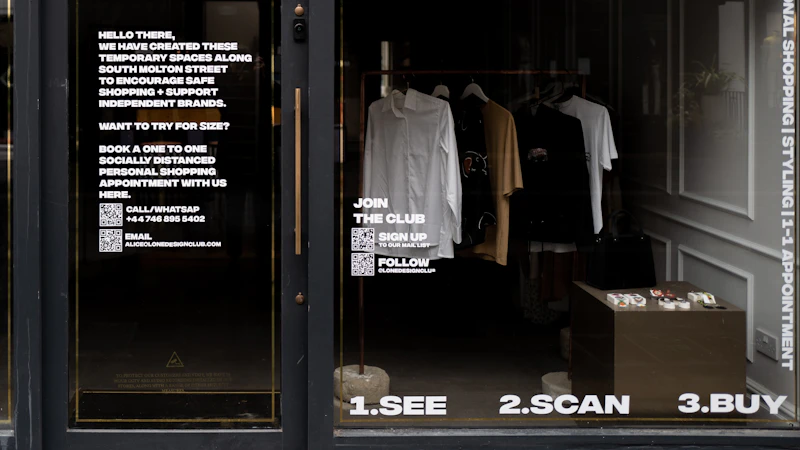
What independent fashion retailers need from their brand partners
Independent boutiques buy with tight budgets and small teams. Brands that make buying easy, share risk in season and protect full-price selling keep them.
Concession, consignment and wholesale: the three models compared
Who owns the stock, sets the price and carries the markdown risk depends on the commercial model. How wholesale, consignment and concessions differ.

Inventory visibility across channels: the basics for fashion businesses
Stock that cannot be seen cannot be sold. What inventory visibility means, which stock states to track and how to build it step by step.
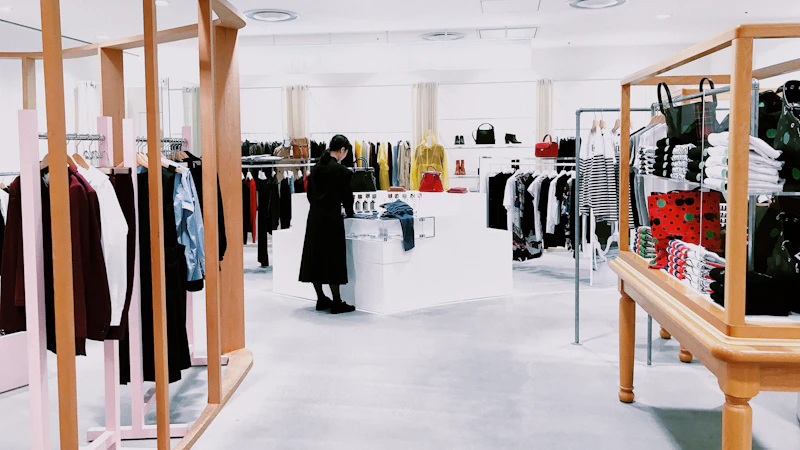
What the physical fashion store is for now
Stores are no longer just places that hold stock. They are showrooms, service centres, fulfilment hubs and return points, and must be measured that way.

How the department store model works, and why it is changing
Department stores are part merchant, part landlord. How their model makes money, why it came under pressure and what brands should ask of them now.
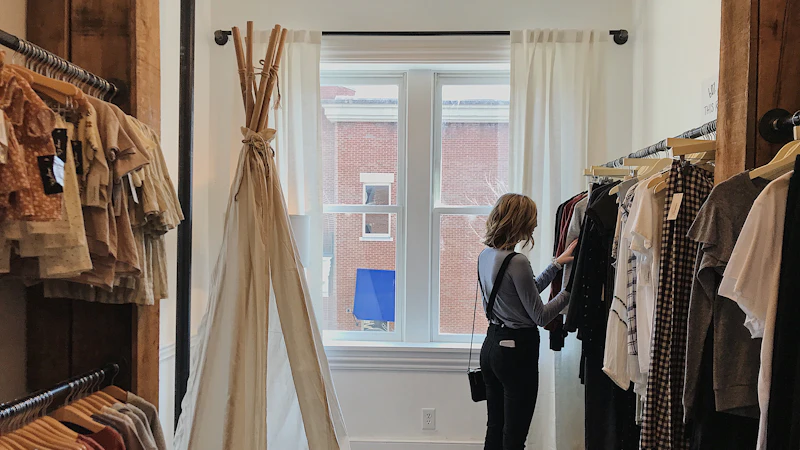
Clienteling: personal service in a data-driven fashion store
Clienteling turns store associates into relationship managers. What it is, what a programme needs, and how to introduce it without the common pitfalls.
Why returns are fashion e-commerce's costliest problem
Returns hit fashion harder than almost any other online category. Where the real costs arise, why they distort data, and what retailers and brands can do.

Endless aisle and drop shipping between brands and retailers
Retailers want wider ranges without more stock; brands want more sales from the stock they hold. How endless aisle and drop shipping connect the two.