Body scanning and AI made-to-measure: is on-demand fit ready to scale?
Phone-based body scanning now reaches millions of shoppers, but made-to-measure production remains a niche. What the technology can do, what on-demand manufacturing requires, and where the bottlenecks are.


KEY TAKEAWAYS Summary by the editors
- Body scanning has moved from in-store booths to smartphones: Zalando predicts customers' measurements from two photos or a video, and says more than 1.5 million customers have tried its tool.
- Scanning at scale is currently used mainly to recommend standard sizes, not to make garments to measure, because made-to-measure needs a production system that can cut and assemble single units economically.
- On-demand manufacturing models, such as Unspun's 3D weaving machine that turns yarn directly into garment tubes, aim to make individual production viable, with the company claiming lead times of about a week.
- In the EU, goods made to the consumer's specifications or clearly personalised are generally excluded from the 14-day right of withdrawal, which changes the economics of returns for made-to-measure.
- Made-to-measure is ready for selected categories such as tailoring, jeans and shirts with simple fit variables, but scaling across mainstream fashion is limited by production cost, speed and pattern automation.
Body scanning is ready to scale; made-to-measure production is not yet. Smartphone-based measurement now reaches millions of shoppers, but it is mostly used to recommend the best standard size. Making each garment to an individual's measurements still requires automated pattern adjustment and single-unit production that only a few categories and manufacturers can deliver economically.
What is AI body scanning?
Body scanning estimates a person's measurements, such as chest, waist, hip, inseam and shoulder width, from images or depth data. Early systems used booths with multiple cameras or special suits. Current consumer systems use the smartphone camera: the shopper takes photos or a short video, and a computer vision model predicts measurements by fitting a body model to the images.
Zalando offers a well-documented example. Since July 2023 it has let customers take two photos, front and side, in tight clothing, from which it predicts their measurements and recommends a size. In June 2026 the retailer said more than 1.5 million customers had tried its body measurement tool, that the measurements are now integrated into size charts so customers can compare them with product information, and that they underpin its 3D virtual fitting room, whose pilots it says reduced return rates by up to 40%.
How does body scanning connect to made-to-measure?
There are two quite different uses for the same measurements. In size recommendation, they help choose the best of the existing sizes. In made-to-measure, they are used to alter a base pattern so the garment is cut for one person. The second use is far more demanding: measurements must be accurate enough to cut fabric, a pattern system must translate them into adjustments automatically, and production must make a single unit at an acceptable cost and speed.
| Aspect | Size recommendation | Made-to-measure |
|---|---|---|
| Use of measurements | Pick best standard size | Alter pattern for one person |
| Accuracy needed | Moderate: choose between sizes | High: errors are cut into the garment |
| Production | Existing mass production | Single-unit cutting and assembly |
| Inventory | Stock in all sizes | Little or no finished stock |
| Returns | Standard withdrawal rights | Often excluded from EU withdrawal right |
| Scale today | Millions of users | Niche categories and brands |
What does on-demand production require?
The bottleneck is not the scan but the factory. Conventional apparel production is optimised for cutting many layers of fabric at once and sewing in batches. Made-to-measure requires single-ply cutting, automated pattern alteration, flexible sewing lines and order-by-order logistics.
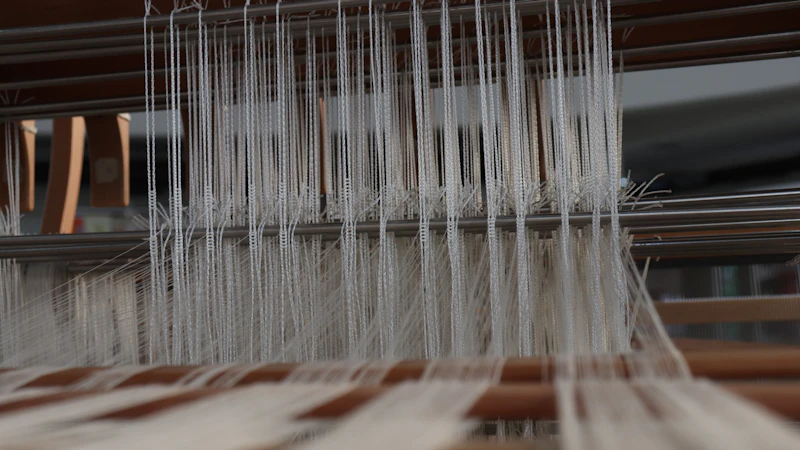
Some companies are attempting to redesign production itself. TechInformed reported in June 2024 on Unspun, a company founded in 2017 that uses a computer-controlled weaving machine called Vega to turn yarn directly into seamless 3D tubes that become trousers and other garments. The report said Unspun had offered body scans in a Stockholm store in a 2020 partnership with Weekday, part of H&M Group, has an app that scans customers for custom jeans, and that Walmart was piloting its 3D weaving for on-demand chinos. Unspun claimed lead times of about a week and lower cut waste than conventional methods; these are company claims rather than independent measurements.
- Automated pattern alteration: rules or models that adjust a base pattern from measurements, validated by pattern makers.
- Single-unit production: cutting, weaving or knitting one garment at a time without excessive cost.
- Short lead times: shoppers used to next-day delivery will wait for custom fit, but not indefinitely.
- Quality control: each unit is different, so checks cannot rely on standard samples.
- Data integration: measurements, pattern files and orders must flow automatically to production.
How does made-to-measure change returns and business models?
Made-to-measure shifts the economics in two ways. First, it reduces or removes finished-goods inventory, because garments are made after the order. Second, it changes the returns position. Under EU consumer rules, as summarised in the European Commission's Your Europe guidance, the 14-day right of withdrawal for online purchases generally does not apply to goods made to order or clearly personalised. That lowers return volumes but raises the stakes on getting fit right first time, because dissatisfied customers still expect remakes or alterations to protect the brand.
What about privacy and body data?
Body measurements and the photos used to derive them are personal data, and images of people in tight clothing are sensitive in practice even where they are not a special legal category. Any scanning programme needs clear consent, a stated purpose, limits on how long images are kept and strong security. Zalando, for example, describes its body measurement dataset as anonymised. Brands that plan to use measurements for both size advice and production should say so explicitly when asking for consent, because shoppers may accept one use but not the other.
Which categories are closest to scale?
Categories with a small number of critical fit variables and simple constructions are the most practical. Tailored shirts and suits have long been sold made-to-measure through measurement-based configurators. Jeans and trousers, where waist, hip, rise and inseam dominate fit, are a natural target for on-demand production, as the Unspun example shows. Complex, fashion-led items with many seams, linings and trims, and fast seasonal turnover, are much harder to make one at a time.
Is on-demand fit ready to scale?
The answer depends on which part of the chain is in question.
- Measurement capture: yes, smartphone scanning is in use at scale for size recommendation.
- Fit prediction and size advice: yes, with published return reductions from large retailers.
- Automated pattern alteration: partly, for simpler categories with defined rules.
- Single-unit production: emerging, in specific technologies and categories, with limited published data on costs.
- Mainstream made-to-measure fashion: not yet, because cost, speed and complexity remain barriers.
For most brands, the realistic next step is to use body measurement data to improve standard sizing and grading, and to pilot made-to-measure in one category where fit is the main reason customers buy or return.
Frequently asked questions
How accurate is smartphone body scanning?
Accuracy depends on the system, photo quality and clothing worn, and vendors rarely publish independent validation. Retailers such as Zalando use phone-based measurements mainly to recommend standard sizes, where moderate accuracy is sufficient, rather than to cut garments.
What is AI made-to-measure clothing?
It uses body measurements, often captured by phone, to adjust a base pattern automatically so a garment is produced for one person. It requires single-unit production and close integration between measurements, pattern software and manufacturing.
Can customers return made-to-measure clothes in the EU?
The EU's 14-day right of withdrawal for online purchases generally does not apply to goods made to the consumer's specifications or clearly personalised. Brands usually still offer alterations or remakes to maintain customer satisfaction.
Does made-to-measure reduce overproduction?
In principle, yes, because garments are made only after an order. Companies such as Unspun position on-demand production around reduced waste and inventory, but published, independently verified data on the environmental and cost impact at scale is limited.
One edition every weekday morning. Read in five minutes. Free for industry professionals.
SOURCES
- Zalando Corporate: How Zalando uses technology to help customers find the right size
- Zalando Corporate: How Zalando leverages technology to help customers find the right size
- TechInformed: World in Disruption: Loom with a View
- Your Europe (European Commission): Returning goods and the right of withdrawal