Strategy

How Burberry uses data and AI across clienteling, design and the supply chain
Burberry has built customer models for its client advisors and talked publicly about predictive inventory and traceability pilots. This case study separates what has been published from what has not.

How VF Corporation uses AI and data across its outdoor and lifestyle brands
VF's annual report cites AI-powered inventory planning inside a wider turnaround, and its CEO calls AI transformative but hyped. What is documented, and what is not.

How Macy's uses data and AI to reshape its omnichannel business
Macy's says it has 35 AI use cases and pilots across supply chain, merchandising and service. This case study sets out what the company has reported, the guardrails it describes and what is still unmeasured.

An agentic commerce playbook for fashion retailers in 2026
Agentic commerce lets an AI assistant shop on a customer's behalf. This guide sets out what is live, what fashion retailers must fix first and where the open risks sit.

Monitoring what AI models say about your brand: a monthly routine
AI assistants now describe fashion brands to shoppers and buyers. A simple monthly routine can show whether those descriptions are accurate, which sources they rely on and what to fix.

AI Act roles explained: is your fashion company a provider or a deployer?
Most fashion companies are deployers of tools built by others, but branding, modifying or repurposing a system can make them providers. Here is how to tell which you are.
The AI Act timeline after the digital omnibus: what applies and what slipped
High-risk obligations have moved to December 2027 and August 2028, but transparency duties and AI literacy are already in play. A dated guide for fashion teams.

An AI acceptable-use policy for fashion teams: a checklist
A practical checklist for writing a short, enforceable AI policy covering tools, data, disclosure, review and incidents, mapped to the AI Act and NIST guidance.

AI incident response: what to do when a model gets it wrong in public
A step-by-step approach for fashion brands and retailers: contain, assess, notify, correct and learn, with the legal clocks that may apply.

A 90-day AI pilot in wholesale: scope, metrics and exit criteria
A practical plan for a time-boxed AI pilot in a wholesale business, with a defined scope, measurable targets and agreed conditions for stopping or scaling.

How do you avoid AI vendor lock-in? Data portability and exit plans
Lock-in with AI suppliers rarely comes from the model itself. It comes from data formats, workflows and contracts, and the EU Data Act has changed some of the leverage buyers hold.

What are the lessons from rolling out an enterprise AI assistant in fashion?
General-purpose AI assistants are the easiest AI to buy and the hardest to measure. Published rollouts and survey data point to a handful of repeatable lessons on scope, data access, training and proof.

Which fashion jobs change first with AI? A task-level view
Jobs are bundles of tasks, and AI reaches some tasks long before it reaches whole roles. A task-level reading of the evidence shows where fashion work is likely to shift and what stays human.

How should a mid-size fashion group set up an AI centre of excellence?
A small, well-placed AI team can coordinate use cases, data, governance and training without becoming a bottleneck. This guide covers structure, roles, operating rules and a cost framework, with no invented benchmarks.

How should fashion companies budget for AI in 2027?
A 2027 AI budget works best as a portfolio: a small base for foundations and compliance, a core for proven use cases, and a capped experimental pot. Usage-based costs and data work are the lines most often missed.

What should boards ask about AI? A briefing for fashion directors
Directors do not need to understand model architecture, but they do need to ask about strategy, value, risk, regulation and people. This briefing sets out the questions and the evidence a good answer should contain.

How does LVMH organise AI? The AI Factory, maison agents and the Innovation Award
LVMH runs AI as shared group infrastructure with maison-level control: a central data and AI team, internal assistants, clienteling agents and a startup award that feeds the pipeline.

Gap Inc. and Google Cloud: what a retailer-wide AI partnership covers
In October 2025 Gap Inc. signed a multi-year AI partnership with Google Cloud spanning design, pricing, marketing and employee workflows. Here is what was announced, what was not, and how it fits Gap's earlier AI work.

How Otto Group rolled out generative AI across its retail companies
Otto Group launched its in-house assistant ogGPT in 2023 and by late 2025 had more than 10,000 monthly active users. How the rollout was organised, governed and supported, and what it has not yet shown.
Who owns the customer when an AI agent shops? Brand control in agentic commerce
When assistants search, compare and buy for shoppers, fashion brands risk losing the relationship, the data and the presentation. Where control is shifting, and which levers brands still hold.

GEO vs SEO: what changes for fashion brands when answers replace search results?
Generative engine optimisation builds on SEO rather than replacing it. What changes is the unit of success: being cited and described correctly inside an answer, not only ranking on a page.

EU AI Act after August 2026: what fashion companies must comply with now
Most of the AI Act has applied since 2 August 2026, but the AI Omnibus pushed high-risk rules to December 2027. A dated checklist for fashion brands and retailers.

Does the EU AI Act apply to Swiss and UK fashion brands? AI rules outside the EU
Switzerland and the UK have no AI Act of their own, but EU rules reach brands selling into the EU. What applies at home, what applies via the EU and what is coming.

Dynamic pricing in fashion: where does AI help and where does it harm the brand?
Algorithmic pricing can clear stock and protect margin, but frequent or personalised price changes carry brand, trust and legal risks. Where AI pricing earns its place in fashion and where it should stop.

How can fashion brands use AI scenario planning for tariffs and sourcing in 2026?
US tariff rules changed again in 2026, and trade flows in apparel are shifting. How AI-supported scenario planning helps brands compare sourcing options, and why it cannot predict policy.

What new AI roles do fashion companies need, and what do they actually do?
Chief AI officers, AI product owners, prompt and conversation designers, data stewards: a sober guide to the AI roles appearing in fashion businesses and what each one is accountable for.

How do you get employees to actually use AI? An adoption plan for fashion teams
Licences alone do not change how people work. A practical adoption plan for fashion companies: use cases by team, training, guardrails, champions and measurement.

Why do AI pilots stall in fashion, and how do you scale them to production?
Most generative AI pilots never reach scaled use. Why fashion pilots stall, from data and integration to unclear value, and a step-by-step route from proof of concept to production.

Platform or point solutions? How to structure the AI vendor landscape in fashion
Should a fashion company buy one AI platform or many specialised tools? A structured look at the layers of the AI stack, the trade-offs, and how to decide use case by use case.
What is AI in fashion? A complete guide to AI across the fashion value chain
From design and planning to wholesale, supply chain and e-commerce: what artificial intelligence really does in fashion today, what data it needs and where its limits are.

How to start with AI in a fashion company: a 90-day plan
A practical three-month plan for fashion companies: choosing the first use cases, checking the data, running a pilot that proves something and deciding what to scale.

How to build an AI strategy for a fashion brand
An AI strategy is a set of choices about where AI should change how the business works, what data and skills that requires and how risk is governed. Here is how fashion brands can make those choices.

Build, buy or partner? How fashion companies should source AI capabilities
Fashion companies can buy AI as software, build it on their own data or develop it with technology partners. When each option makes sense, what the evidence says and how to avoid lock-in.

What skills and team structures do fashion companies need for AI?
AI changes work in design, merchandising, sales and service. Which skills fashion companies need, how to organise AI teams and how to build AI literacy that sticks.

What makes a wholesale business AI-ready?
AI readiness in fashion wholesale is less about algorithms than about structured product, order and partner data, clear ownership and processes that capture why buyers decide.

How Levi Strauss & Co. uses AI: the data programme and its lessons
Levi Strauss & Co. trained its own staff in machine learning, stumbled with AI models in 2023 and is now rolling out agents for employees and shoppers. What the programme shows.

AI for fashion CFOs: where the money is and how to govern it
Where AI creates measurable value in a fashion business, what finance teams can use it for, why many AI projects fail to pay back and how CFOs can govern AI spending and risk.
AI in mid-market and wholesale-led fashion brands: where to start
Mid-market brands that sell mainly through retail partners have less data and smaller teams than the giants. AI still pays off, if it targets order-taking, product data and sell-through insight.

Why trade fairs still matter in a digital wholesale world
Digital tools now handle much of what fairs once did, from presenting collections to writing orders. Yet the fair floor still does jobs that a screen struggles to replicate.

Build or buy? Choosing software for a fashion business
Custom software promises a perfect fit, standard software promises speed and lower risk. A practical framework for deciding which path suits each part of a fashion business.

Marketplaces for fashion brands: models, trade-offs and control
Online marketplaces offer reach, but each model changes who controls price, stock and brand presentation. Here is how the main models work and what brands should weigh.

How to run a software selection (RFP) without losing a season
A structured selection process finds the right system and protects the selling calendar. A step-by-step guide for fashion businesses running a request for proposal.

Is your data ready for AI? A readiness check for fashion brands
Most AI projects in fashion stall on data, not algorithms. A practical readiness check across product, customer, order and stock data, with the fixes that matter most.

AI governance for fashion companies: a pragmatic starting point
Staff are already using AI tools, with or without a policy. A lean governance framework for fashion companies: what to allow, what to control, and who decides.

The main business models in fashion, explained
Wholesale, direct-to-consumer, licensing, private label and more: how each fashion business model makes money, where the risk sits and why most brands run several at once.

Direct-to-consumer vs wholesale: rethinking the channel mix
The promise of DTC was higher margin and direct customer data. The reality includes acquisition costs, inventory risk and returns. Why the smart answer is usually a deliberate balance.

Expanding a fashion brand internationally through wholesale
Wholesale is often the lowest-risk route into new markets. A practical guide to choosing markets, structuring sales, pricing across currencies and supporting retailers abroad.
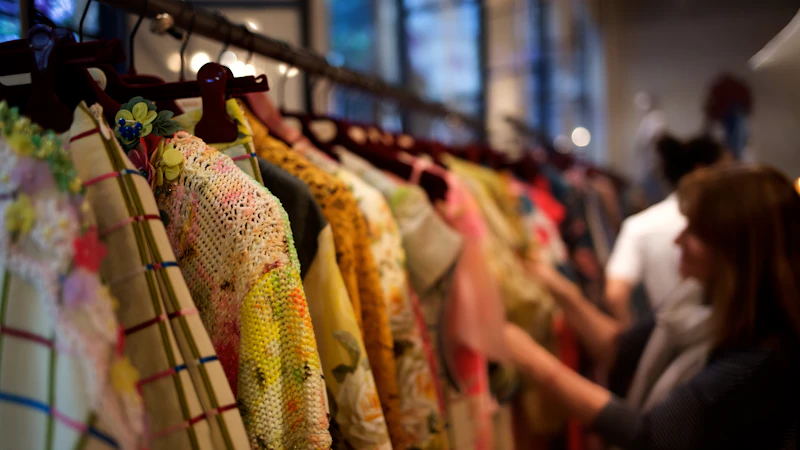
Agents, distributors and showrooms: who sells a brand abroad
Commission agents, distributors and multi-brand showrooms all open doors for fashion brands in foreign markets. How each model works, what it costs and what to put in the contract.

Pricing architecture: wholesale price, RRP and currency price lists
How fashion brands structure price points, wholesale prices, recommended retail prices and currency lists into one coherent system that retailers trust and finance can defend.

Nearshoring in fashion: the trade-offs
Moving production closer to end markets promises speed, flexibility and resilience. It also raises unit costs and narrows capability. How to decide what to bring closer and what to leave.

What investors look at in a fashion brand
Brand heat is not enough. Investors and acquirers examine margin quality, channel mix, customer data, inventory discipline and scalability. A clear guide to how fashion businesses are assessed.

A realistic digital roadmap for a traditional fashion brand
Digital transformation fails when it starts with tools. A phased, practical roadmap for established fashion brands, starting with data and processes and sequenced around the season.