ROI

A 90-day AI pilot in wholesale: scope, metrics and exit criteria
A practical plan for a time-boxed AI pilot in a wholesale business, with a defined scope, measurable targets and agreed conditions for stopping or scaling.

Forecast value added: proving a model beats the planner
Forecast value added compares each step of a forecasting process with a simple benchmark, so a team can see whether models and manual overrides improve accuracy or only add effort.

How to measure virtual try-on: a test design and the numbers to track
Try-on users are not a random sample, so naive comparisons overstate results. A test design with holdouts, the metrics that matter and the traps to avoid.
How do you track AI benefits after go-live? Baselines, owners and reviews
Most companies approve AI projects on a business case and never check it again. A practical routine for baselines, named owners and regular reviews turns promised benefits into measured ones.

How should fashion companies budget for AI in 2027?
A 2027 AI budget works best as a portfolio: a small base for foundations and compliance, a core for proven use cases, and a capped experimental pot. Usage-based costs and data work are the lines most often missed.

Do AI stylists sell? The metrics to judge a conversational shopping assistant
Chat volume says little about whether an AI stylist earns its keep. Which metrics show real commercial impact, how to test them fairly and what published data does and does not prove.

How do you measure traffic and sales from AI assistants on a fashion website?
AI assistants send fewer but often well-informed visitors, and much of their influence is invisible in standard reports. Here is how to set up analytics to see what can be seen.

How do you measure forecast accuracy in fashion? MAPE, WAPE, bias and MASE
Forecast accuracy decides whether an AI planning tool is worth its cost, yet the most popular metric is badly suited to fashion. A practical guide to MAPE, WAPE, bias and MASE, and what good looks like.

How to choose a demand forecasting tool: a checklist for fashion brands
Demand forecasting software promises less stock and fewer stockouts, but results depend on fit with fashion's product cycles and on your data. A neutral checklist for evaluating tools before you sign.
How can AI reduce fashion returns? 12 levers ranked by likely impact
From size advice and fit flags to return prediction and try-on, a checklist of twelve AI levers for reducing online fashion returns, ranked by evidence and likely impact, with the data each needs.

How do you get employees to actually use AI? An adoption plan for fashion teams
Licences alone do not change how people work. A practical adoption plan for fashion companies: use cases by team, training, guardrails, champions and measurement.

Why do AI pilots stall in fashion, and how do you scale them to production?
Most generative AI pilots never reach scaled use. Why fashion pilots stall, from data and integration to unclear value, and a step-by-step route from proof of concept to production.
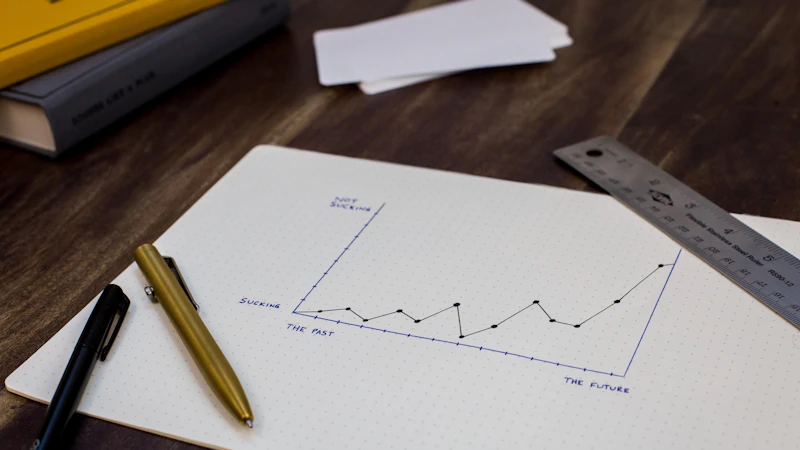
Which AI KPIs should fashion companies track in each function?
A function-by-function checklist of AI metrics for fashion businesses: what to measure, how to set baselines, and how to separate usage from real business impact.

What does generative AI really cost? Licences, tokens and hidden costs explained
Per-seat licences are only the visible part of generative AI spending. How licence, token, integration, data and governance costs add up for a fashion company, with published price points.

How to start with AI in a fashion company: a 90-day plan
A practical three-month plan for fashion companies: choosing the first use cases, checking the data, running a pilot that proves something and deciding what to scale.

How to measure the ROI of AI in fashion
Most companies struggle to prove that AI pays off. A practical framework for fashion: baselines, control groups, the right metrics per use case and the full cost picture.

AI for fashion CFOs: where the money is and how to govern it
Where AI creates measurable value in a fashion business, what finance teams can use it for, why many AI projects fail to pay back and how CFOs can govern AI spending and risk.

Can AI forecast a full pre-order book from the first 20 percent of orders?
Early wholesale orders carry more signal than any pre-season plan. Here is how AI models read them, what data they need and where the forecast breaks down.

How can brands use early-booking discounts without eroding margin?
Early-booking incentives buy demand information and production certainty. A guide to pricing them, choosing the right form and checking whether they pay off.

Digital showroom ROI: how to build the business case for costs and sell-in
What a digital showroom really costs, where the savings come from, why sell-in uplift is the hardest number to prove, and how to build a business case a CFO will accept.
How to measure sales app and digital showroom adoption: the metrics that matter
Logins and licence counts do not show whether sales teams really switched. The metrics that reveal true adoption of sales apps and digital showrooms, and how to act on them.

How to use AI to catch EDI errors before they become chargebacks
Most EDI deductions start as small data mismatches between order, shipment and invoice. AI can flag them before files leave the building, if the rules and the data behind it are sound.

Retailer compliance manuals and chargebacks: what EDI and labelling failures cost
Retailers publish vendor compliance rules and deduct from invoices when deliveries, labels or EDI documents break them. How the system works, where brands lose money and how to push back.

Moving a fashion ERP to the cloud: lessons from 2024 to 2026 migrations
Maintenance deadlines for older ERP platforms are pushing fashion companies to move. What drives the timing, which approaches are used and where projects run into trouble.

Can 3D garments and AI imagery replace e-commerce photo shoots in 2026?
Large online retailers have cut studio photography sharply in favour of AI-generated product imagery. What has changed, where 3D still matters, and what the limits and legal duties are.
What does 3D sampling really save? Sample costs, lead times and carbon
3D sampling promises fewer physical samples, shorter calendars and lower emissions. What the published evidence supports, what remains vendor claims, and how to build your own business case.

How do you measure clienteling ROI across store, chat and online?
Clienteling sales happen in the store, in a chat thread and on the website, often weeks apart. A credible ROI needs clear attribution rules, a control group and honest costs.

When does brand resale pay off? The unit economics of second-hand fashion
Resale is growing quickly, but each garment carries inspection, cleaning, photography and logistics costs. Whether it pays depends on price point, sell-through and how much of the work the customer or a partner does.

Is there a DPP business case beyond compliance? Resale, service and customer data
The Digital Product Passport is a regulatory cost, but the same identifier and data can support resale, repair, care services and a direct link to owners. Where the value is real and where it is still unproven.

How do you build an AI business case your CFO will sign? A template for fashion
Most AI projects stall between pilot and P&L. A practical business case template for fashion companies: baseline, value drivers, full costs, risks and stage gates, with examples from planning, content and service.

Build or buy? Choosing software for a fashion business
Custom software promises a perfect fit, standard software promises speed and lower risk. A practical framework for deciding which path suits each part of a fashion business.